


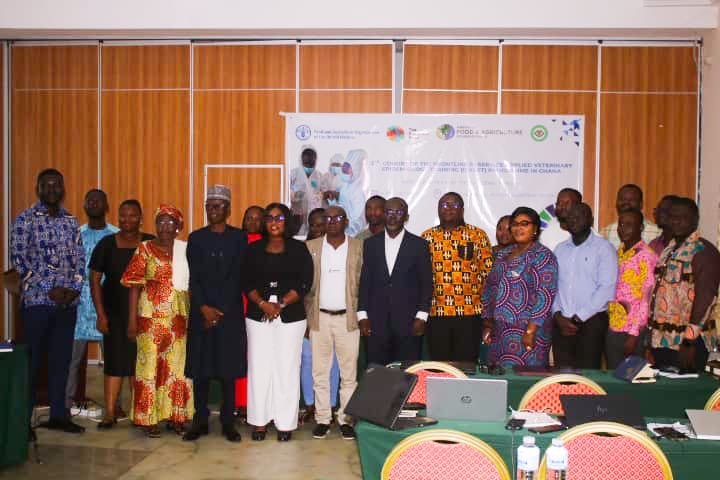
Ghana is rolling out In-Service Applied Veterinary Epidemiology Training (ISAVET) programme aimed at strengthening the country’s frontline animal health workforce to improve the detection, investigation and real time respond to emerging and transboundry animal diseases.
The training, supported by the Pandemic Fund (PF) Project, brings together veterinary professionals and paraprofessionals from all 16 regions. Already, 42 have been trained in the first and second cohorts.
The third cohort of 25 participants along with two participants from The Gambia sponsored by the UK DEFRA project are currently undergoing training in Koforidua, Eastern Region of Ghana.
The four-month training program include four weeks of intensive classroom sessions and three months of supervised fieldwork.
Speaking at the opening ceremony, Dr. Fenteng Danso, Deputy Chief Veterinary Officer, underscored the need for stronger national capacity to confront Emerging Infectious Diseases (EIDs) and Transboundary Animal Diseases (TADs).
“Integrated veterinary workforce strategies are urgently needed to strengthen disease detection and response,” he said. “This training enhances Ghana’s ability to predict, prepare for and recover from threats at the human–animal–environment interface.”
He explained that demand for ISAVET at the district level continues to rise, with many districts lacking frontline officers trained in epidemiology.
Under the Pandemic Fund project, Ghana aims to train 25 frontline officers annually from 2025 to 2028.
READ: Lumba case: Judgement sets no precedent, every matrimonial case is unique – Lawyer Mankotam
Delivering remarks on behalf of Food and Agriculture Organization (FAO), Dr. Garba Maina Ahmed commended Ghana’s leadership in veterinary epidemiology capacity building. He stated that ISAVET is being implemented in 15 countries across West and Central Africa.
Since its inception, Ghana has trained 12 frontline staff in 2023 and 30 in 2024, both funded by USAID.
The current cohort falls under the Pandemic Fund project priority areas; surveillance and early warning, laboratory strengthening, and workforce development.

The Eastern Regional Minister, Rita Akosua Adjei Awatey, who officially opened the training program,described it as an innovative and strategic investment in Ghana’s future.
The Minister said the Eastern Region, with its vibrant poultry and livestock industries, stands to benefit significantly from the enhanced surveillance and response capacity.
“By equipping our frontline veterinarians with the necessary tools, knowledge, and networks, we reinforce the foundation for stronger animal health systems and greater resilience against outbreaks. This is why the One Health approach has become central to global health”.
READ: A/R: Okada rider jailed 10 years for defiling 5-year-old boy in Bekwai
She added that “your work safeguards food systems, protects farmers’ livelihoods, and prevents diseases that threaten human health.”
Source: Starrfm.com.gh


