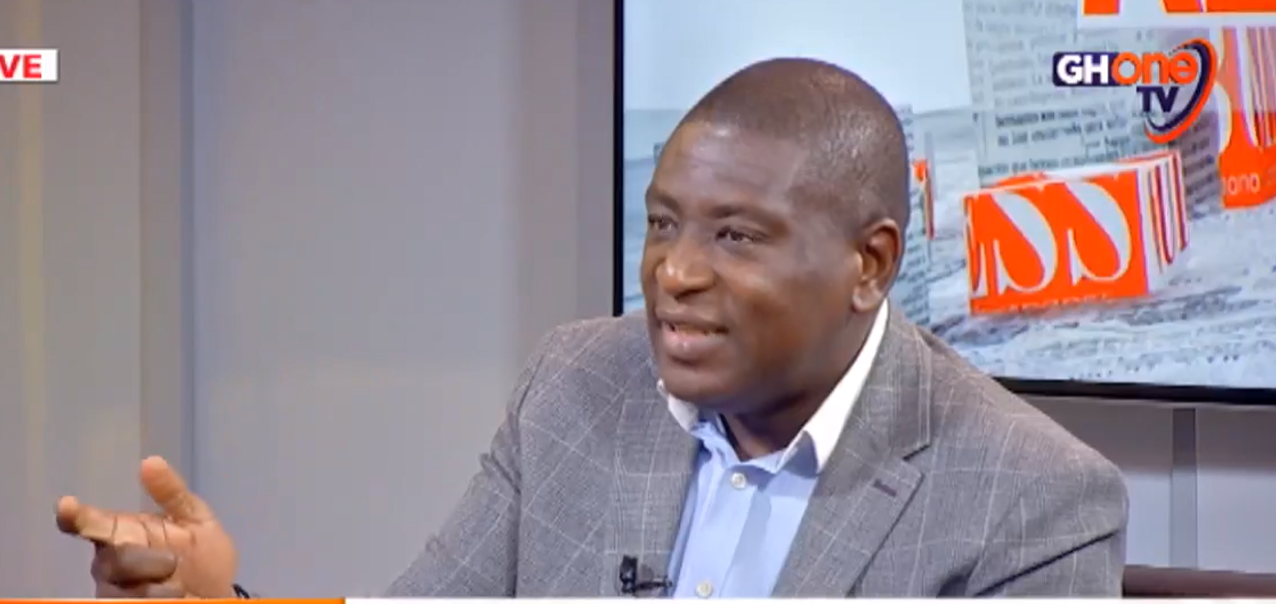
Kwadwo Nsafoah Poku, a member of the New Patriotic Party (NPP), has defended his party’s management of Ghana’s economy, insisting that the 2022 economic challenges were largely the result of global events rather than domestic mismanagement.
Speaking on GHToday with Lily Mohammed on Tuesday, March 3, Mr. Opoku noted that governments inherit problems which they must address.
He highlighted the energy sector as a key challenge inherited by the NPP in 2017, pointing to “excess capacity” payments stemming from power agreements signed by the previous National Democratic Congress (NDC) administration, which required Ghana to pay about $500 million annually for unused electricity.
“The government of the day had to deal with that problem. Government is continuous. You come into power and you deal with the problems you inherited,” he said.
Mr. Opoku argued that Ghana’s economy performed strongly between 2017 and 2020 before the COVID-19 pandemic disrupted global production.
He also attributed the 2022 economic downturn to the combined effects of COVID-19 and the Russia-Ukraine war, which created international ripple effects. “Wars create international ripple effects. We are not an island on our own,” he stressed.
He defended the NPP’s industrialisation policies, noting that tax incentives, interest rate reductions, and import duty exemptions on machinery helped attract companies and stimulate business operations in Ghana.
In contrast, he criticised the current government’s 24-hour economy policy, claiming that while a secretariat has been set up, there is no dedicated budget to support industries. “How are you going to promote industry without a budget for industry?” he questioned.
On international support during the pandemic, Mr. Opoku highlighted that Ghana received over $130 million from the World Bank, alongside assistance from the International Monetary Fund, to cushion the economy.
He concluded that Ghana’s fiscal challenges, including contractor payments and broader economic difficulties, must be understood in the context of inherited liabilities and external shocks, rather than as failures of domestic policy alone.
Source: Starrfm.com.gh/Abigail Praise Pabai