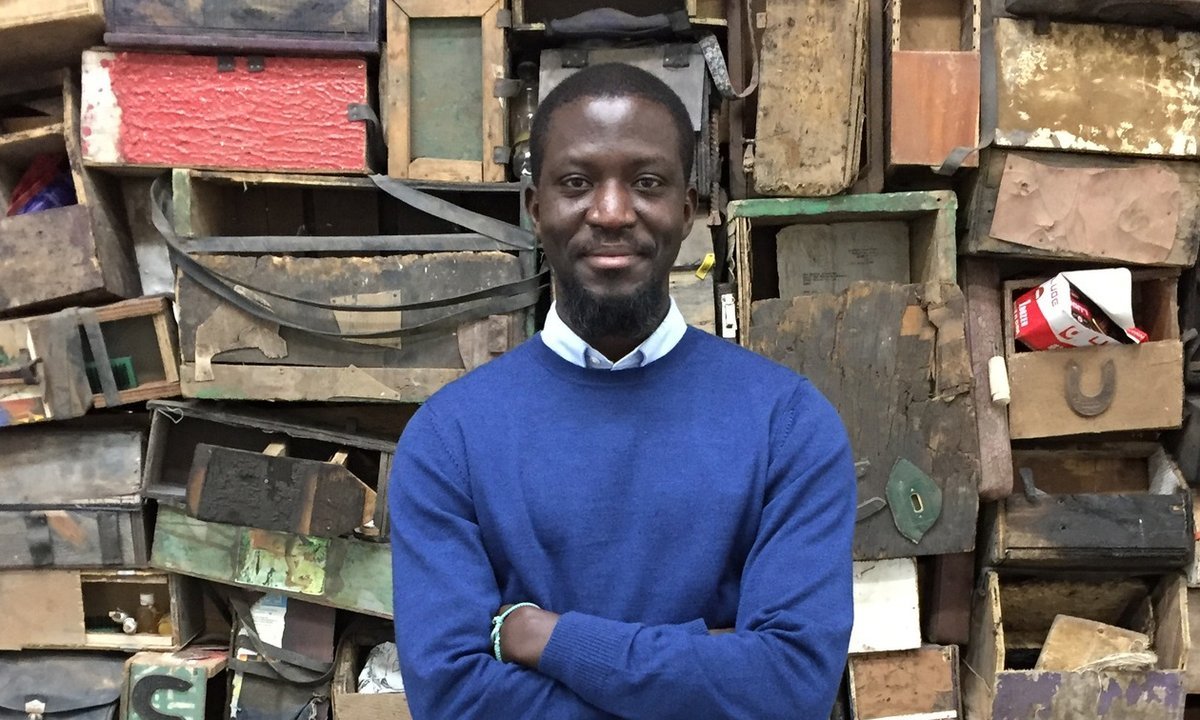
Ghanaian contemporary artist Ibrahim Mahama has revealed that it took him a decade to secure railway trains for his preservation project in Tamale, citing bureaucratic delays and the risk of historic infrastructure being destroyed for scrap.
Speaking on StarrChat with Bola Ray on Starr FM on Thursday, November 26, Mr. Mahama said his efforts began in 2013, but the first train was not transported to Tamale until 2023.
“10 years, I had to wait. From the first time I did the first project at the railway in 2013, the first train we took to Tamale was 2023. Yes, it took 10 years,” he said.
He attributed the delay largely to bureaucracy and the difficulty of acquiring old railway equipment, which he said was often sold off to be dismantled or melted down.
“Bureaucracy and also mostly, you know, when these objects are old and they sell them, the idea is to erase the history but I am keen on preserving it. So if it means that I have to go to where the thing is going to be melted to buy it, I will do that,” he said.
Mr. Mahama explained that he eventually had to adopt a more strategic approach to securing the trains, with support from people working behind the scenes.
“I realized at some point I had to be tactical and I said to you before, we also had people in the background who were looking after us,” he added.
The artist said his interest in acquiring the trains was driven by a desire to make them part of a broader narrative in his artistic work, rather than allow them to disappear as obsolete equipment.
The project eventually brought colonial-era railway carriages to his Red Clay cultural complex in Tamale, with the trains transported nearly 700 kilometres from southern Ghana.
The carriages, which date back to the colonial railway era, form part of Mahama’s efforts to preserve industrial heritage while giving abandoned objects new uses. Plans for the trains have included transforming them into classrooms, libraries, studios and other educational spaces.
Mr. Mahama’s approach reflects his wider artistic practice, which often uses discarded materials and industrial objects to explore questions about labour, history, trade and Ghana’s past.