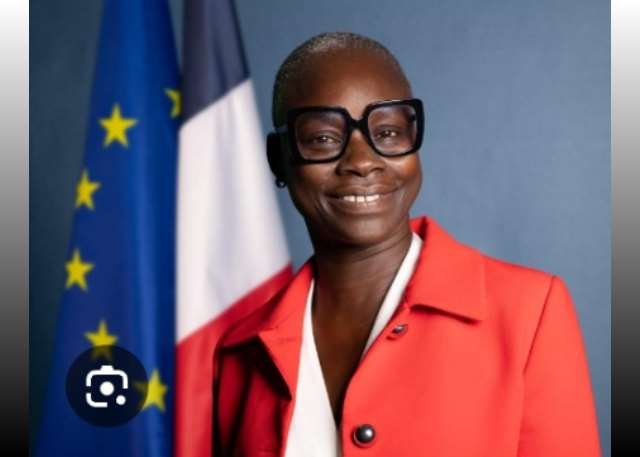
France has expressed willingness to work with Ghana to advance the global reparatory justice agenda, with discussions underway between the two countries over the possibility of establishing a joint council or commission to explore areas of cooperation.
French Ambassador to Ghana, H. E. Diarra Dimé-Labille, disclosed this in an interview with Tutuwaa Danso, host of GHOne TV’s Inside Diplomacy.
She called for a broader international approach to addressing the historical injustices of slavery, insisting that reparatory justice should not be viewed solely as an African or Caribbean concern.
Asked what reparatory justice meant to her personally, particularly in view of her African ancestry, the Ambassador said the issue went beyond her background and should concern humanity as a whole.
“It’s definitely very important, and not because I’m of African descent. It’s important for humanity. It’s important for the whole international community,” she said.
While acknowledging that countries may have differing views on the details of reparatory justice, Dimé-Labille stressed the need to move beyond discussions towards practical action.
She said France was willing to work with Ghana on the issue, revealing that discussions were already taking place between the two countries to explore possible areas of collaboration.
“There is right now a very important discussion taking place between Ghana and France. Actually, we’re going to have a kind of council or commission to really see what we can do together, to really act,” she said.
The Ambassador also indicated that the French government had given her a clear direction to engage on the matter, citing instructions received from Paris, including from President Emmanuel Macron, to act, work and move the process forward.
“Talking is important. Definitely important to state the reality and to state how important this is for Ghana, but also for the African Union and for CARICOM,” she added.
She further described Ghana as an important partner in the campaign, expressing France’s willingness to work with the country in its capacity as a champion of the African Union’s reparatory justice agenda.
For Dimé-Labille, the issue should not be limited by geography or ancestry, but approached as a shared responsibility of the international community.
“We don’t need to be of African descent or from the Caribbean. This is about humanity. That’s why we are willing and keen to work with Ghana as a champion of the African Union on that topic,” she said.
Ghana’s push for reparatory justice
Ghana has been at the forefront of efforts to advance the global reparatory justice agenda, championing the cause within the African Union and pushing for greater international recognition of the historical injustices of the transatlantic slave trade.
In March 2026, Ghana spearheaded a resolution at the United Nations General Assembly recognising the trafficking of enslaved Africans and racialised chattel enslavement as the gravest crime against humanity.
The country subsequently hosted the Next Steps Conference on Reparatory Justice in Accra in June, bringing together international stakeholders to discuss practical ways of advancing the agenda and strengthening cooperation between Africa and the Caribbean.
Against this background, France’s expressed willingness to work with Ghana introduces another dimension to the country’s diplomatic efforts, particularly as discussions continue over how international partners can contribute to advancing the reparatory justice agenda.
As the two countries explore possible avenues for cooperation, attention will turn to whether the proposed council or commission can translate the expressed willingness to collaborate into concrete initiatives.
Ultimately, the challenge remains how growing international recognition of historical injustices can translate into meaningful action for the communities and countries that continue to demand redress.
Source: Starrfm.com.gh