The Deputy Commandant of the Kofi Annan International Peacekeeping Centre (KAIPTC), Air Commodore David Akrong, has emphasized the need to harness the potential of youth to maintain peace and security in the country.
Speaking at a Stakeholder Dissemination Workshop for the Roadmap for the Development of the National Action Plan on Youth and Security (NAP), Air Commodore Akrong reiterated the importance of placing youth at the forefront.
“Young people are not merely beneficiaries of peace; they are agents of change, drivers of innovation, and active participants in peace-building processes,” he told stakeholders.
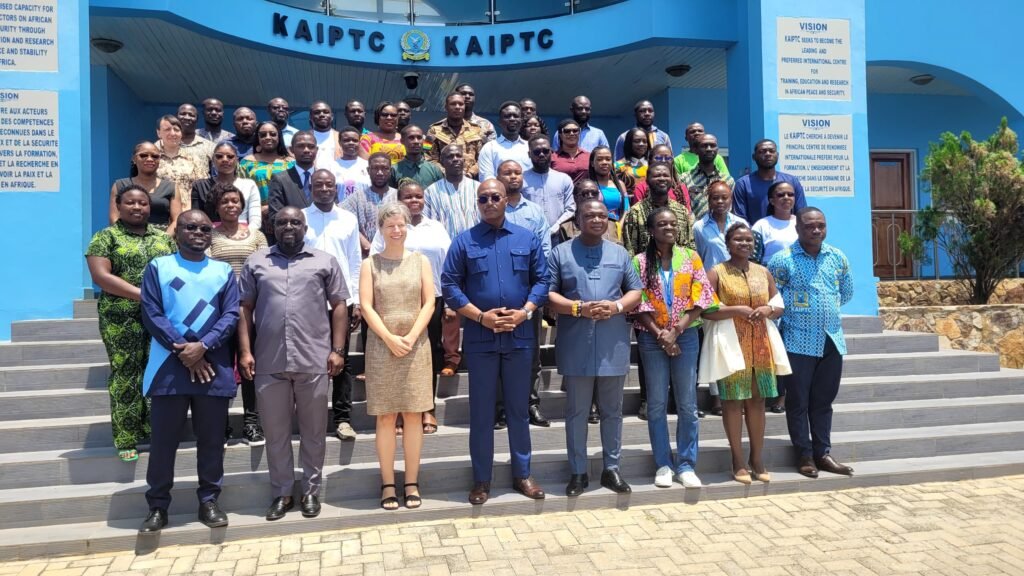
He added that developing the roadmap is a critical mechanism for harnessing this potential, providing a framework that empowers youth for greater inclusivity and ensures their involvement in decision-making at every level.
He further warned of the risk of losing significant opportunities if the youth are not included.
“In my experience with youth, especially in areas of youth leadership and peace-building, I’ve realized that if you don’t bring the youth to the table, they will not only come to the table; they will come and take the table away,” he cautioned.
“It’s important to understand the role that youth have to play because they have a lot to contribute, especially regarding their future. That is what they are going to inherit,” Air Commodore Akrong added.
Teresa Kraft, Head of Component for GIZ’s ECOWAS Peace and Security Architecture and Operations (EPSAO) project, acknowledged the German government’s long-standing support for Ghana’s efforts to integrate youth into peace and security frameworks.
She stated, “Empowering youth to take responsibility in promoting peace and security means reviewing how we shape our respective societies, how we run our organizations, and even challenging our mindsets.”
On his part, Mr. Daniel Bonsu, Deputy Director of the National Counter Terrorism Fusion Centre at the Ministry of National Security, urged youth to take leading roles in security actions.
“In the sub-region, and specifically in West Africa, the current climate calls for specific actions within various countries,” he stated. “Within our own country, we have seen a growing demand for accountability, transparency, and active youth participation.”
This dissemination workshop follows a technical working group retreat in Koforidua, where participants shared outcomes, roadmaps, principles, and key considerations to ensure that the final NAP reflects the strategic dynamics across Africa.
Source: Ghana/Starrfm.com.gh/103.5FM/Edem Kojo