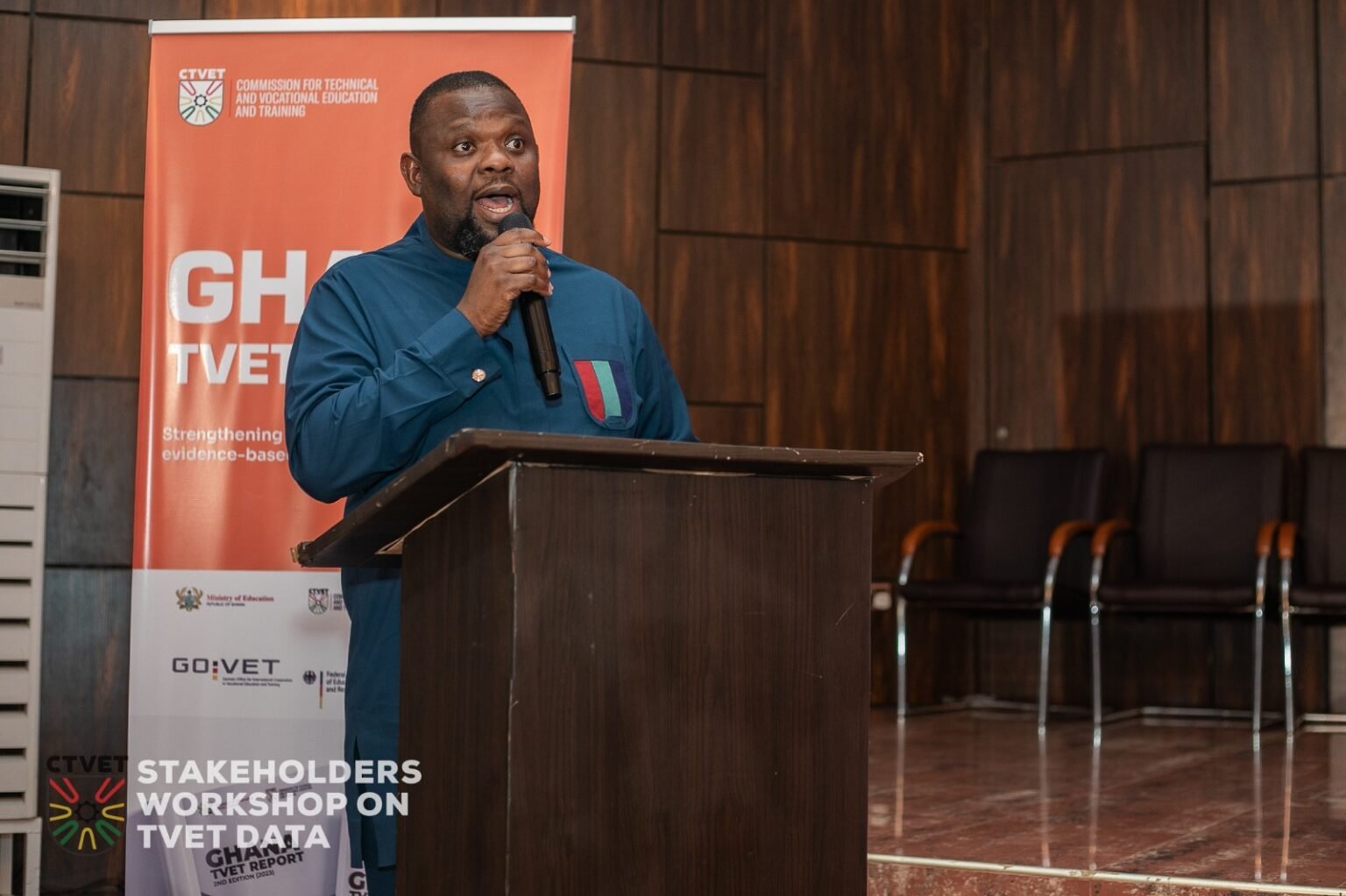
Ghana is intensifying efforts to strengthen its Technical and Vocational Education and Training (TVET) system, as policymakers, educators, and development partners gathered in Accra for a two-day workshop focused on evidence-based monitoring and reporting.
Convened by the Commission for Technical and Vocational Education and Training (CTVET), the workshop underscored the urgent need for accurate, comprehensive, and timely data to guide policies that align the country’s skills development agenda with labor market demands.
The opening day highlighted concerns that the absence of reliable data could undermine Ghana’s vision of TVET as a driver of socio-economic transformation.
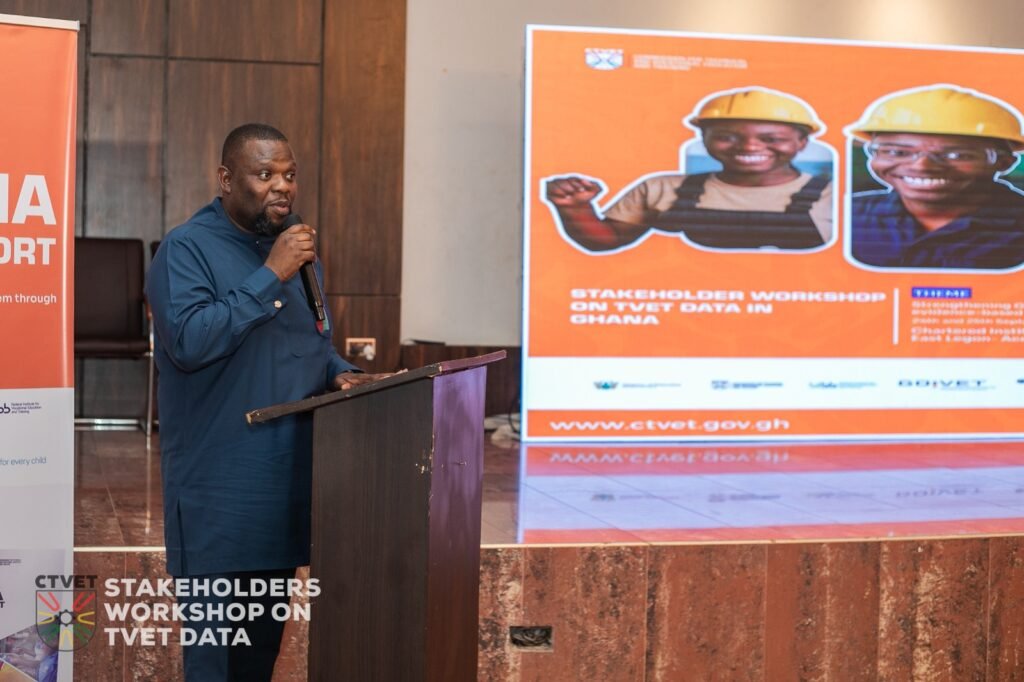
“Without accurate data, we risk misallocating resources and missing opportunities to harness the full potential of TVET,” said Mr. Kevin Antierku, Deputy Director for the TVET Directorate at the Ministry of Education, speaking on behalf of the Director for TVET.
Mr. Anthony Seyram Kwame Zu, Deputy Director-General of CTVET, reinforced the point, noting that “reliable data is the bedrock of planning, monitoring, and accountability,” and stressing the need to track the relevance of training to labor market demands.
READ: Foreign Affairs Ministry announces international scholarships, cautions against middlemen
International experts added further perspective. UNICEF Ghana’s Chief of Education, Christin Lucille McConnell, described data as “a foundation for equity, accountability, and efficiency,”
while Julia Olesen, Senior Technical Advisor at Germany’s Federal Institute for Vocational Education and Training (BIBB), shared how global best practices could inform Ghana’s approach.
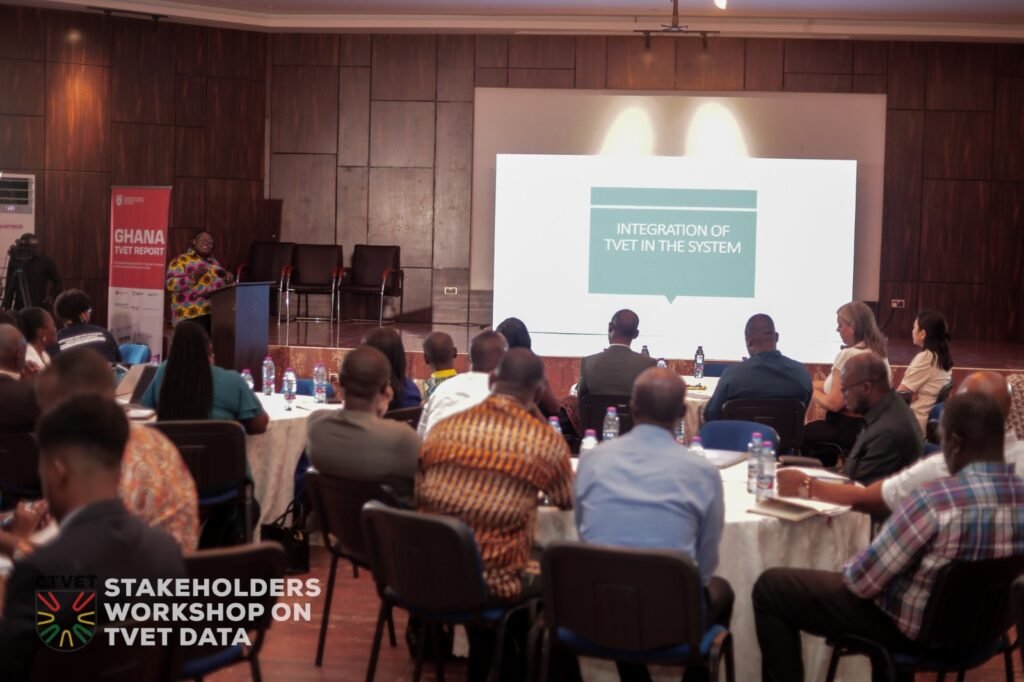
Panel discussions featuring government, academia, and industry representatives explored the role of consistent reporting in strengthening collaboration and ensuring accountability.
Academic presentations from Takoradi Technical University, AAMUSTED, and Accra Technical University showcased ongoing research, while the Ghana Education Service introduced its Mobile School Report Card initiative.
CTVET and the TVET Service also outlined new directions in evidence-based reporting.
The second day of the workshop turned from dialogue to action. Ms. Olesen presented Germany’s model of comprehensive TVET data management, laying the foundation for breakout sessions where policymakers, practitioners, and industry stakeholders examined practical strategies for Ghana.
Participants worked in groups to address building TVET management information systems, improving data acquisition and quality assurance, developing indicators for policymaking, and streamlining communication across institutions.
Recommendations included stronger graduate tracer studies and more robust datasets on informal apprenticeship training, which remains central to Ghana’s skills sector but poorly captured in official records.
Closing the workshop, Mr. Zu described data as “the lifeblood of modern policymaking,” cautioning that Ghana’s TVET system remains too fragmented to fully inform decisions. “Without accurate and timely information, decisions risk being based on assumptions,” he said.
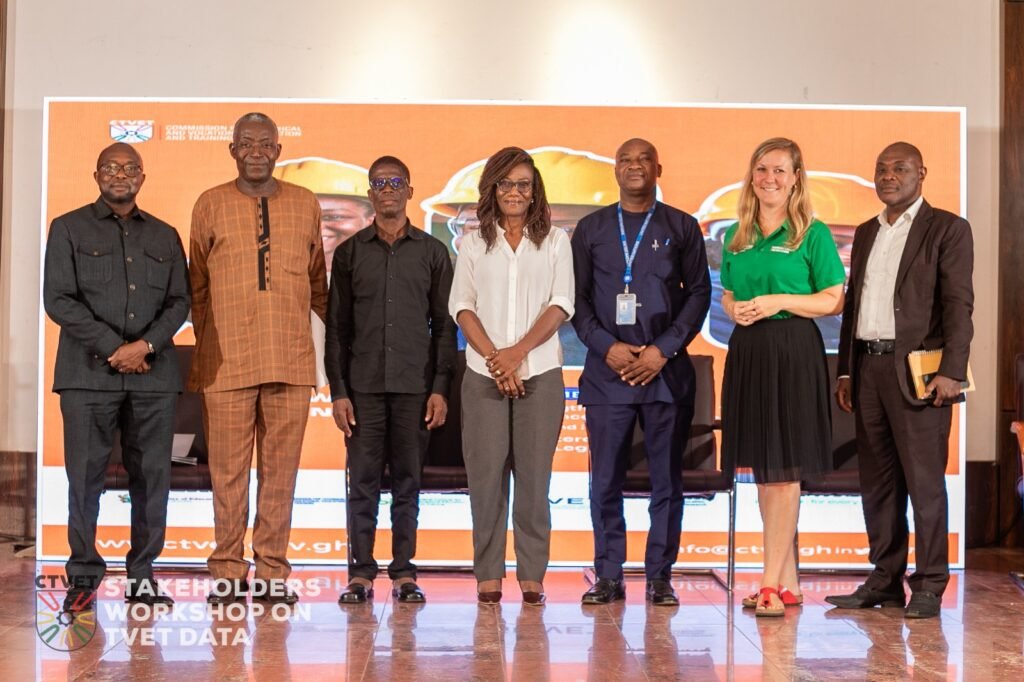
The event brought together a wide range of stakeholders, including the Ghana Statistical Service, the National Development Planning Commission, trade associations, universities, and development partners such as UNESCO, UNICEF, ILO, and GIZ, underscoring the national importance of building a skills development system that is both data-driven and responsive to economic realities.
By the close of discussions, participants agreed that while progress has been made, much more remains to be done.
Drawing on lessons from Germany and locally generated recommendations, Ghana now has a clearer roadmap to develop a transparent, accountable, and future-ready TVET sector capable of preparing its young people for the demands of a rapidly changing labor market.
Source: Starrfm.com.gh