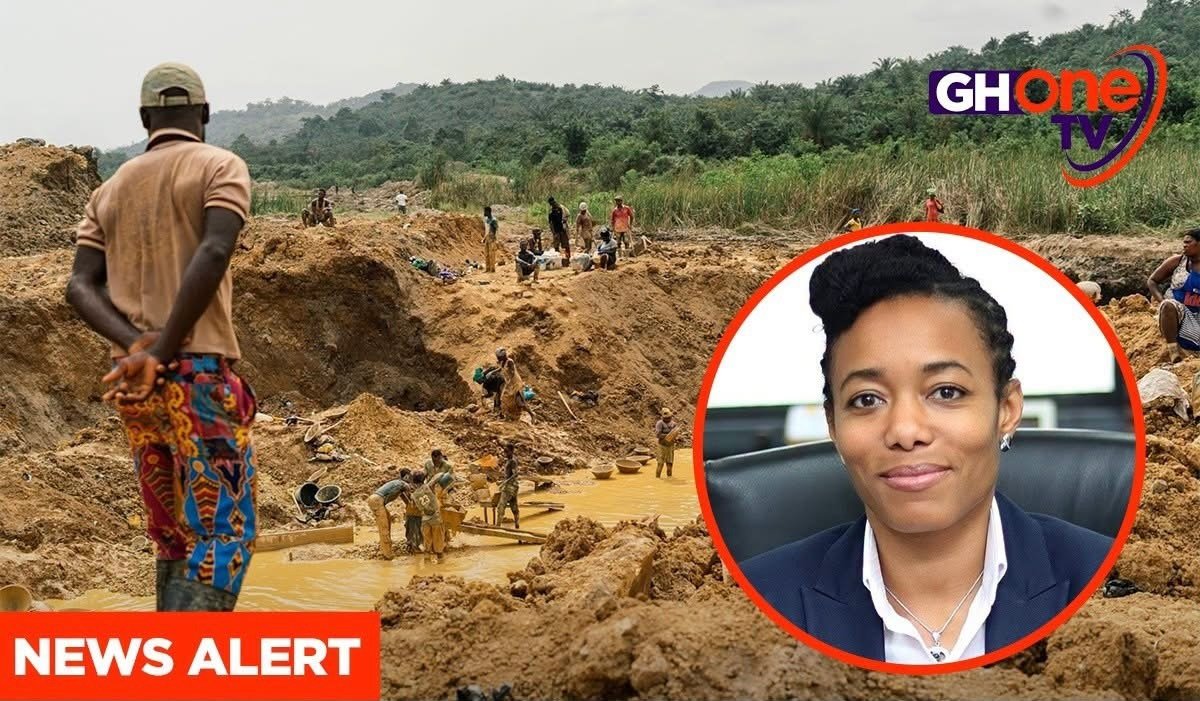
The Minister for Environment, Science and Technology, Dr Zanetor Agyeman-Rawlings, has warned that environmental degradation poses a threat to Ghana’s national security, citing its impact on livelihoods, human lives, economic activities and social stability.
She said the destruction of natural resources was creating conditions that could deepen competition over scarce resources, trigger tensions and displace communities, while also threatening the country’s revenue from agricultural exports.
Speaking at the launch of the National Water Restoration and Rehabilitation Framework in Ho, Dr Agyeman-Rawlings questioned how the country could account for the loss of livelihoods and human lives resulting from environmental destruction.
“When farmers can no longer farm, when fishing communities lose their livelihoods, and competition over increasingly scarce natural resources creates tension and displacement, and if Ghana should lose revenue as a result of our great produce being flagged as contaminated, environmental degradation becomes a national security issue,” she said.
The Minister noted that climate change was further compounding the situation, with rising ambient temperatures and changing rainfall patterns placing additional pressure on the country’s water resources.
She cautioned that Ghana could not afford to destroy the ecosystems that provide resilience against the effects of climate change, stressing that the country’s natural and mineral resources were finite.
“Our mineral resources, I beg you, are finite. No amount of gold or money can compensate for the absence of the basic necessities of human existence,” she said.
Dr Agyeman-Rawlings stressed that preventing further environmental destruction must be the first principle guiding any restoration programme, arguing that it would be wasteful to commit public resources to restoring rivers downstream while allowing their destruction to continue upstream.
She described the protection of water bodies and their designated repair and buffer zones as a matter of national environmental security, underscoring the need for coordinated action to safeguard them.
The Minister also cautioned against activities carried out under the guise of dredging, reclamation or restoration, warning that such interventions must comply with environmental regulations and must not become avenues for unauthorised mining or further pollution.
She said the Ministry would provide the necessary policy direction and oversight, while the Environmental Protection Authority would lead environmental regulatory coordination, technical supervision and verification of restoration outcomes.
Dr Agyeman-Rawlings made the remarks as Ghana steps up efforts to restore degraded water bodies and strengthen the protection of its natural resources through the National Water Restoration and Rehabilitation Framework.