In a significant move toward securing reliable and clean electricity, key national stakeholders convened in Accra to advance plans for integrating Small Modular Reactors (SMRs) with renewable energy sources. The high-level workshop marked a pivotal step in translating Ghana’s nuclear energy ambitions into a concrete strategy for a resilientelectricity generation mix.
Held at the Graduate School of Nuclear and Allied Sciences (SNAS), the event brought together leadership from the Ministry of Energy and Green Transition, Nuclear Power Ghana (NPG), the Volta River Authority (VRA), the Bui Power Authority (BPA), the Energy Commission, and academia.
Workshop participants
The workshop, supported by the United States Department of State’s Foundational Infrastructure for Responsible Use of Small Modular Reactor Technology (FIRST) Programme and implemented through the International Science and Technology Centre (ISTC), focused on hybrid energy system where SMRs provide constant, low-carbon electricity to back up Ghana’s growing solar and wind infrastructure.
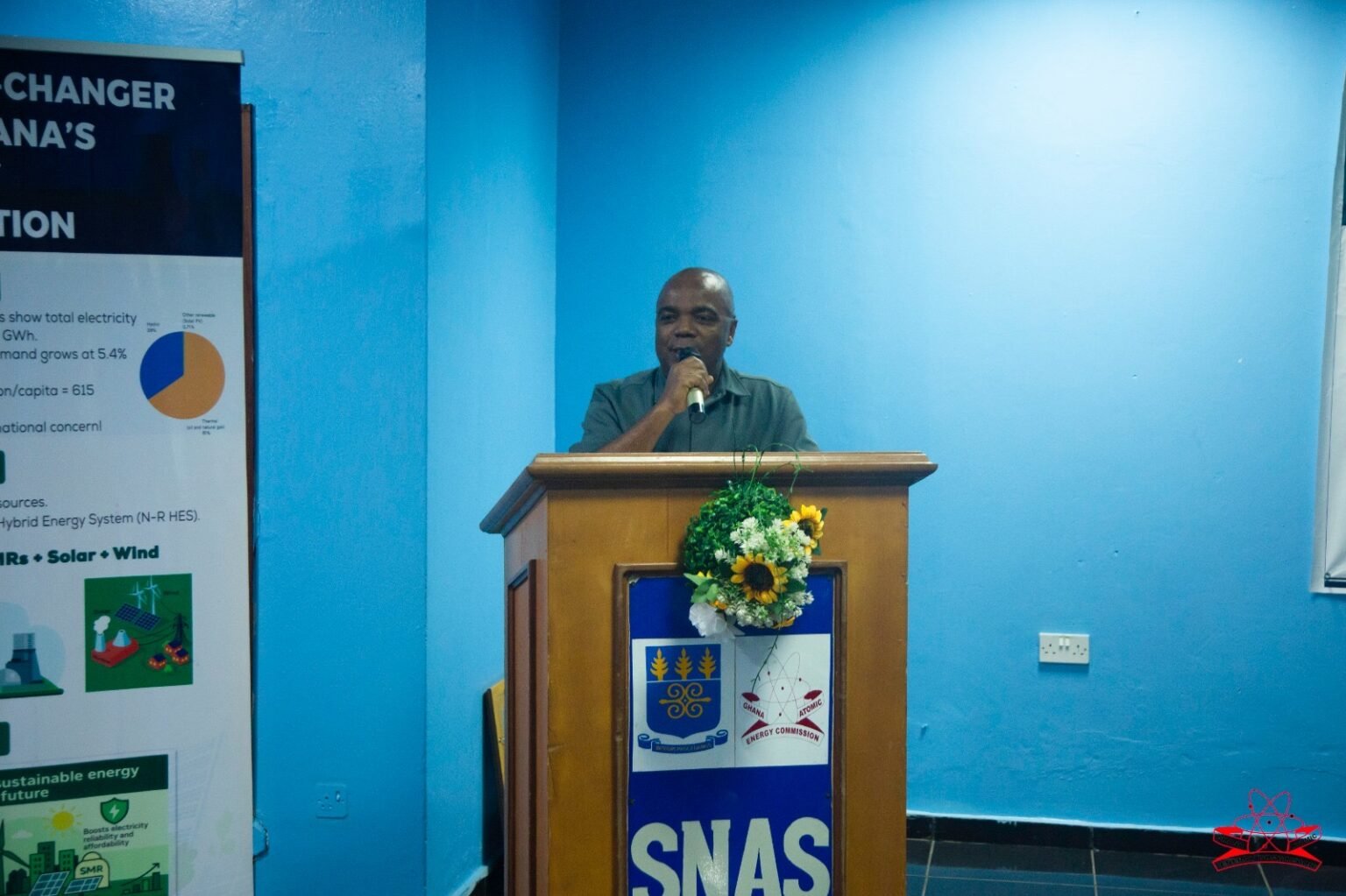
Dr. Eric Glover, delivering the opening remarks on behalf of the Director-General of the Ghana Atomic Energy Commission (GAEC), described the dialogue as a “strategic milestone” for national energy security. “We are engaged in a solution-focused dialogue that focuses on nuclear as a dependable partner in a diversified power mix,” he stated.
Dr. Eric Glover, Delivering the Opening Remarks, on behalf of the Director-General of GAEC
From the international side, ISTC’s Mr. Bauyrzhan Almagzhanov highlighted capacity-building that is already underway, including delivery of a NuScale SMR simulator to Ghana in January 2025 and progress toward a welding certification programme to deepen the local industrial skills base. He described SMRs as a “transformative opportunity” for reliable, flexible power that strengthens security while cultivating national expertise for development.
The workshop discussions were grounded in research by Mr. Mark Amoah Nyasapoh, manager of the project, whopresented findings from a study funded by a FIRST microgrant. Using specialised energy modelling tools, the National Renewable Energy Laboratory’s (NREL) HOMER Pro software for micro-level hybrid system optimisation and the International Atomic Energy Agency’s (IAEA) MESSAGE model for macro-level pathway analysis. Mr. Nyasapoh’s work demonstrated how SMR-renewable hybridenergy systems can enhance grid reliability, curb emissions, and improve long-term electricity affordability or relatively stable tariff regime.
Mark Amoah Nyasapoh, an Energy Economist and Planner at the Nuclear Power Institute (NPI) of the Ghana Atomic Energy Commission (GAEC) and a PhD candidate at the University of Energy and Natural Resources (UENR), Sunyani, emphasised that the research is geared towards practical, national solutions.
“The models provide a cohesive and compelling evidence for policy and investment,” Mr. Nyasapoh said. He expressed his deep gratitude for the immense support and guidance provided by Dr. Archibold Buah-Kwofie, Director of the Nuclear Power Institute (NPI) of GAEC, as well as by his academic supervisors: Prof. Samuel Gyamfi of UENR; Prof. Seth Kofi Debrah of the IAEA, Vienna; Prof. Hossam A. Gaber of Ontario Tech University, Canada; and Prof. Nana Sarfo Agyemang Derkyi of UENR.
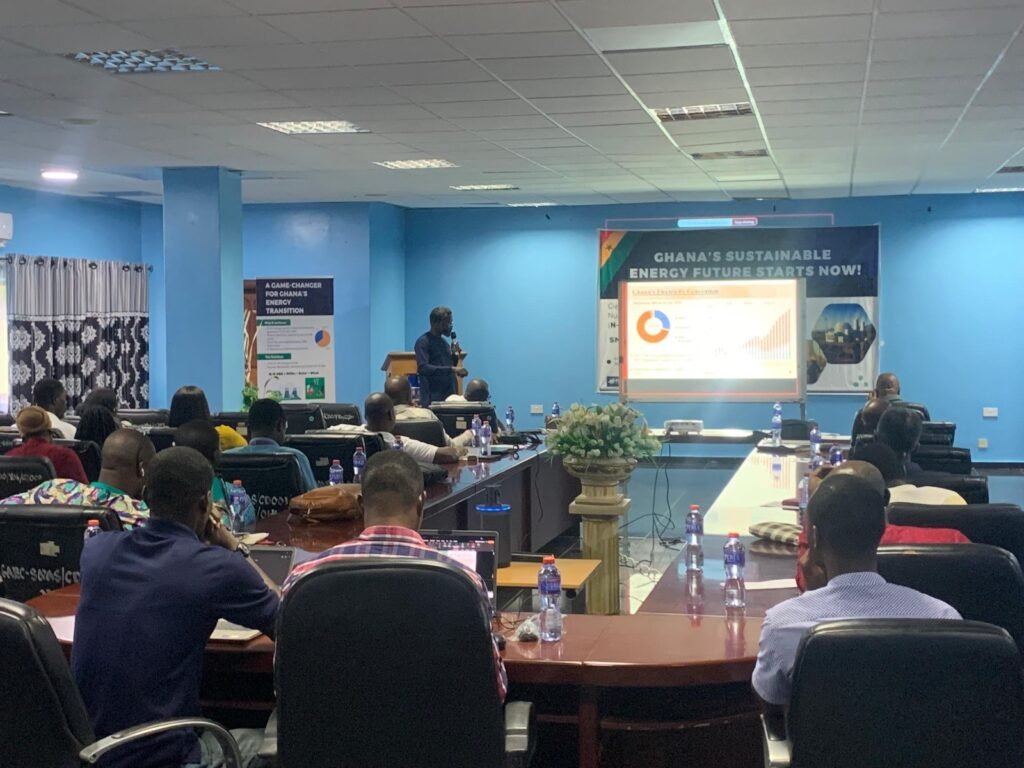
Mark Amoah Nyasapoh making a presentation
Professor Hossam A. Gaber of Ontario Tech University highlighted global advancements and safety protocols, emphasising “defence-in-depth” engineering and careful site selection as paramount attributes of nuclear. He proposed establishing a local training simulator and data centre to accelerate Ghana’s technical capacity. Prof. Emmanuel Ampomah-Amoako, Director of the Nuclear Installations Directorate at the Nuclear Regulatory Authority (NRA), emphasised safety, independence and readiness as Ghana evaluates advanced technologies.
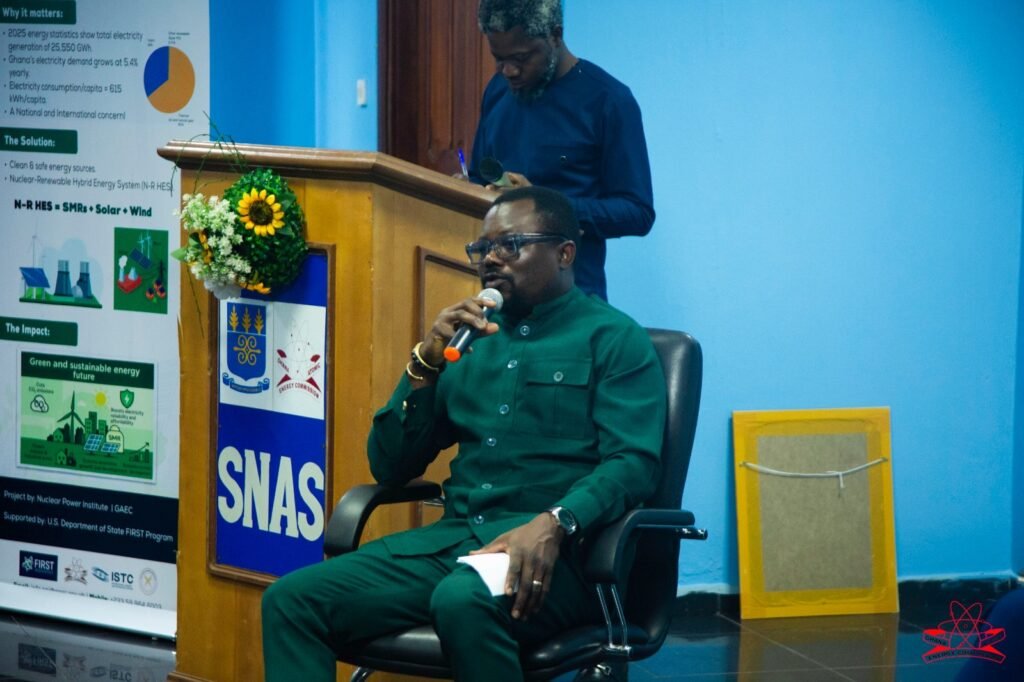
Dr Robert M. Sogbadji, Deputy Director for Nuclear and Emerging Green Technologies at the Ministry of Energy and Green Transition, a panel member, responding to a question.
From a policy perspective, Dr Robert M. Sogbadji of the Ministry of Energy and Green Transition reaffirmed Ghana’s commitment to achieving net-zero emissions by 2070, identifying nuclear power as a strategic complement to renewables. Dr. Stephen Yamoah, Executive Director of NPG, stressed the need for tailored financing and proactive public engagement.
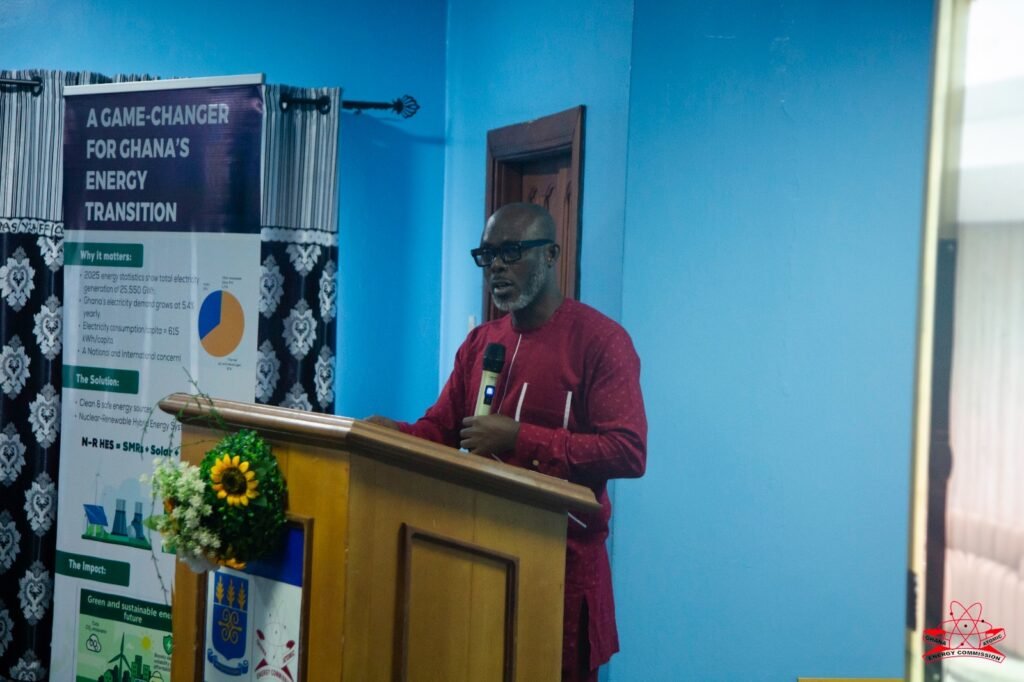
Dr. Stephen Yamoah, Executive Director of NPG, a member of the panel, delivering remarks
From the renewables front, Ing. Maxmillian Kwarteng of Bui Power Authority (BPA) affirmed the utility’s readiness to support the integration.

Ing. Maxmillian Kwarteng of Bui Power Authority (BPA), a member of the panel, responding to a question
Prof. Samuel Gyamfi, Director of the Regional Centre for Energy and Environmental Sustainability (RCEES) at the University of Energy and Natural Resources (UENR), highlighted the enduring partnership between GAEC and UENR. He specifically commended his PhD candidate, Mr. Nyasapoh, whose project, supported by a FIRST microgrant, represents a significant addition to a growing body of academic work. Prof. Gyamfi credited the project’s success to the guidance of Professors Seth Kofi Debrah, Hossam A. Gaber, and Nana Sarfo Agyemang Derkyi, as well as the support of Dr. Archibold Buah-Kwofie, the Director of the Nuclear Power Institute of GAEC.
“The message is clear,” “When academic excellence meets real-world opportunity, Ghana builds the talent pipeline its energy future depends on,” he stated.

Prof. Samuel Gyamfi, Director of the Regional Centre of Energy and Environmental Sustainability (RCEES) at UENR, delivering remarks
The workshop concluded with a visit to the new NuScaleSMR simulator at SNAS’s Energy Exploration (E2) Centre, a tangible symbol of the nation’s progressing capabilities. Theforum follows an earlier outreach, including a community workshop at Takoradi Technical University (TTU).
Consensus emerged on the immediate next steps: leveraging the simulator for workforce training, advancing industrial certification programmes, maturing financing models, and integrating research into national energy planning. With these actions, Ghana aims to build a resilient, low-carbon generation mix that could serve as a model for West African energy development.