


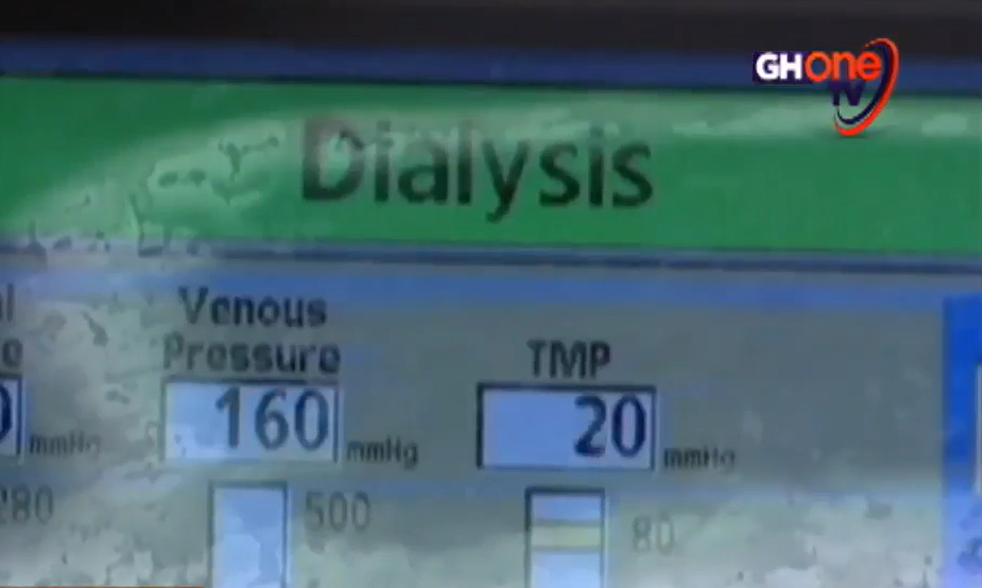
The Forum for Development and Accountable Governance (FDAG) has criticized the previous government’s “free dialysis” initiative, labeling it as deceptive, flawed, and politically motivated.
According to the group, the initiative, launched in November 2024, collapsed shortly after the December 2024 elections, leaving thousands of renal patients without access to life-saving treatment and contributing to at least 30 deaths.
Ghana’s dialysis crisis remains dire, with an estimated 5,000 renal patients requiring regular treatment.
However, due to high costs and limited access, over 60% of patients receive inadequate or no treatment, resulting in one of the highest renal mortality rates in the sub-region.
The government, through the National Health Insurance Authority (NHIA), announced free dialysis at 40 health facilities, backed by an allocation of GHS 20 million to GHS 57 million.
“In November 2024, the government, through the National Health Insurance Authority (NHIA), announced that free dialysis treatments would be available at 40 credentialed health facilities, backed by an allocation of between GHS 20 million and GHS 57 million.The NHIA further claimed that the World Bank was expected to support the provision of modern dialysis machines”.
However,findings by FDAG, a Civil Society Organization revealed that the program was poorly planned and unsustainable.
FDAG’s research uncovered several critical flaws which include the fact that over 70% of patients could not access treatment due to logistical and funding challenges.
“FDAG’s extensive field investigations at Korle Bu Teaching Hospital (KBTH), Komfo Anokye Teaching Hospital (KATH), Cape Coast Teaching Hospital (CCTH), Efia Nkwanta Regional Hospital (ENRH), Ho Teaching Hospital (HTH), and Tamale Teaching Hospital (TTH) revealed a deeply flawed, poorly planned, and short-lived intervention that failed to provide meaningful relief”.
The group, stated that Hospitals lacked clear directives, causing confusion among staff and patients making the implementation of the program ineffective.
According to the group, the initiative’s failure had dire consequences.
FDAG claims that at least 30 patients died due to lack of access to treatment, while families faced financial hardship, with some forced into debt to pay for dialysis.
Regional disparities in service delivery further exacerbated the crisis, leaving many patients without support.
The statement issued by FDAG and signed by Nana Kojo Abbam, Senior Research Fellow at FDAG, stated:
“The so-called free dialysis initiative was nothing more than an electoral gimmick, a deceptive and politically motivated strategy to secure votes. The program’s abrupt termination caused widespread panic, stress, and financial hardship, forcing families into crippling debt just to keep their loved ones alive.”
He added: “It is unacceptable for patients battling life-threatening conditions to be used as electoral pawns, only to be abandoned once votes are secured.”
Demands for Accountability
FDAG has called for a transparent explanation of how allocated funds were spent.
Also, the introduction of a permanent, sustainable dialysis support program,and Prosecution of officials responsible for the initiative’s failure.
FDAG emphasized the need for a healthcare system built on integrity and sustainability.
The civil society organization urged civil stakeholders to demand better governance and reforms that prioritize citizens’ health over political gains.


