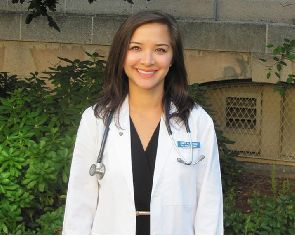
Yale medical student Aimee Alphonso chose to complete her four-week obstetrics-gynecology clinical rotation in Accra, Ghana last year, rather than at a Connecticut-based hospital.
Alphonso,currently in the final year of her M.D. degree program at Yale School of Medicine (YSM), was able to have this experience through an International Clinical Elective Travel Fellowship.
YSM’s Office of International Medical Student Education coordinates the fellowship program for approximately 30 students each year. The program has expanded since it began in 2006 with students going to Uganda, to now also include clinical rotations in Argentina, Colombia, Chile, China, Dominican Republic, Ghana, Jamaica, Peru, South Africa and Thailand.
A Yale faculty member works as a mentor for each site.
Participating students are required to write reflections of their experience upon their return. Alphonso’s reflection of her 2017 experience in Ghana follows.
For four weeks I was in Accra, Ghana, working at the Korle Bu Teaching Hospital. I was there as a form of self-exploration of sorts. For the entirety of my professional life I thought that I would pursue a career in pediatrics.
Then the third year of medical school came along and so did my first exposure to obstetrics and gynecology (ob-gyn). I was shocked by how thoroughly I enjoyed the field but also completely unnerved by the possibility that my career choice could change.
So I took advantage of a “fifth” year at Yale to learn more about ob-gyn before I made the switch. My goal was to explore the field of ob-gyn in the most difficult of situations — a high-patient volume in a low-resource setting.
I knew that if I could love ob-gyn under those conditions, I could not only learn a great deal clinically but also confirm that ob-gyn was the right field for me.
Accra, Ghana was the perfect setting for this exploration. Personally, I had been hoping to visit Ghana for many years. The culture and people are known to be particularly vibrant and welcoming. I was also looking forward to living in an environment that was completely different from my own.
Professionally, Korle Bu Hospital offered the opportunity to practice ob-gyn in an incredibly busy urban and low-resource setting. The obstetrics department on average has over 12,000 deliveries per year.
Many of the cases are very similar to those seen in the United States (preeclampsia, gestational diabetes, multiple gestation, etc.) but are often more advanced at the time of presentation. Some cases, like sickle cell disease and malaria in pregnancy, are also very unique to Africa and would give me the opportunity to learn about diagnosis and management from the experts.
With these opportunities in mind, I set off for Accra and arrived on the first day of the new year. New year, new beginnings. Prior to arrival I pictured my international elective as a grand adventure. I would discover a new country and many of its local traditions.
I would practice medicine in a hospital outside of Yale and outside of the U.S. for the first time. I would meet people who endured through incredible hardships and who had interesting stories to tell. In the end, the elective rotation in Ghana did provide all of these experiences and more, but I could never have anticipated the lessons and difficulties that I would encounter as well.
The first thing that I noticed when I stepped off of the plane was intense heat. We landed during a giant dust storm — part of the annual harmattan — with temperatures bordering 100°F. I learned very quickly that sweat would become an inescapable part of my daily life.
But even more striking than the heat and dust was the poverty I saw as soon as I stepped out of the airport. Dozens of people were walking barefoot, wearing tattered rags for clothing. Women balanced heavy tubs of goods on their heads, gently avoiding the goats grazing on the sparse burned grass. Colorful billboards and signs decorated dilapidated and abandoned buildings.
Small houses and shops were fashioned out of old shipping containers. As I looked more closely at my taxi driver, I realized that his shoes were mismatched. His watch had only the hour hand, and his shirt was that of a woman. He had clearly put together what he could find. I looked down at my own clothes and I realized that my shoes not only matched, but were also thick and sturdy.
My clothes were my own and fit well, and my two bags of luggage were conveniently on wheels. These small details felt like embarrassingly massive luxuries.
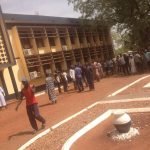
This poverty even translated to the hospital. My first day on the maternity floor, two days after I arrived in Accra, I noticed that the halls were crowded with many people who could not possibly be obstetric patients — men young and old, women frail and worn. I asked my resident who all of these people were, and he replied, “Family. They are all waiting around in case the patient needs money or medication.”
I learned that in Ghana, family members are integral to the care of a patient. When a physician prescribes a medication or intravenous fluids, a patient’s family member rather than a nurse is tasked with going to the pharmacy to retrieve it. Not only must they retrieve the medication, but they must pay for it out of pocket as well.
So extended families would gather their money and resources and send a single family representative to sit in the hallway, ready to run to the pharmacy or to the cashier’s office as needed.
Women without family members or without sufficient funds would either experience a delay in their care or receive no care at all. For some women this meant that a urinary tract infection or an infection from a Cesarean-section incision would go untreated for far longer than was safe and lead to extended hospital stays. For other women the consequences were far more serious.
My first patient on the ward was a 35-year-old woman from a small town outside of Accra who had come to the hospital at 20 weeks of pregnancy to seek care for an enlarging mass in her chest wall. She and her husband were deeply religious, as are most people in Ghana, and hoped that prayer would resolve her symptoms. But when the mass started to compress on the large vein carrying blood back to her heart, heavy swelling to her vocal cords and lungs rendered her unable to speak or lie down.
The work-up at Korle Bu took over a week, with the $250 cost of the biopsy draining what little funds they had. In the end, it was learned she had undifferentiated lymphoma. She would need chemo and radiotherapy, each costing thousands of dollars. They would never be able to afford the cost of one therapy, much less both.
I had become close to the patient after seeing her every day for almost two weeks and was profoundly saddened by her prognosis. Even more than that, I was frustrated and angered that inability to pay would disqualify her from life-saving treatment. But as I looked at the patient and her husband, they seemed oddly accepting.
They harbored no resentment and no anger. They were simply appreciative of the efforts of the physicians to minimize her pain and treat her symptoms. I think they had always known that they would be unable to afford treatment. But their situation was not a unique one. Family members, friends, neighbors all told similar stories. And in a place where poverty is a way of life, death and dying are understood.
However, this is not to say that death is taken lightly and suffering is ignored. Physicians in Ghana are impossibly outnumbered by patients, so patients often serve as one another’s caregivers. Women in neighboring beds — prescribed bed rest for days or weeks at a time — often became friends and would alert physicians if their neighbor had a problem. Rounds started each morning by asking each patient, “Ete sen?” or “How are you?” in the local Twi language. Either from deference or denial, patients would undoubtedly respond, “Eye” or “I’m fine.” If this was true, rounds would continue, but if not, the neighbor would often respond, “No!” and explain the patient’s complaints for her. “She feels nauseous,” or “She’s been vomiting all night.” Women who were not on bed rest would seek out the doctor and report if a patient on the floor seemed unwell or if a baby was jaundiced. Privacy was a luxury, but no one seemed to mind.
Neighbors also helped one another with missing resources. Ghana has a national shortage of blood, and the blood bank was notoriously empty. Women would only have blood available for surgery if their family members had donated, but many working families could not get to the blood bank before its 4 p.m. closing time. Therefore, women whose surgeries were uncomplicated and did not need additional blood would often donate their extra units to other women who needed it. Women being discharged who had unused medication or fluids would give their surplus to other women in need. Free of charge. This sense of community and caring for one’s neighbor was one part of the culture that I could never have anticipated but deeply appreciated.
In addition to the patients caring for one another, physicians also seemed to be consumed with caring for patients. My initial impression of the physicians at Korle Bu was that they were overworked and overwhelmed. Ob-gyns would regularly see over 50 patients per day and then perform surgeries well into the night. I watched with trepidation as practices I thought necessary — patient counseling, full diagnostic work ups, close patient follow-up — were abandoned in favor of rapidity.
As my elective continued, however, I realized that these omissions were a result of lack of available resources rather than a lack of care or compassion. Taking five extra minutes to counsel each patient would add up to four additional hours of work, precluding the possibility of performing a potentially life-saving procedure later. Even if a physician did order a full diagnostic work-up for conditions like infertility or recurrent pregnancy loss, the likelihood that a patient would be able to afford the tests was extremely low.
So instead physicians would order the one test that their clinical reasoning told them was the most important and hope that the results would be enlightening. Resources that I took for granted in the U.S. — ultrasound, imaging, continuous fetal monitoring — were simply not available in Ghana.
Yet physicians at Korle Bu never complained about their difficult working conditions or the stress of unrelenting demands on their time. Rather they seemed to become excellent at using the one tool they all had — the physical exam — and helped patients in the best way they knew how.
My time in Ghana was everything I had hoped for and more. I am now more receptive to the importance of the physical exam, more thoughtful in justifying the tests I order, and more mindful of the impact kindness and compassion can have on patient outcomes. While I did learn a great deal about how to practice medicine in a low-resource setting, I also came to realize that a strong sense of community can be a resource in itself.
I feel very privileged to have learned this lesson in Accra and will be forever thankful to Yale for providing me with this opportunity. I hope that when I do become an ob-gyn — for I did finally embrace my love for ob-gyn in Ghana — I will continue to consider my patient as a whole and in the context in which she arrives under my care.
Source: news.yale.edu