A new literacy paper urging governments to translate evidence into classroom policy has been unveiled at the 6th Biennial Education Evidence for Action (EE4A) and EDF Conference, ahead of its formal launch later this year.
Produced by the What Works Hub for Global Education (WWHGE), with the Global Education Evidence Advisory Panel (GEEAP) and the British Council as core partners, the paper highlights the urgent need for evidence-based reforms to address global learning poverty.
It stresses that foundational literacy is essential to unlocking future learning opportunities, warning that millions of children remain excluded without it. The report identifies three key levers for improving outcomes at scale: structured pedagogy, teacher professional development, and targeted interventions. It also emphasises the importance of partnerships that connect global research with local policy and classroom practice.
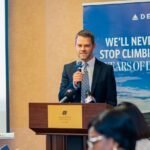
The EE4A conference, hosted by the Zizi Afrique Foundation, serves as a platform for education stakeholders and researchers to deliberate on how best to bridge the gap between evidence and decision-making.
At the event, WWHGE convened education leaders in a session titled “Strengthening the Evidence Ecosystem: Building a Roadmap for Education Reform in Kenya.” The Hub underscored its mission to ensure that rigorous global evidence—such as the GEEAP Literacy Paper—is embedded into government policies and implemented in classrooms.
Through collaborations with ministries, teacher training institutions, and local organisations, WWHGE is working to translate research into practical reforms that directly shape teaching methods and improve foundational learning outcomes.
The British Council’s Learning and Life for Global Education (LL4GE) initiative also featured at the conference. LL4GE integrates literacy, language, and life skills, equipping young people with both academic and social competencies needed for employment, resilience, and active citizenship.
Funded by the UK government’s Foreign, Commonwealth & Development Office and the Gates Foundation, WWHGE is an international partnership hosted by the Blavatnik School of Government. It brings together 12 strategic partners and 43 consortium partners to support education reform at scale.
Together, WWHGE, GEEAP, the British Council, and LL4GE are advancing a shared agenda: embedding evidence into national reform strategies, accelerating classroom transformation, and ensuring that every child has access to foundational literacy and lifelong learning skills.