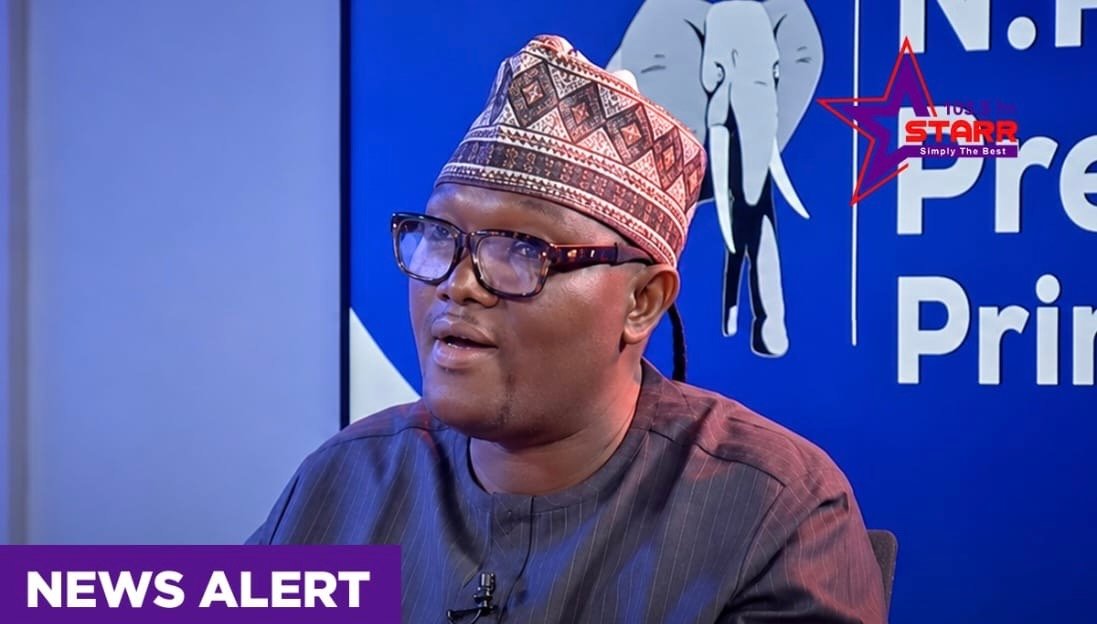
Political Analyst Mohammed Tawfik Adamu says Ghana’s ability to tackle political insults online is being hampered by the jurisdictional limitations of the country’s laws, particularly when perpetrators operate from outside Ghana.
Speaking to Isaac Addae on the Morning Starr on Starr FM, Mr Adams said the rise of social media and digital platforms has made it increasingly difficult for authorities to directly control individuals who engage in insults from outside the country.
According to him, some of these individuals openly acknowledge that they are outside Ghana’s jurisdiction and therefore cannot easily be subjected to the country’s laws.
“People sit outside the legal jurisdiction or constitutional jurisdiction of Ghana. And then they send insults and it goes there. And you don’t have the jurisdiction to arrest them,” he said.
Mr Tawfik, however, said the political connections of some of these individuals provide another avenue through which the problem can be addressed.
He explained that although political actors operating outside Ghana may not be within the country’s legal jurisdiction, some maintain links with political parties in Ghana.
“Even though these people are outside the jurisdiction of Ghana, they still have political ties with the political parties in this country. And so, they should be able to call them to order, or at least come out publicly to disassociate themselves from the kind of behaviour these individuals are engaging in.”
He described the situation as an “attitudinal” problem and questioned whether a national dialogue alone could resolve it.
“If these political class keep quiet about it and then set us up or pretend to be doing something about it, pretend to say that, no, there should be a national dialogue, what kind of national dialogue or national conversation can solve this problem?” he asked.
Mr Tawfik argued that political parties have knowledge of the individuals associated with the practice and should therefore take concrete action where their members are involved.
“This is an attitudinal problem that they themselves, they know whoever… who are behind it. The political government, they know it. All of them, both NPP and NDC, they know the individuals who are behind it,” he said.
He called for sanctions where individuals involved in the conduct are members of political parties.
“If they are members of the party, I mean card-carrying members of the party, they need to be… there are sanctions. If the party would even have to kick them out of the party, make something so that Ghanaians know that something is happening,” he said.
Mr Tawfik also questioned the decision to involve independent organisations in efforts to address political insults, particularly when Ghana has state institutions with responsibilities relating to the media and civic space.
He referred to the President’s reported move to involve the Media Foundation for West Africa and the Ghana Journalists Association, arguing that neither organisation is a state institution.
“Media Foundation for West Africa is not a state institution. GJA is also not a state. These are non-governmental organisations. They are independent organisations within themselves,” he said.
He questioned why state institutions such as the National Media Commission (NMC) and the National Commission for Civic Education (NCCE) were not being placed at the centre of the response.
“We have NMC. What are they doing? How are they regulating the media space? We also have the NCCE. Yes, these are state institutions. What are they doing?” he asked.
Mr Tawfik said the involvement of independent organisations must not create a perception that their independence is being compromised.
Source: Starrfm.com.gh/Pamela Quayson