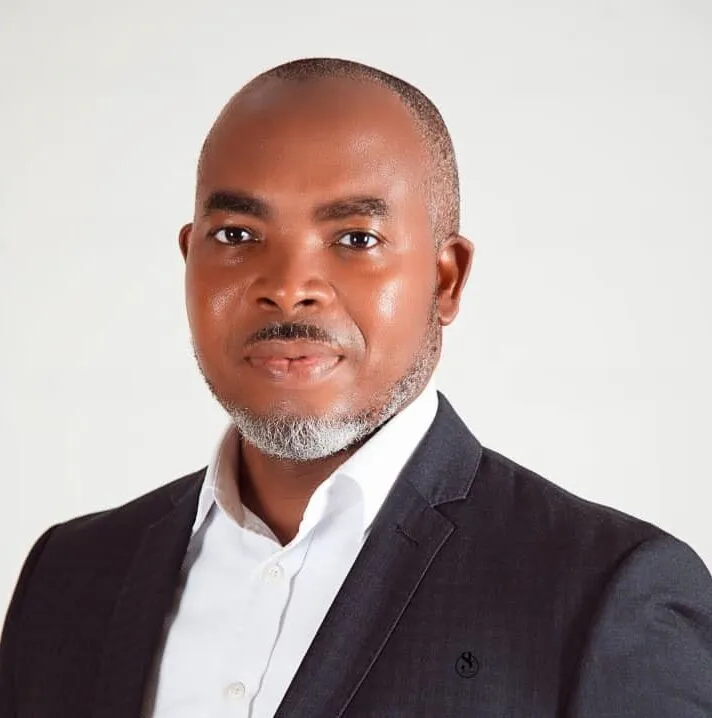
The legal battle against Dr. Johnson Asiama, a former Deputy Governor of the Bank of Ghana, has dragged on for over seven years, curtailing his freedom and imposing significant financial burdens in legal fees. The charges levied against him—breach of the Bank of Ghana Act and causing financial loss—have not been substantiated, yet the prosecution persisted despite the fact that no financial loss occurred.
More significantly, Dr. Asiama became the target of political persecution because he defended the legitimacy of certain financial decisions made under the National Democratic Congress (NDC) government and pushed back against politically motivated accusations.
The New Patriotic Party (NPP) government, which took over in 2017, saw his actions as defiant and singled him out for legal harassment. His prosecution was never about justice; it was about punishing a public official who refused to betray his principles. This article argues why the case against Dr. Asiama was a politically motivated witch hunt that should have never happened.”
The political context of the prosecution
Following the NDC’s loss in the 2016 general elections, the incoming NPP government embarked on a series of actions aimed at discrediting key figures from the previous administration. Dr. Asiama, who had been vocal in defending the policies of the NDC-led government, found himself at the centre of this crackdown. Instead of being recognized for his role in maintaining financial stability, he was targeted as part of a broader effort to demonize officials associated with the previous government.
The liquidity support measures he authorized were not personal decisions but official Bank of Ghana policies designed to prevent systemic collapse. However, because he did not distance himself from the NDC, he became a convenient scapegoat. The selective nature of his prosecution further underscores the politically charged motives behind the case.
The context of the transactions
Between 2015 and 2016, UNIBANK was experiencing severe liquidity constraints due to a confluence of factors, including delayed government payments for road contracts and energy sector-related exposures. Several banks, including UNIBANK, faced imminent failure if no intervention was provided. The Bank of Ghana, in its role as the lender of last resort, acted decisively to stabilize the banking sector by providing liquidity support. These interventions were not arbitrary but followed recommendations from the Banking Supervision Department and adhered to laid-down processes within the Bank of Ghana.
At the time, UNIBANK’s liquidity crisis was exacerbated by large withdrawals from institutions such as COCOBOD, VRA, EDC, and Databank. UNIBANK had significant government receivables, estimated at GH¢850 million, which it relied on for future liquidity. Given this situation, the Bank of Ghana granted liquidity support based on standard procedures, ensuring the stability of the financial system. This was a systemic intervention rather than a personal decision by Dr. Asiama.
No financial loss was incurred
The fundamental flaw in the case against Dr. Asiama is the assertion that his actions resulted in financial loss to the state. This claim is demonstrably false. The GH¢150 million facility extended to UNIBANK has been repaid by UMB Bank, a fact that has been duly presented in court. Similarly, the GH¢413.09 million extended to UT Bank was not squandered but utilized to fulfil critical financial obligations, including interest payments to the Bank of Ghana, monthly reserve requirements, and international loan settlements to prevent Ghanaian banks from being blacklisted by correspondent banks.
Furthermore, out of the GH¢413.09 million, a significant portion (GH¢289.98 million) was retained by the Bank of Ghana itself for various payments, further proving that the money was not mismanaged. The CEO of UT Bank, under cross-examination, confirmed that he submitted regular utilization reports to the Bank of Ghana, indicating that the funds were properly accounted for. Therefore, the charge of causing financial loss is baseless and should be dismissed long time.
Selective prosecution and the role of other officials
A major concern regarding Dr. Asiama’s prosecution is the selective nature of the charges. The liquidity support provided to UNIBANK and UT Bank was an official decision by the management of the Bank of Ghana, approved at the highest levels. Other Deputy Governors and senior officials played key roles in these decisions, yet Dr. Asiama remains the only individual facing legal action.
For instance, the GH¢200 million liquidity support granted to UNIBANK in December 2015 was approved by then-First Deputy Governor Mr. Millison Narh. Similarly, the GH¢450 million liquidity support in March 2016 was signed off by Dr. Abdul-Nashiru Issahaku, the Second Deputy Governor at the time. Both approvals followed recommendations from the Banking Supervision Department, reinforcing the fact that these were institutional decisions rather than personal actions by Dr. Asiama.
If these liquidity supports were illegal, then all officials involved, including those who approved similar transactions before Dr. Asiama’s tenure, should also be held accountable. However, targeting only Dr. Asiama suggests a prejudicial approach that lacks fairness and consistency in the application of justice.
Compliance with banking procedures
Dr. Asiama’s actions were in line with standard banking procedures. The Bank of Ghana had previously provided similar liquidity support to banks facing distress, adhering to international best practices for central banking. These interventions were not reckless but were part of efforts to ensure financial stability.
Moreover, the decision to extend liquidity support was based on an official Board Resolution dated September 19, 2016, which mandated the Bank of Ghana to support systemically important banks for up to three years to restore regulatory compliance. The resolution specifically delegated authority to the management of the Bank of Ghana to approve liquidity support when necessary.
Therefore, Dr. Asiama was simply executing his official duties under the mandate of the central bank, and his prosecution for doing so is entirely unjustified.
The human cost of the political persecution
Beyond the legal and financial implications, the prolonged prosecution of Dr. Asiama has had a profound personal toll. For the past seven years, his freedom has been significantly curtailed, and he has had to endure enormous financial costs in legal defence. This has not only affected him personally but has also impacted his family. At this point, with no concrete evidence of wrongdoing, it is inhumane and unjust to continue prosecuting a man who was merely carrying out official duties in good faith. Justice should not be weaponized, and legal processes should not be used as a tool for political vendettas.
Conclusion
The case against Dr. Johnson Asiama was never about justice it was a political witch hunt orchestrated by the NPP government as part of a broader attempt to silence and punish officials associated with the previous NDC administration. The liquidity support provided to UNIBANK and UT Bank was an official Bank of Ghana policy designed to stabilize the financial sector. No financial loss occurred, and the transactions were fully accounted for. Furthermore, his prosecution was clearly selective, as other officials who approved similar liquidity support packages remain uncharged.
Ghana must move beyond political divisions and focus on harnessing the expertise of capable professionals who can help drive national progress. Dr. Asiama is a seasoned economist whose objective approach and commitment to sound financial policies can contribute meaningfully to solving the country’s economic challenges.
As a nation, we should be encouraging problem solvers from all backgrounds to work together for a stronger and more stable economy. Justice demands fairness, but beyond that, Ghana needs a future where competence, not political affiliation, determines who gets to serve. It is time to drop this case and embrace a path toward a united, forward-looking nation.
By: Korsi Dzokoto
>>> The writer is an economic policy and financial analyst. He can be reached via
waxson.waxson@gmail.com