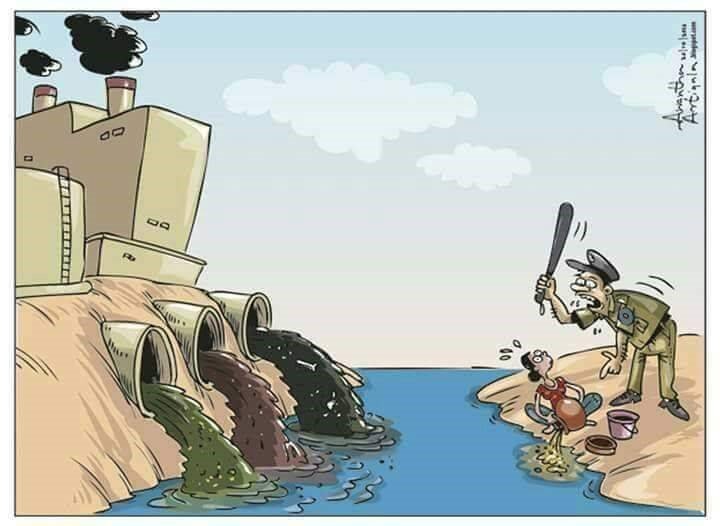
Industries and commercial activities use 20% of all water abstracted from the earth for their operations. 80% of the ensuing wastewater is discharged into the environment untreated further contaminating the little fresh water reserves available.
The focus over the years has been on domestic water consumption (which accounts for 10% of global water abstraction) and wastewater/sewage treatment. Significant progress has been made in that regard.
In quantitative terms, industries discharge more volumes of wastewater with higher concentrations of contaminants into the environment compared to domestic sources.
It is time to turn the lenses on Industrial water use and wastewater treatment.
What a lot of businesses and industries don’t appreciate is that water has a place on the risk agenda for them. Water is direct operational challenge for many industries or an issue in their value chain. But the risks aren’t always well appreciated leaving industries and the environment exposed. When things go wrong, not only is production at stake, reputation, licence to operate, and damage to the environment are too … so the decisions around water have far reaching consequences.
It therefore behoves on industry to ensure they have in place the right strategies to secure and preserve their water sources to guarantee the continued existence of their business and to safeguard of the environment.
Several water bodies in and around industrial hubs in Ghana are ecologically dead. This is often blamed on dumping of solid waste and sewage into these water bodies. But I dare say one of the biggest culprits are the industries. Cases in point: The Odaw River in Accra and the Chemu Lagoon in Tema.
For many industries, discharged wastewater represents the end of a process. But this is never the case. Wastewater discharged into the environment is the continuation of a cycle where the wastewater will be treated by nature to sustain life and return clean water back to the industries.
But nature has lost its capacity to handle all the industrial pollution load.
This year, for World Water Day, we seek to highlight the role of nature in overcoming water challenges. What we often don’t consider is that nature’s capacity is inversely related to the level of contamination of present. The more contamination present, the less nature’s capacity to deal with it. To effectively take advantage of nature in addressing our water challenges, we also need to be mindful of the wastewater we return to nature.
Responsible industries do not need to wait for regulators to do the right thing.
Industrial wastewater treatment and water management is central to the viability and acceptance of a modern industrial operation and non-compliant industries have the opportunity to stem the tide and transform their operations.
At Cleanearth Scientific, we provide expert solutions in water quality monitoring and treatment to industrial companies. A lot can be done to minimize pollution. Let’s make a difference in safeguarding our environment together. Happy Water Day!
By S-lase Kuwornu | water@cleanearthsci.com