


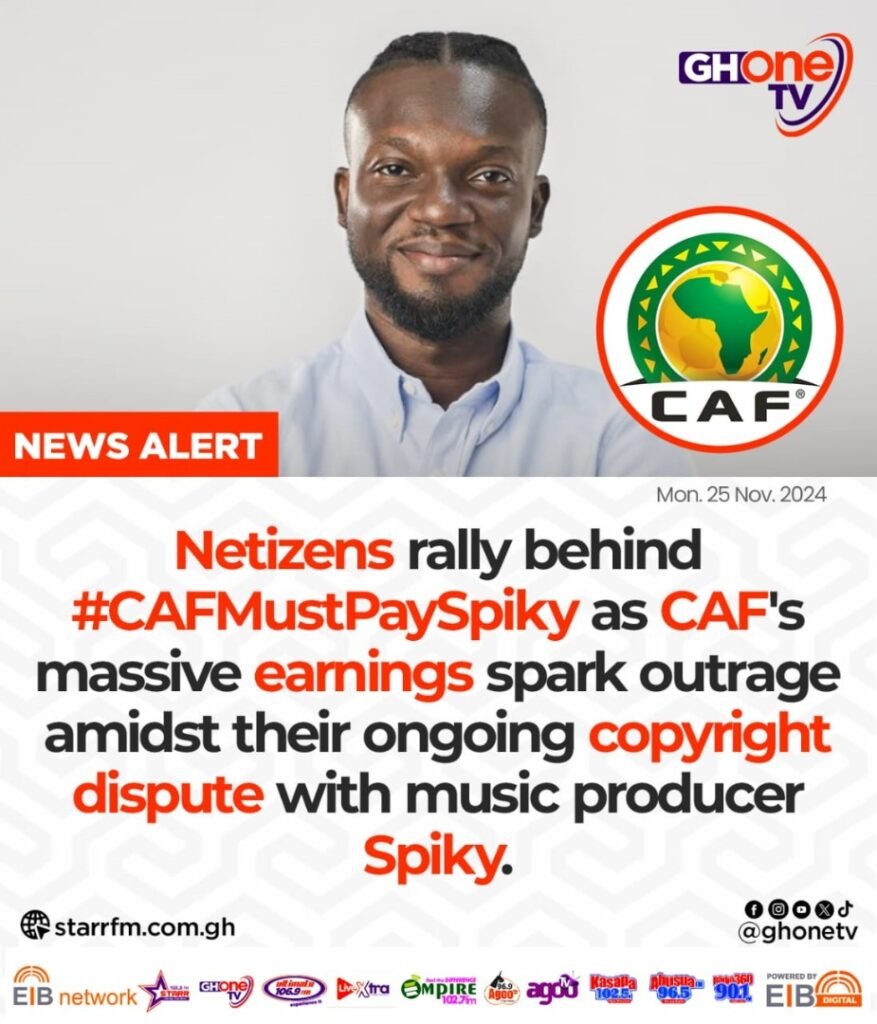
A wave of online outrage has engulfed the Confederation of African Football (CAF) following revelations about its unsettled copyright infringement case with Ghanaian music producer Kobby Spiky. The dispute, which has sparked the trending hashtag #CAFMustPaySpiky, centers around CAF’s failure to pay a court-ordered $250,000 settlement for the unauthorized use of Spiky’s beat, “Spiky-Okokmo Anokye,” during the 2018 CAF Awards promotions.
Social media users have expressed anger and disappointment, accusing CAF of exploiting African creatives while prioritizing profits. Many have highlighted the stark contrast between CAF’s financial achievements—reportedly earning $74.75 million from the 2023 African Cup of Nations sponsorship—and its refusal to honor the legal judgment.
“CAF made millions, yet they can’t pay a creative whose work they used illegally? This is disgraceful,” one user posted on X (formerly Twitter), echoing the sentiments of thousands calling for accountability.
Background of the Case
The copyright dispute began when Spiky discovered his music was used across CAF’s promotional platforms without consent. Despite notifying CAF about the infringement before the 2018 awards ceremony, the promotional material remained online. Spiky filed a lawsuit, and the Ghanaian courts ruled in his favor, ordering CAF to compensate him and cover legal costs.
CAF admitted to using the music but argued that it was accessible online without restrictions. The court dismissed this defense, citing Spiky’s clear stipulations regarding commercial use, as outlined on his SoundCloud account and in subsequent communications.
Broader Implications
This controversy has reignited discussions about the treatment of African creatives and the enforcement of intellectual property rights. Advocates argue that Spiky’s case is emblematic of a larger issue, where artists struggle to protect their work against exploitation by powerful organizations.
While CAF remains silent on the matter, public pressure is mounting. The court’s decision underscores the importance of respecting intellectual property, setting a precedent for safeguarding creative works in Africa.
What’s Next for CAF?
As #CAFMustPaySpiky continues to trend, the organization faces increasing scrutiny. Whether CAF will comply with the court’s ruling remains to be seen, but for now, the unpaid settlement has cast a shadow over its financial milestones and reputation.
The uproar serves as a reminder of the importance of respecting the rights of creatives and honoring legal obligations—especially in an era where social media amplifies public accountability.


