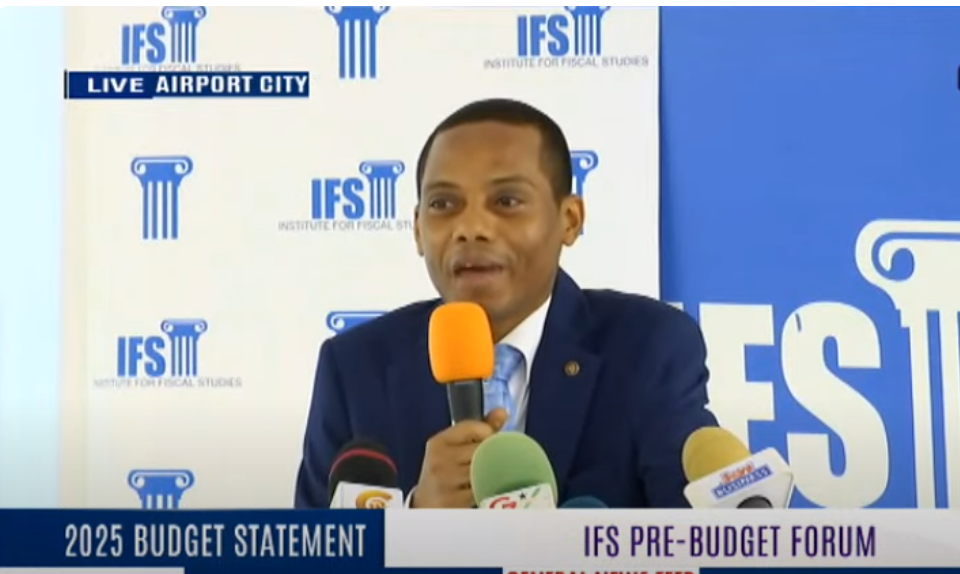
The Institute for Fiscal Studies (IFS) has urged the country’s new government to adopt a cautious approach in its revenue projections as it prepares the 2025 Budget and Economic Policy Statement.
Finance Minister Dr. Cassiel Ato Baah Forson is expected to on March 11, present to parliament on behalf of President John Mahama the government’s first budget.
Already, Dr. Ato Forson has already urged the Ghana Revenue Authority (GRA) to surpass its revenue targets for 2025. In 2024, the GRA collected GH¢153.5 billion, exceeding the projected GH¢145.9 billion by 5.3%. But, it’s Acting Commissioner-General, Anthony Kwasi Sarpong, has pledged to meet and exceed the ambitious revenue target of over GH¢200 billion set for 2025.
However, addressing the media on What the Priorities of the New Government should be as It Confronts the Ongoing Economic Difficulties, the IFS emphasized the need for realistic budgetary targets, warning that overambitious revenue projections have historically led to fiscal shortfalls.
“An essential feature of a credible budget is realistic revenue targets, since revenue is the cornerstone of any budget. However, over the past decade, Ghana’s revenue targets have consistently fallen short, with an average deviation of -7.4% from budgeted expectations”, Dr. Saed Boakye, acting Executive Director told journalists.
“IFS has therefore urged government and the ministry of Finance to improve the realism of revenue targets to underpin budget credibility through measures such as “Review the Ministry’s macro-fiscal forecasting framework and processes with a view to addressing possible optimism bias in the projection of revenue, Improve estimation of the revenue impact of new tax policies by strengthening the underlying data and analyses, Involve independent experts to evaluate and advise the Ministry about its forecasts
As the government is set to hold a “national economic dialogue” on March 3, 2025, to review and potentially overhaul the existing $3 billion IMF program. the IFS has additionally identified other key areas for urgent government intervention:
– Ensuring Macroeconomic Stability by pursuing strong fiscal consolidation and curb excessive monetary growth to control inflation and stabilize the Ghanaian cedi.
– Boosting Economic Growth Through Strategic Investments like agriculture through a structured youth mobilization program, expansion of irrigation systems, and establishment of fertilizer manufacturing plants to boost agricultural productivity.
– Reforming the External Sector by changing the ownership structure of Ghana’s major export sectors—gold and oil—by adopting joint venture agreements or production-sharing models. According to IFS, the current concession arrangements allow foreign firms to retain most export revenues, limiting their impact on the cedi’s stability.
– Avoiding Overreliance on International Borrowing and instead focusing on domestic revenue mobilization and leverage the country’s natural resources for financial stability.
- And Fighting Corruption Effectively through stringent anti-corruption measures, including swift prosecution of offenders, institutional reforms, and a merit-based public sector management system.
In all, the IFS concludes that while the new government faces a daunting economic landscape, decisive and well-implemented policies in these areas, coupled with prudent revenue management and strategic economic reforms, could help restore stability and lay the foundation for sustained growth.