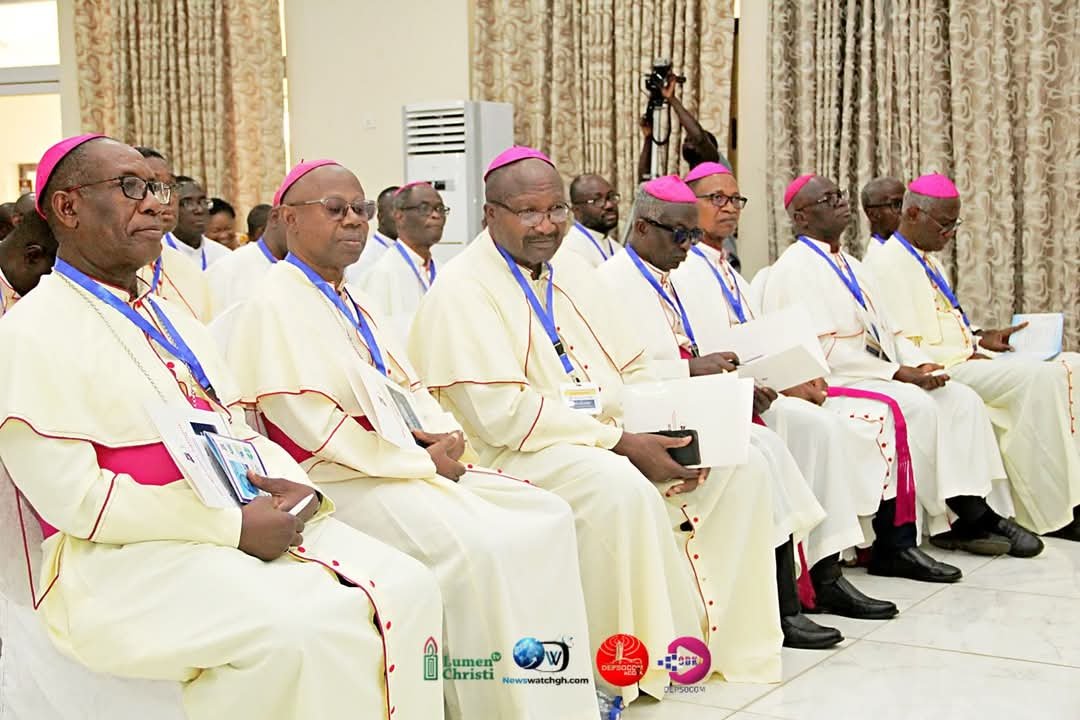
The Ghana Catholic Bishops Conference has urged the government to review and enhance the Free Senior High School (SHS) policy to address critical challenges affecting education in Ghana.
The call was made in a communiqué issued at the end of the Second National Catholic Education Forum held in Koforidua.
The Catholic Bishops outlined several recommendations aimed at improving the quality of education and addressing policy gaps in the sector.
They urged the government to fulfill its promise of including private second-cycle schools under the Free SHS policy and provide funding to enable them to admit some Basic Education Certificate Examination (BECE) graduates.
This they believe would ease pressure on public Senior High Schools (SHS), Senior High Technical Schools (SHTS), and Technical and Vocational Education and Training (TVET) institutions.
The Bishops also urged the government to review the Double Track System and phase it out within two years, citing the need to address the challenges affecting students and teachers under the system.
To address falling academic standards, the Catholic Bishops Conference proposed that the government should set a cut-off point for admission into second-cycle institutions.
Additionally, the government should establish short-term skills training centers for students who do not qualify for SHS, SHTS, or TVET institutions, as well as remedial programs for those who wish to continue their education.
The communiqué called for the reinstatement of the policy of repeating non-performing students at the pre-tertiary level to promote academic excellence.
The Catholic Bishops Conference also recommended to clearly define the responsibilities of parents and the government in financing education. They called for the reinstatement of Parent-Teacher Associations (PTAs) to allow parents and teachers to actively participate in school management
Touching rising cases of examination malpractice, the Bishops call for Strengthen measures to curb cheating in schools and enforcement of stricter punishments for students, teachers, administrators, and officials involved in exam malpractice.
They also want Religious and Moral Education made core subject in pre-tertiary education to instill discipline and ethical values among students.
The Catholic Bishops Conference also made recommendations regarding the management of Catholic schools, calling on the government to:Sign a Memorandum of Understanding (MoU) with faith-based schools to strengthen their partnership in education, in line with the Pre-Tertiary Education Act 2020 (Act 1049).
Also urged government to restore the roles of Catholic Education Managers at national, regional, and local levels in the supervision of Catholic schools.
They also recommended to government to grant the Catholic Church a permanent seat on the Ministerial Advisory Board of Education and the Ghana Education Council, as the Catholic Church is the second-largest provider of education in Ghana.
They also proposed a guarantee that at least 20% of students admitted into Catholic Schools are Catholics.
The Catholic Bishops Conference concluded the forum with plans to release two key documents soon:Policy recommendations on education and a 5-year strategic plan for Catholic education in Ghana.
They also emphasized the urgent need for the government to implement these recommendations before the 2025/2026 academic year.