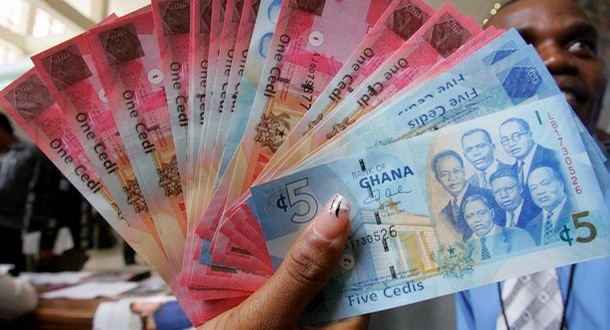
Banking consultant and economist, Dr. Richmond Atuahene, has attributed the recent appreciation of the Ghanaian cedi against the U.S. dollar to a combination of external and internal factors.
This includes robust gold exports, improved remittance inflows, and fiscal prudence.
His comments come amid the strengthening of the cedi, which is currently trading at around GH₵12.40 to the U.S. dollar, a notable improvement in recent weeks.
Speaking on Morning Starr with Naa Dedei Tettey, Dr. Atuahene explained that global economic dynamics, especially the shift in investment from the U.S. dollar to gold following political changes in the United States, have worked in Ghana’s favor.
He added that favorable developments in the global oil and cocoa markets have also contributed to the cedi’s stability.
Dr. Atuahene also emphasized the impact of the government’s gold-for-oil programme and increased domestic gold purchases, which have bolstered the country’s foreign reserves.
On the domestic front, he credited the Bank of Ghana for implementing structural reforms that have significantly improved remittance inflows.
He also pointed out that Ghana has not yet made payments on its external bond debts, particularly the $2.1 billion eurobond due in July.
This, he said, has allowed the country to build up its reserves in the short term.
He said, “The external factors are basically immediately Trump assumes if power. The geopolitics of the dollar and gold are in a battle. A lot of people, instead of dollar, moved to gold. So gold prices have been going up and that has been a positive for Ghana because last year we exported 11.6 billion worth of gold. And even if we were getting to achieving 20% or 15%, from 7.6 in 2023 to 11.6, it means there was a marked improvement. The prices have gone up, we have revamped the production. So these are the issues. And then you go to the global oil market. Last year by this time, the oil market, Brent crude was 18.25 per barrel. Today it’s just about 60, so you can see the savings over there.”
Dr. Atuahene added, “And then you go to areas like Cocoa. A lot of people have not been following the Cocoa. Today, Cocoa has been selling at $8,600 forward market, against $4,000 last year. So all these factors have helped us to build our reserves, more reserves. And don’t forget, when they started doing the purchasing of gold from paying Cedis to the gold production people, it has also revamped the reserves, the gold reserves, which are linked to the dollar. So all these things have gone a long way that have supporting the currency.”
He continued, “Then we go to the domestic. The domestic, the first that will into mind is that remittances have been speaking of it years and years and years and even being insulted here and there, I can conveniently tell you that today, Bank of Ghana has put in strata-farm measures for which we are now seeing more than 50% we used to do on our remittances. And the remittances, as I’ve told you before, the remittances are bigger than Cocoa and bigger than gold. Now, number two for the local is that we are yet to pay the external bond debt. One is in July, 2.1 billion. We are yet to pay, and because of that, the reserves keep on building up, reserves keep on going up. At least we take our hearts off. I’m not a politician. I think we’ve seen some issues in the last few times. And because of that, people are getting a bit insane.”