


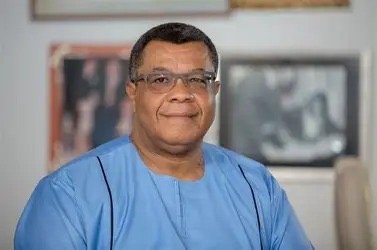
Presidential Advisor on the 24-Hour Economy and Accelerated Export Development, Dr. Goosie Tanoh, has revealed that Ghana will require $4 billion over the next five years to fully implement the 24-hour economy initiative.
Speaking at a media briefing ahead of the official launch of the policy, Dr. Tanoh explained that the programme aims to holistically transform Ghana’s economy by reducing imports by at least 50%, promoting value addition, and enhancing export development.
The initiative, he stressed, is expected to be primarily driven by private sector investment, with the government committing an initial $300 million as a seed fund to kickstart the process.
“The total investment required is about $4 billion times ten, so GHS 400 billion. We hope it stays that way, and most of it is going to come from the private sector. One of the problems investors have had in working in Ghana and I am sure all of you have heard that because not the unpredictable and incoherent incentive regimes and the high costs of operations in Ghana including the under table payments and requests of corruption, some companies left to Ivory Coast where it is easier to do business,” Dr. Tanoh stated.
He further explained that the $4 billion investment requirement translates to approximately GHS 400 billion, the bulk of which is expected to come from private investors.
According to him, one of the key challenges investors face in Ghana is the unpredictable and inconsistent incentive regime, coupled with high operational costs, including corruption-related expenses, which have driven some businesses to relocate to neighbouring countries like Côte d’Ivoire.
“Our aim is to reverse that, and so the key components are a coherent, practical, transparent, incentive regime that is based on performance and with very little discretion, so we will remove the corruption component,” Dr. Tanoh assured.
The 24-hour economy policy, he indicated, is anchored on three key pillars: agricultural transformation, efficient supply chain development, and aggressive value addition.
Other officials from the 24-hour economy secretariat took turns to break down the policy details, outlining how the programme will create an enabling environment for both domestic and foreign investors.
Among the proposed interventions are the development of ecological industrial zones, ensuring land availability without title disputes, and the creation of a stable policy environment to boost investor confidence.
The 24-hour economy policy is expected to stimulate job creation, boost productivity, and position Ghana as a competitive player in global markets.
Source: Ghana/Starrfm.com.gh/Hamdia Mohammed


