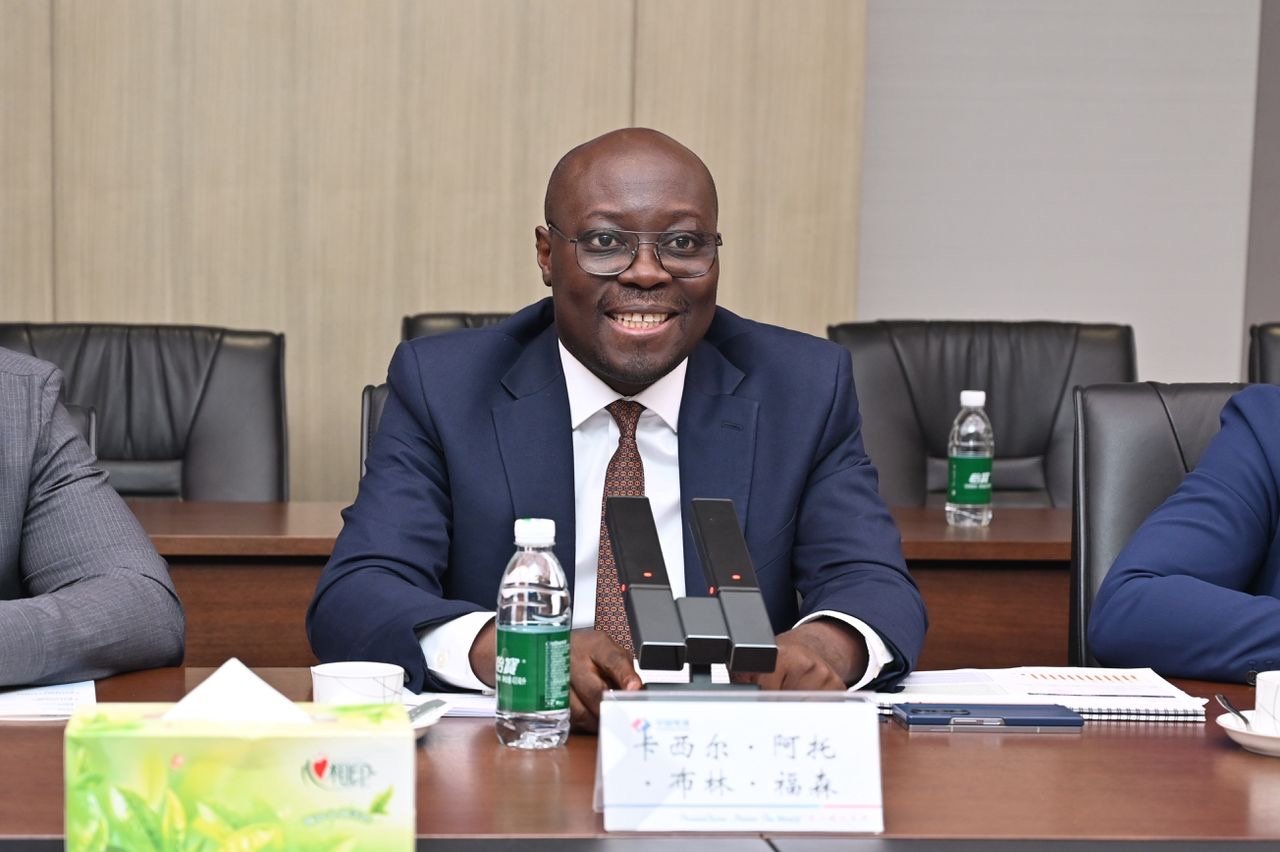
Ghana’s efforts to navigate one of the most turbulent periods in its economic history took a critical leap forward as Finance Minister Dr. Cassiel Ato Forson wrapped up high-level engagements with Chinese officials and creditors to accelerate the country’s debt restructuring agenda.
In a post on his verified social media accounts, Dr. Forson described the meetings—held with China’s Ministry of Finance, the China Exim Bank, and major financial and contractor creditors—as “constructive and forward-looking.” The talks, he said, signal “significant progress” in the government’s campaign to restructure external debts, stabilize the economy, and secure lasting fiscal sustainability.

China: A Key Piece in Ghana’s Debt Puzzle
China is Ghana’s largest bilateral creditor, with an estimated $1.9 billion in loans, constituting about 30% of the country’s official bilateral debt. Its cooperation is pivotal to the successful execution of Ghana’s Official Creditor Committee (OCC) framework, co-chaired by France and China, under the G20 Common Framework for Debt Treatments.
Over the past year, the Ghanaian government has been working to reprofile and restructure nearly $20 billion in external debt, including commercial, bilateral, and multilateral obligations. Progress with China, therefore, sends a positive signal to other stakeholders—especially private creditors—who are awaiting clarity on burden-sharing terms.
Dr. Forson emphasized that the engagement with China “reinforces our commitment to rebuild the economy in a way that protects the most vulnerable and restores confidence across all sectors.” He added that the momentum from the China mission strengthens Ghana’s hand as it works to bring finality to the debt restructuring process his government inherited.

Ghana’s Debt Crisis and the IMF Deal
Ghana suspended payments on most of its external debt in late 2022 after defaulting amid rising interest rates, a depreciating cedi, inflation peaking above 50%, and a liquidity crunch worsened by global shocks and domestic mismanagement. Ghana subsequently secured a $3 billion Extended Credit Facility (ECF) from the International Monetary Fund,disbursed in tranches based on program reviews.
In April 2025, the IMF reached staff-level agreement on the fourth review of the 36-month program, pending Executive Board approval. Once approved, Ghana will have access to about US$370 million in financing.
The IMF lauded Ghana’s strong fiscal adjustments and commitment to good-faith debt negotiations.
Ratings Agencies Welcome Progress
Fitch Ratings recently upgraded Ghana’s Long-Term Foreign-Currency Issuer Default Rating (IDR) from ‘Restricted Default’ to ‘B-’ with a Stable Outlook, citing stronger fiscal discipline and restructuring progress.
S&P Global Ratings also revised Ghana’s rating from ‘SD’ (Selective Default) to ‘CCC+’, while cautioning that any deterioration in fiscal performance or global financial tightening could pose future risks.
By the Numbers: Ghana’s Debt Landscape
- Public debt-to-GDP ratio: Estimated at 55% as of Q1 2025, down from 72.3% in 2023, thanks to debt exchange and fiscal adjustments.
- Domestic debt restructured: About GH₵ 203 billion restructured under the Domestic Debt Exchange Programme (DDEP).
- External debt under restructuring: Roughly $13 billion, including bilateral and commercial loans.
- Bilateral creditors engaged: China, France, UK, Germany, India, among others.
Source: Ministry of Finance | IMF | Bank of Ghana | Fitch Ratings | S&P Global Ratings