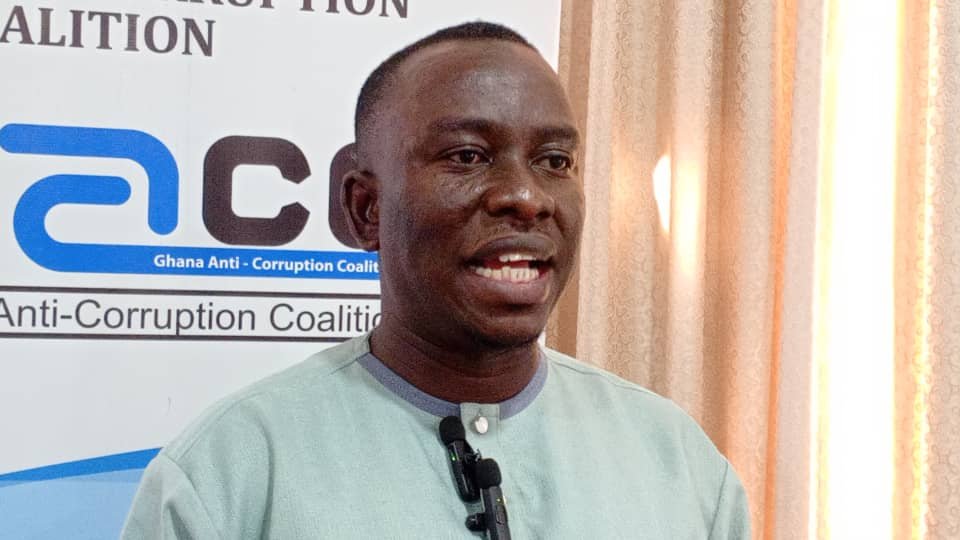
The Ghana Anti-Corruption Coalition (GACC) is intensifying Ghana’s asset recovery agenda through strategic training for journalists and civil society organizations aimed at strengthening institutional and legal frameworks for identifying, tracing, seizing, forfeiting, confiscating, and managing proceeds of crime.
A recent workshop held in Kumasi brought together Civil Society and Community-Based Organizations to examine the roles of the Economic and Organized Crime Office (EOCO) and the Financial Intelligence Centre (FIC) in enhancing the country’s efforts against corruption and financial crimes.
Seth Mana Amoako of the Financial Intelligence Centre detailed the functions of the FIC under the Anti-Money Laundering Act, stressing its intelligence-providing role to investigative and prosecutorial bodies.
He underscored the urgency of asset recovery in the fight against growing transnational crimes such as embezzlement, tax evasion, cybercrime, and environmental offences.
He cautioned that the use of legitimate businesses—like real estate, accounting and law firms, and precious metal traders—as conduits for money laundering presents a significant challenge, noting their potential links to terrorism and the proliferation of destructive weapons.
According to Mr. Amoako, Ghana’s commitment to international conventions places it under scrutiny, especially as it undergoes a current risk assessment.
He expressed confidence in Ghana’s legislative tools, such as the Anti-Money Laundering Act, EOCO Act, and the OSP Act, in boosting the country’s chances of avoiding international blacklisting on asset recovery outcomes.
He called on CSOs and the media to broaden their anti-corruption advocacy to include the private sector, where compliance with anti-money laundering frameworks remains low.
EOCO’s Emmanuel Kwaku Dzakpata, representing its Legal and Prosecutions Department, disclosed that in 2023 and 2024, the agency recovered assets worth GH¢279 million—GH¢79 million in 2023 and GH¢200 million in 2024.
In addition, EOCO recovered or restrained over 60 stolen vehicles during the 2022–2024 period under nine court orders.
Mr. Dzakpata stressed that asset recovery is pivotal not only to fighting financial crimes but also to returning resources for national development and victims’ restitution.
He called for stronger advocacy to push for EOCO and other bodies to be given sufficient operational independence and financial support to effectively handle the often-costly processes of tracing, freezing, preserving, and returning stolen assets.
Participants at the workshop deliberated on challenges confronting EOCO, FIC, and the Narcotics Control Authority, particularly regarding autonomy and resourcing.
Philip Duah of ABAK Foundation and a GACC focal person questioned the fragmentation between EOCO and the Office of the Special Prosecutor (OSP), proposing a merger to increase effectiveness.
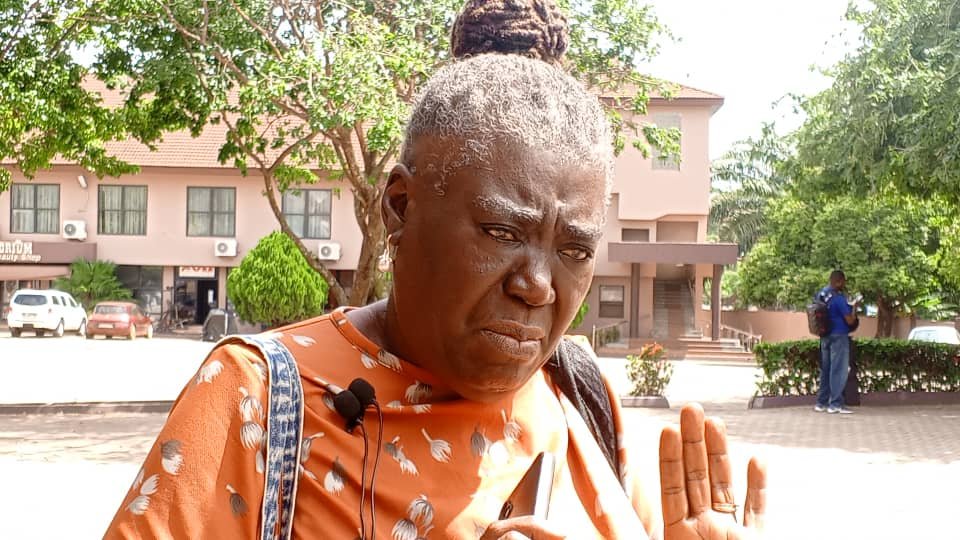
Christiana Osei of Light for Children Ghana argued for EOCO to be granted prosecutorial powers, warning that the current practice—where EOCO must rely on the Attorney-General to prosecute—makes room for political interference.
Aba Oppong of Rights and Responsibilities Initiatives Ghana (RRIG) urged civil society and the media to push for security of tenure for EOCO’s leadership, comparable to that of the OSP.
She emphasized the media and CSOs’ responsibility to educate the public and hold key institutions accountable for asset recovery.
“The roles of both the OSP and EOCO are very important in retrieving assets for the larger economic security for the country. The understanding is that we as CSOs and Media personnel shall be advocates of the work they do and caution people about ways through which they may fall victim to such acts of crime,” she pointed out.
A recurring call throughout the engagement was for improved funding, equipment, and motivation for security and investigative officers to insulate them from corruption and operational constraints.
The workshop formed part of GACC’s project titled “Building Political Will and Public Support for Asset Recovery in Ghana,” and was themed “Ghana’s legal and institutional frameworks for recovery of proceeds of crime; the role of citizens and the media in asset recovery.”
The project is supported by the Inter-Governmental Action Group Against Money Laundering in West Africa.
Source: Starrfm.com.gh