


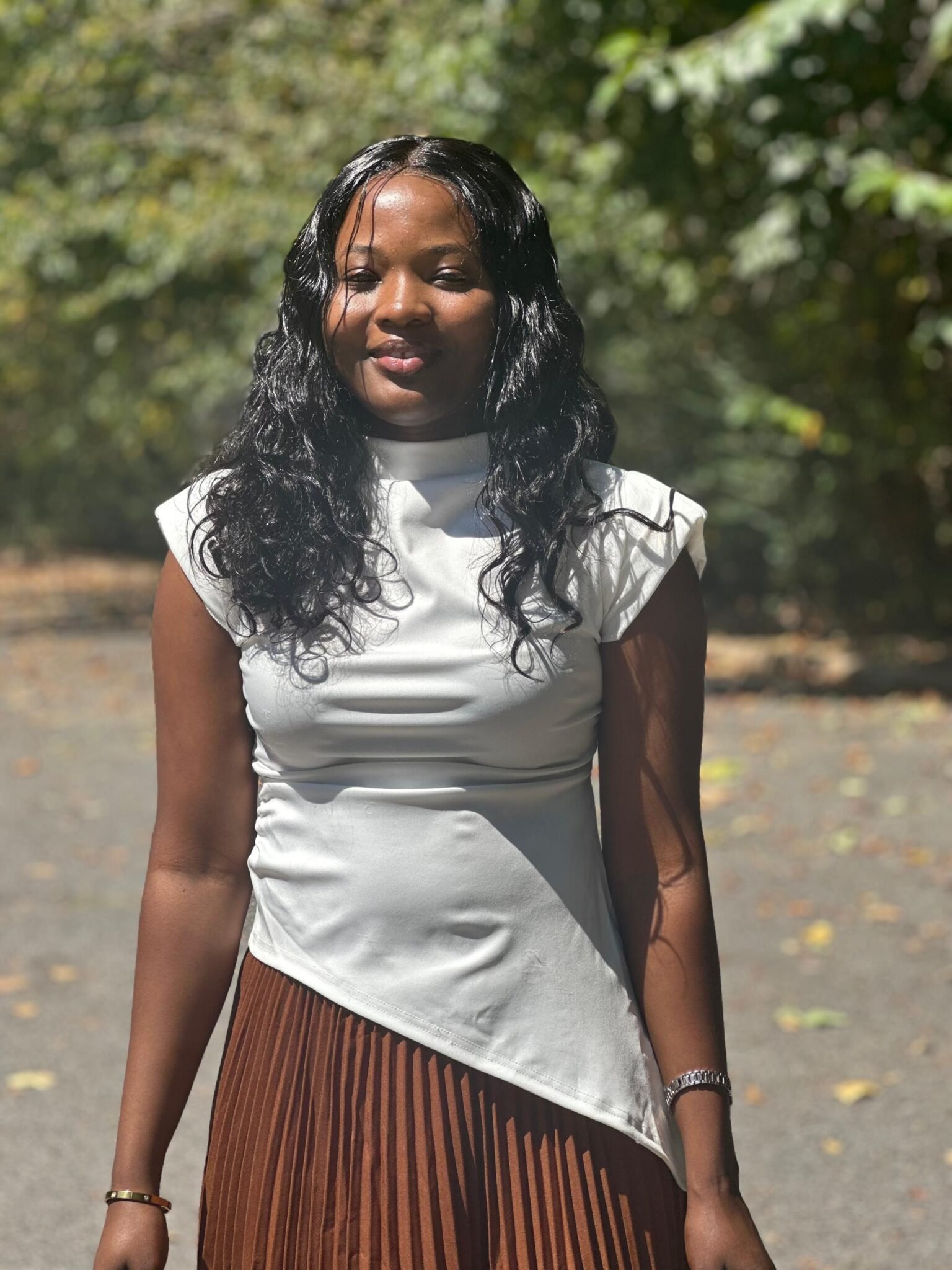
When students at the Kwame Nkrumah University of Science and Technology (KNUST) raised concerns about inclusivity, curriculum relevance, and academic experience, few expected their voices would echo beyond campus corridors. But thanks to the pioneering work of Menaama Amoawah Nkrumah, those concerns are now influencing wider national conversations on education reform and equity in Ghana.
Nkrumah, who began her professional journey as a Research Assistant at KNUST’s Quality Assurance and Planning Office (QAPO) from October 2021 to August 2022, transformed what many saw as routine administrative tasks student surveys, curriculum reviews, employee evaluations into powerful tools of advocacy and reform. Her co-authored report, International Students’ Diversity and Inclusion in Education Delivery in Ghana, not only catalogued experiences but also challenged university leaders to reimagine higher education through the lens of diversity, fairness, and opportunity.
By 2025, her influence extends far beyond campus. As a resilient analytics professional skilled in predictive modeling, statistical analysis, and data visualization, she has become an emerging public figure who connects the dots between student experience and national competitiveness. On Citi TV and in online forums, her contributions are gaining traction among Ghana’s youth, who see in her story a reflection of their own struggles for voice and representation.
“What Menaama is doing is groundbreaking,” remarked a student leader from KNUST. “She has shown that data isn’t just numbers it’s our stories, our frustrations, and our hopes for better systems.”
Her work in R, Python, SQL, and Excel is less about coding for its own sake and more about translating complexity into clarity. In a recent public presentation, she demonstrated how predictive modeling could anticipate dropout risks among disadvantaged students, offering policymakers actionable strategies for intervention. Such insight is especially relevant in 2025, as Ghana debates how to keep education both globally competitive and socially inclusive.
Her online engagement also sets her apart. On platforms like LinkedIn and X (formerly Twitter), she frequently interacts with young professionals, educators, and students, sparking debates about how data can drive fairness, opportunity, and innovation in education. These posts often shared widely blend technical expertise with relatable messaging, amplifying her influence beyond academia.
For Citi Online, her story is also about generational change. Nkrumah represents a cohort of young Ghanaians refusing to accept the status quo in education. By turning institutional research into actionable reforms and public conversations, she is redefining what it means to be both a researcher and a change agent.
Her journey underscores a broader truth: Ghana’s future competitiveness will not only be decided in boardrooms or policy summits but also in how student voices are heard, analyzed, and transformed into action. In that respect, Menaama Amoawah Nkrumah has become one of the most promising bridge-builders of her generation proof that evidence-based research and youthful resilience can change the direction of a nation’s education system.


