


The African Progressive Research and Innovations (APRIL STEM) has issued a bold statement challenging the global STEAM education model, declaring that the inclusion of “Arts” as a separate discipline within science education is conceptually flawed and counter productive.
Backed by its peer-reviewed paper published in Global Scientific Journals (GSJ Vol. 13, Issue 10), the organization in a press briefing asserts that art is already embedded in scientific practice, and that true innovation demands a coherent process, not a patchwork of disciplines.
“Arts is not a fifth wheel. It’s already in the engine,” said Teacher Daniel Aboagye, Co-Founder and CEO of APRIL.
“From pigment chemistry to geometric design, artistic expression is scientific. STEAM tries to elevate arts by separating it, but that’s a contradiction.”
The paper, titled Revolutionizing STEM Education in Africa: Introducing the SMET Model for Innovation and Development, outlines a structured pipeline: Science leads to Mathematics, which informs Engineering, culminating in Technology.
This model, piloted in Ghanaian schools, emphasizes curiosity, pattern recognition, reverse engineering, and real-world problem-solving.
“STEAM and even STEM both lack coherent outcomes,” added David Adofo, Chief Research Officer at APRIL.
“It’s integration without direction. SMET is a process, one that builds inventors and innovators instead of the current practice of producing interdisciplinary students and memorizers.”
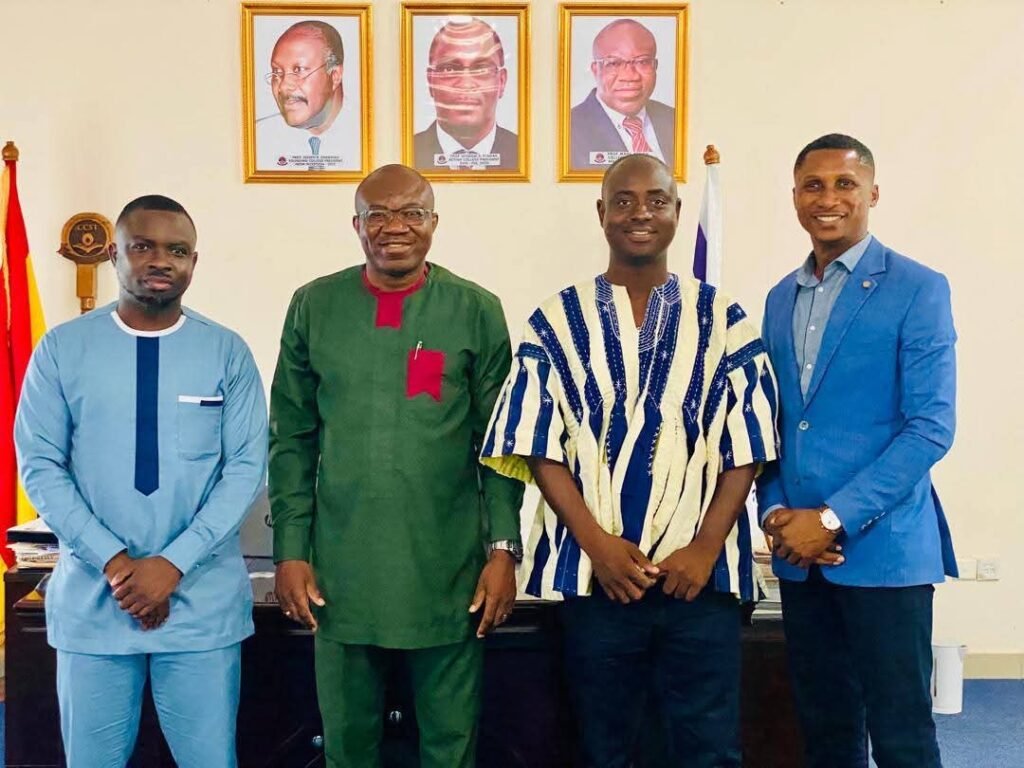
APRIL STEM’s critique of STEAM centers on its tendency to merge disciplines without a clear innovation pathway.
The team argues that this approach dilutes the scientific rigor of education and confuses learners about how knowledge is built and applied.
“Africa doesn’t need borrowed acronyms,” said Dwomoh-Doyen Benjamin, Co-founder of APRIL, and president of the African Chamber of Content Producers in an interview. “We need systems that reflect our reality and empower learners to build what works.
Africa must shift from producing consumers of technologies and pivot to creating innovators, inventors, and local content creators who will create solutions for Africa’s unique challenges based on their lived experiences. The time for slogans and acronyms is over. The time for systems has come. Africa must choose SMET”.
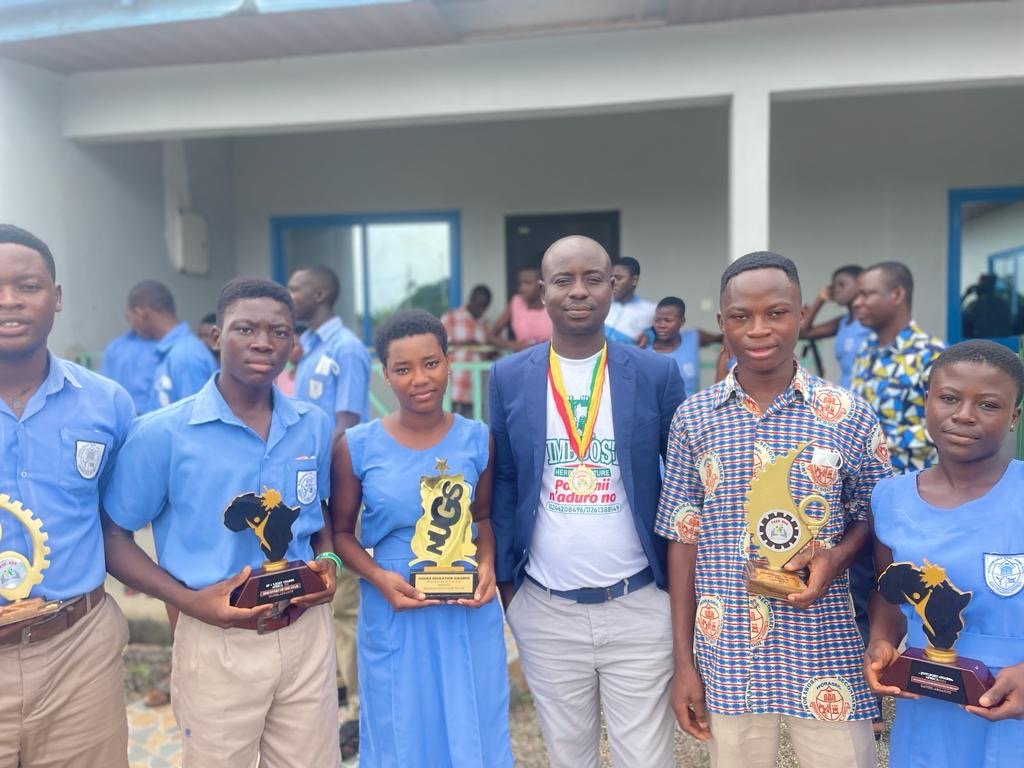
The GSJ paper provides case studies from Worawora Senior High School and other pilot sites, showing measurable gains in cognitive and skill-based outcomes. It also presents historical precedents, from the Wright brothers to local artisans, demonstrating how invention follows the SMET sequence.
APRIL STEM calls on educators, curriculum developers, and policymakers to adopt SMET as a scalable, culturally grounded framework for Education 4.0 and 5.0. The organization emphasizes that artistic thinking should be recognized as scientific, not isolated as a separate domain.
“We’re not rejecting the arts as a component of the SMET process,” said Louis Nana Asiedu, Project Coordinator for APRIL-STEM.
“We are placing it back in science, where it belongs. This explains the growth of sciart, a community merging art and science by connecting their boundaries.”
Ambassador Prince Kojo Hilton, renowned international arts ambassador and director, in an interview with this reporter added his voice to the conversation: “Would you call Leonardo da Vinci an artist or a scientist? The truth is, he was both.
Because the arts fall within the domain of science, he was able to navigate both worlds seamlessly. I believe it’s time for artists to start seeing themselves as scientists. After all, the arts can be argued to be a branch of science, just like biology, physics, or any other scientific field.
Godwin Owusu Frimpong, Director of Instructional and Curriculum Development at APRIL STEM, and Rachel Annoh (PhD), Director of Educational Research and Innovations, reaffirmed their commitment to advancing APRIL STEM’s unique educational models across Africa, with the goal of driving the transformative change the continent urgently requires.
In her statement, Rachel Annoh (PhD), Director of Educational Research and Innovations at APRIL-STEM stated that Science and Art are creative intersections.
“Imagine a biologist sketching the delicate patterns of a leaf, a physicist visualizing the swirl of a galaxy, or an engineer crafting a sculpture that defies gravity.
Art breathes life into data, making the invisible seen, the complex very beautiful, as well making the abstract tangible such that, whether it’s the symmetry of a DNA helix or the chaos of a Jackson Pollock painting, both disciplines fuel curiosity, push boundaries, and remind us that innovation thrives where logic meets imagination”.
She further revealed that Art in science harmonizes like the piano’s white and black keys.
“Imagine a painter mastering light like Newton, a musician echoing the rhythm of waves, or a sculptor crafting forms as fluid as a cell’s dance. Science isn’t a formula; it’s a gallery of mysteries waiting to be interpreted.
The spiral of a galaxy, the curve of a seashell, the pulse of a heartbeat are all nature’s art in motion. Studying this nature is science. Thus, we must artistically grasp scientific concepts, mathematically define problems, engineer solutions, and create technology that simplifies life. That is the SMET we hope to push to revolutionize Africa and the World. Einstein noted that the greatest scientists are artists in their own right. The best science is art” she concluded.
APRIL STEM (African Progressive Research and Innovations ) is a Ghana-based organization transforming education through culturally relevant, process-driven models. Its SMET framework empowers learners with practical skills, scientific thinking, and creative problem-solving rooted in African heritage.


