Ghana Secondary Technical School becomes the first SHS in the country to deploy campus-wide WiFi, an Alumni IT Department, and a 100,000-ebook digital library—all in support of a hands-on extracurricular program built around robotics, AI, drones, and more.
When Ghana Secondary Technical School (GSTS) opened its doors to students from four other schools during its 2025 Homecoming Weekend last December, the event looked, on the surface, like any other alumni-led celebration. But beneath the festivities lay something quietly historic: the public debut of STEMQUEST, an extracurricular pilot program that has rapidly become one of the most ambitious student-facing technology initiatives in Ghanaian secondary education.
STEMQUEST is not a curriculum replacement. It does not sit inside the classroom timetable or compete with the Ghana Education Service’s national syllabus. It is, by design, an extracurricular program, one that enriches what students learn inside the classroom by giving them a space to experiment, and explore emerging technologies on their own terms. What makes it remarkable is not just what students get to do, but the infrastructure, governance, and alumni-driven muscle that has been quietly assembled to make it sustainable.

What STEMQUEST Is and Isn’t
STEMQUEST was conceived as an extracurricular pathway, a structured, hands-on program that runs alongside, not instead of, the standard GES curriculum. Its goal is straightforward: to ensure that every GSTS student gains real, practical experience with technologies that are shaping the world, from robotics and artificial intelligence to drone engineering and digital media production.
“We’re not rewriting the syllabus,” says Gt. Walter Kwami ‘84/H6, Chief Technology Officer of the GSTS Alumni Association (GAA) and one of the architects of STEMQUEST. “What we’re doing is making sure that when a student finishes their coursework and picks up a robotics kit or sits down at a programming station, they have the tools, the connectivity, and the mentorship to actually learn something meaningful. STEMQUEST is about expanding what’s possible beyond the classroom.

The distinction matters. Ghana’s national curriculum is set by the GES, and STEMQUEST has been deliberately designed to sit outside that framework, not to undermine it, but to complement it. Teachers benefit too: the infrastructure STEMQUEST relies on, particularly the campus-wide WiFi and digital library, supports classroom instruction without requiring a single change to how lessons are planned or delivered.
A Weekend That Revealed Months of Work
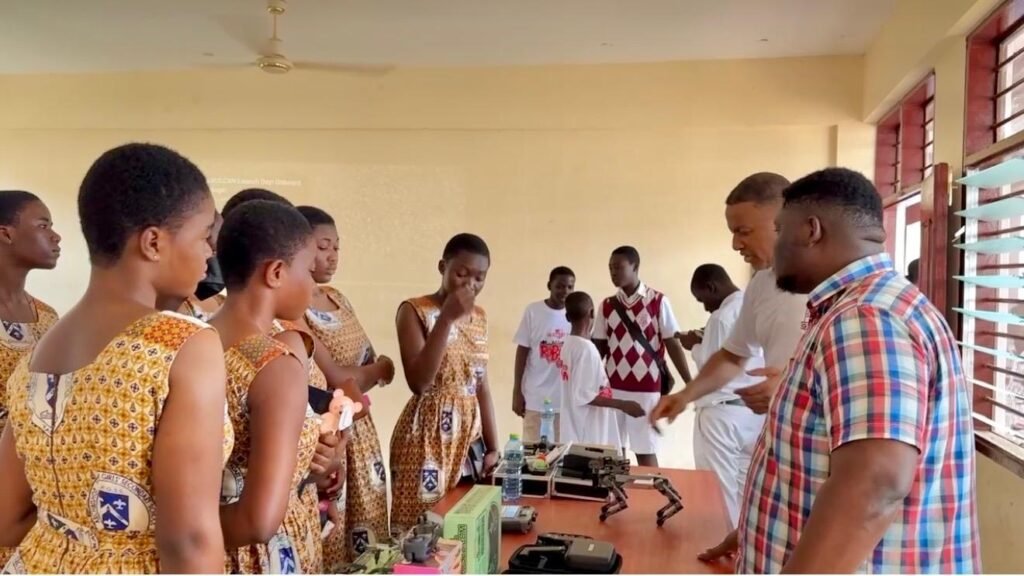
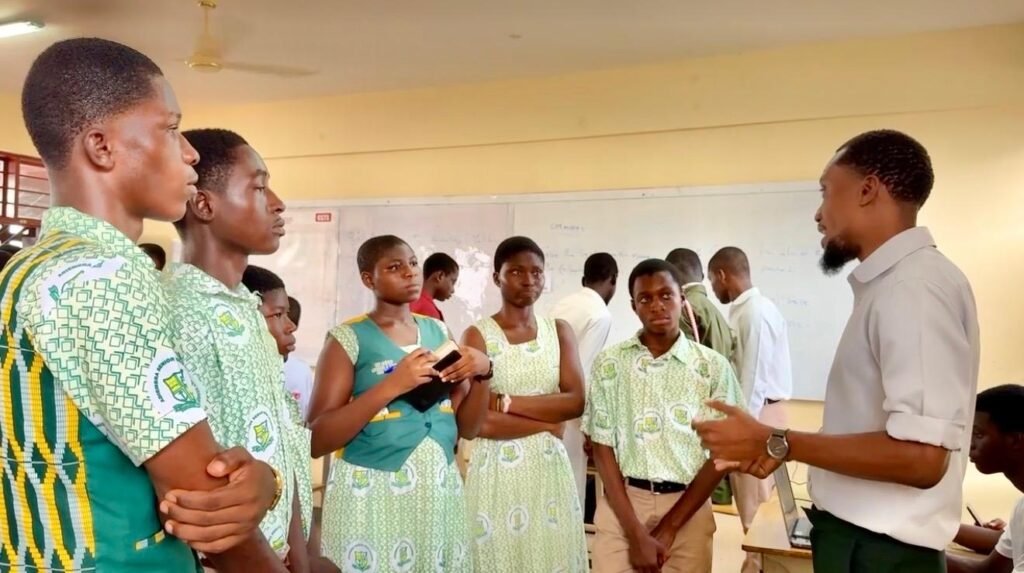
The public launch of STEMQUEST took place during the GSTS 2025 Homecoming Weekend, December 4–6, in the form of a three-day technology exhibition. Students from GSTS and four visiting schools, Adiembra SHS, Archbishop Porter Girls SHS, Ahantaman Girls SHS, and Bompeh Senior High Technical School, rotated through six hands-on stations, each designed to introduce them to a different slice of modern STEM.
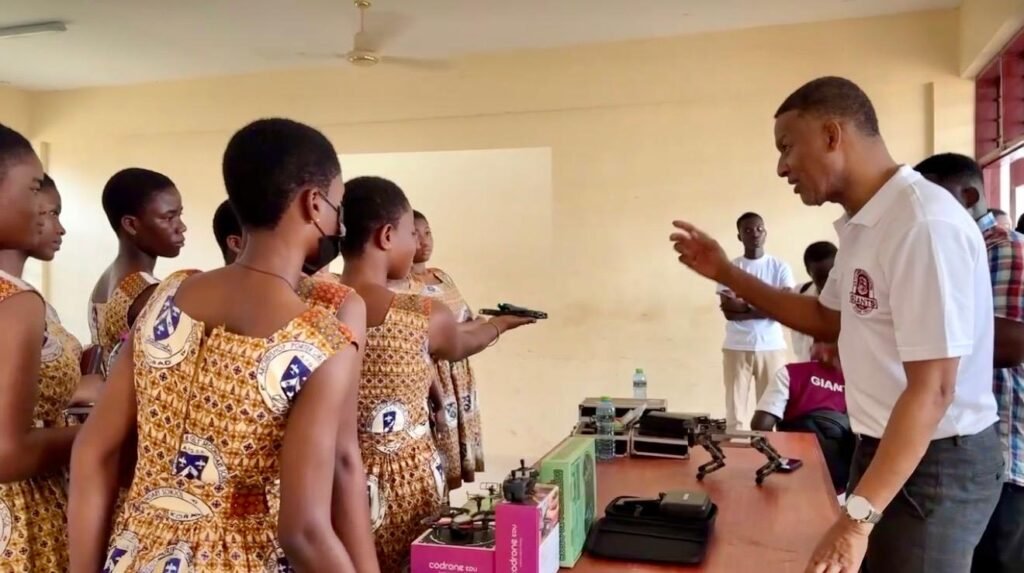
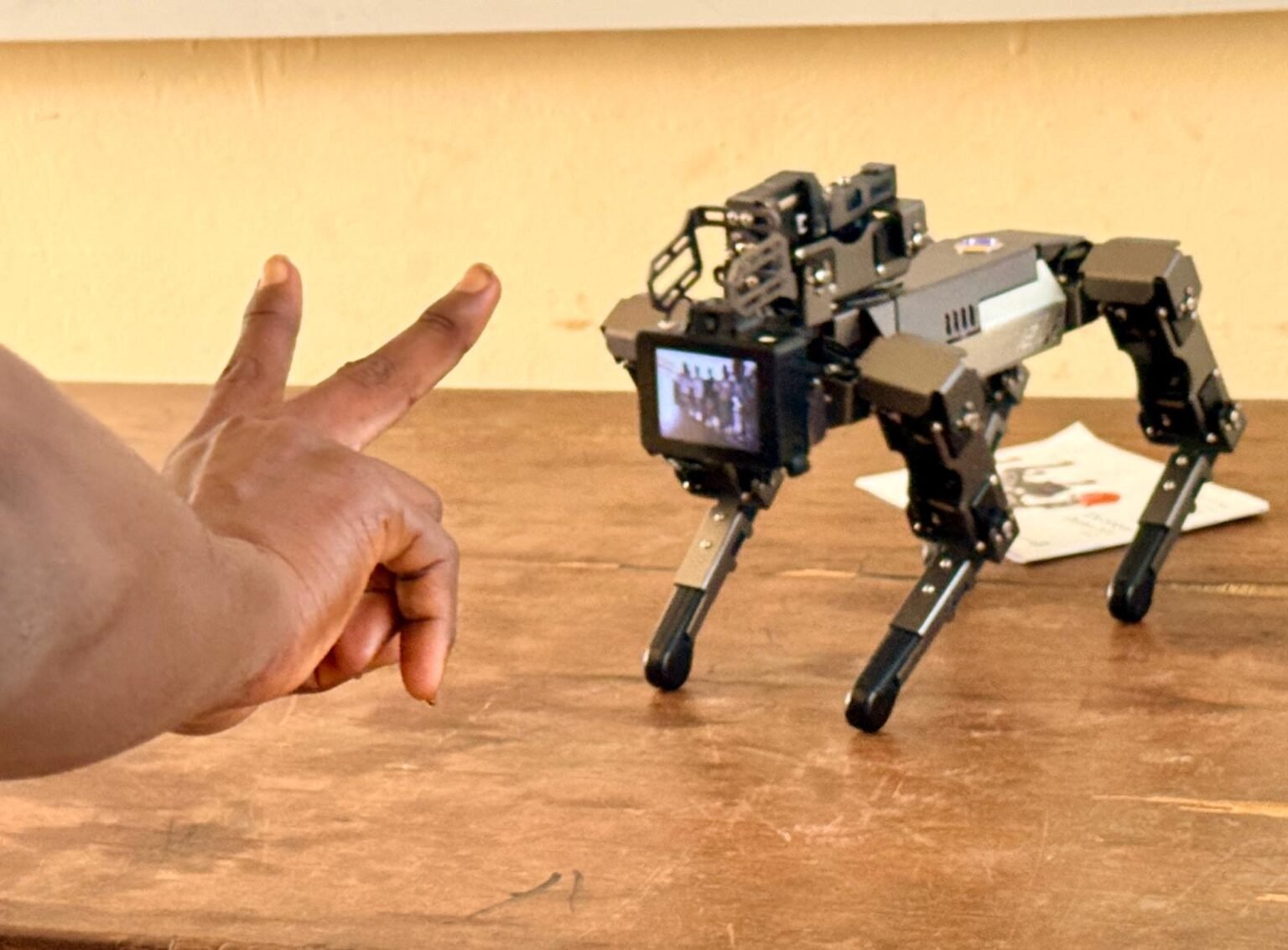
The exhibition was built around participation, not passive observation. At the robotics and AI station, students programmed CM4 robot dogs to navigate obstacle courses and watched live demonstrations of facial recognition technology. Programming stations let participants write code in both block-based visual tools and Python, giving beginners a foothold while offering depth for those ready for a challenge.
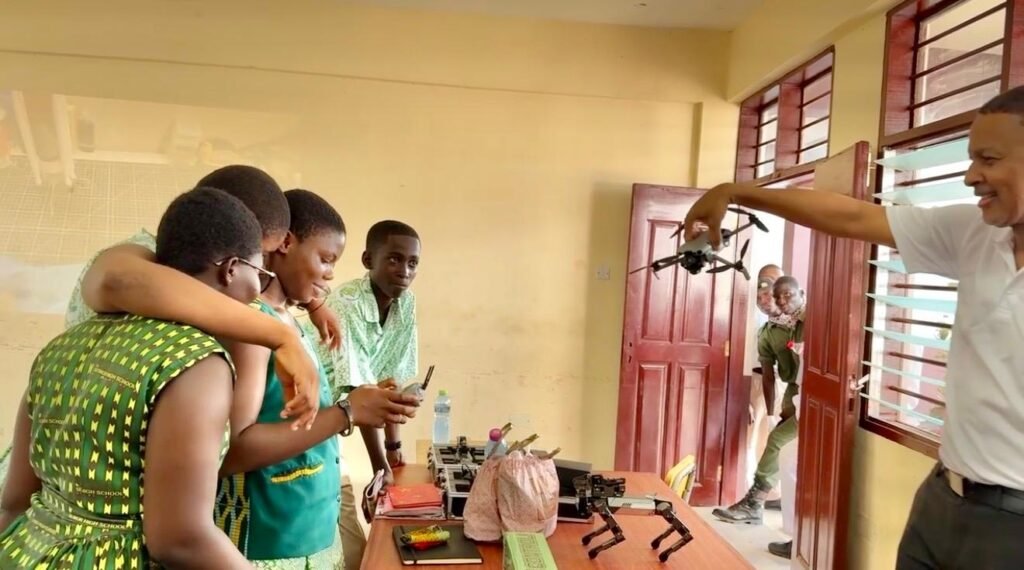
The drone station was structured as a learning pathway with three tiers. Newcomers used Drone Maker Kits to build and fly simple designs, grasping basic engineering principles in the process. Intermediate participants programmed CoDroneEDU devices equipped with sensors for navigation and data collection. At the advanced level, professional DJI Mini Series drones demonstrated real-world applications in agriculture, infrastructure monitoring, and aerial surveying, capped off by a live roof inspection of the GSTS campus itself.
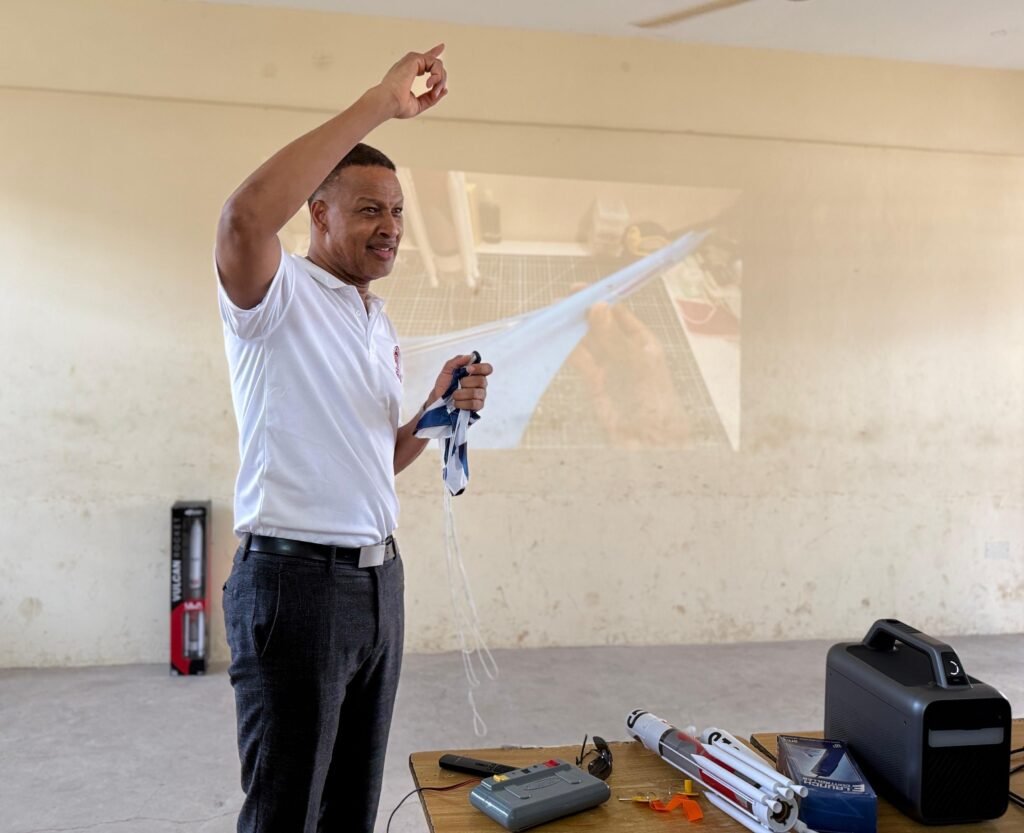
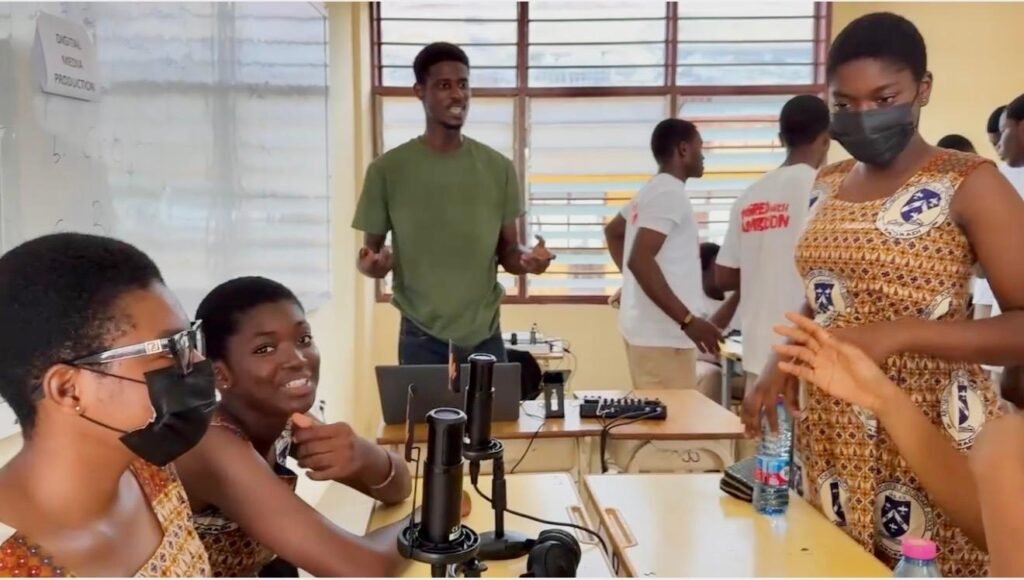
Rocketry was another highlight. Students examined model rockets up close, learning about propulsion, payload design, and orbital mechanics, topics that connected hands-on tinkering to the bigger questions of space science and Ghana’s potential future in the field. A digital media station rounded out the exhibition, offering sessions in photography, videography, podcasting, and live streaming, alongside discussions of social media literacy and responsible digital communication.
Students as Builders, Not Just Participants
Perhaps the most telling sign of STEMQUEST’s impact was what the GSTS Robotics Club brought to the exhibition. Rather than showcasing purchased equipment or pre-built demos, the club presented two student-designed prototypes built to address real challenges on campus.
The first was a door-breach alarm system, a working prototype that sends instant alerts when unauthorized access is detected, doubling as a security deterrent. The second was a fully functional digital Exeat App, designed to replace the paper-based permission system currently used by the school. The app enables real-time notifications and approvals from parents, a small but significant leap in how a secondary school can manage student movement and safety.
These weren’t theoretical exercises. They were working solutions, built by students, for problems they encounter every day.

The Infrastructure Underneath
What made the Homecoming exhibition possible was not a single event or donation. It was a stack of infrastructure investments that the GSTS Alumni Association has been quietly building, piece by piece, over the preceding months.
GSTS is now the first Senior High School in Ghana to establish a dedicated Alumni IT Department, deploy campus-wide WiFi powered by Starlink, and create a digital library containing 100,000 ebooks. Each of these milestones is a first for Ghanaian secondary education, and each one was built with sustainability in mind, not just speed.
The Alumni IT Department operates on a services-oriented model, staffed by National Service graduates and supported remotely by alumni professionals based around the world. The campus WiFi network provides reliable connectivity for both administration and learning, while a Learning Management System (LMS) is in development to support lesson planning, progress tracking, and personalized learning paths, tools that will serve teachers and students alike, without replacing what the GES curriculum already requires.
Smart Classrooms and Offline-Ready Technology
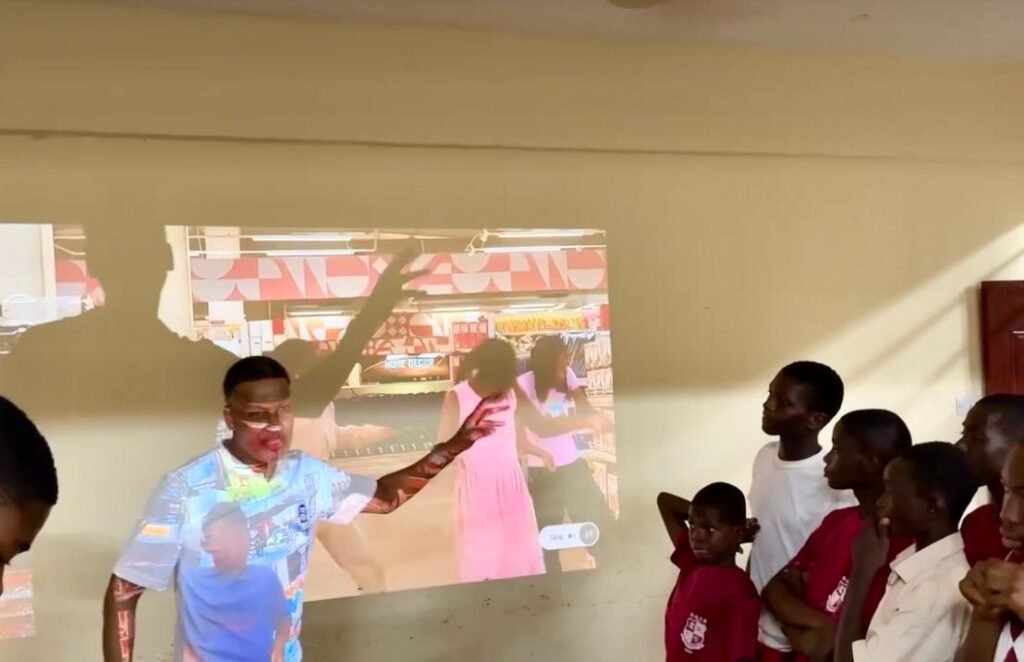
Two pieces of technology stood out during the exhibition for the way they addressed a persistent challenge in Ghanaian schools: what do you do when the power or the internet goes out?
A battery-powered AI projector demonstrated how classroom instruction can continue uninterrupted during power outages. And the RACHEL (Remote Area Community Hotspot for Education and Learning) ecosystem went a step further, providing offline access to educational content across subjects, turning a classroom into a resource hub that doesn’t depend on a live internet connection.
“Power outages are a reality we’ve designed for, not around,” Kwami explains. “Equipment like our Nebula projector and RACHEL device runs for hours on built-in batteries. Our network infrastructure auto-recovers when power returns. We’re not creating dependency on resources we can’t guarantee. We’re building for endurance, not just innovation.”
An Alumni Commitment, Not a One-Off Gift
STEMQUEST is the product of a deliberate strategy by the GSTS Alumni Association, one that frames the initiative as an ongoing investment rather than a single act of generosity.
“STEMQUEST represents one of the alumni’s most significant investments in our alma mater’s future,” says Gt. Daniel K. Teye ‘93/’95/H5, President of the GAA. “We’re not approaching this as a one-time donation but as a sustained commitment to restoring GSTS to its rightful place as Ghana’s premier technical secondary school. The infrastructure we’ve built is just the beginning, we’re prepared to scale this across every aspect of campus life.”
Gt. Tetteh Abbeyquaye ’89/H8, Immediate Past President of the GAA, echoed the sentiment, emphasizing access as a non-negotiable principle. “Every young person who walks through the gates of GSTS must have the opportunity to engage with technology,” he said. “Our traditional technical foundations remain vital, but we must also equip current and future generations with the skills to innovate responsibly using emerging technologies. This is about preparing them not just for the jobs that exist today, but for the challenges and opportunities they’ll face tomorrow.”
What Comes Next
The Homecoming exhibition was a showcase, but it was also a test run. Alumni leadership is now planning to expand STEMQUEST from a pilot into a permanent extracurricular pathway, one that weaves technology across clubs, practical training, and student life without touching the core GES curriculum.
Future plans include AI-powered tutoring tools, learning analytics, digital attendance systems, and continued expansion of the robotics and drone programs. The campus network will also enable remote learning and virtual workshops, allowing alumni and outside experts to contribute to student education from anywhere in the world.
But underpinning all of it is a philosophy that Kwami articulates with clarity: technology at GSTS is not the point. It is the means.
“The GSTS of old built engineers for a mechanical age,” he says. “The GSTS we are building now will forge innovators for the digital era, while continuing our tradition of technical excellence.”
For a school system still grappling with how to integrate technology without losing its way, GSTS and STEMQUEST offer something rare: a model that is hands-on, extracurricular, and built to last, not just for this year, but for the decades ahead.
By: Starrfm.com.gh