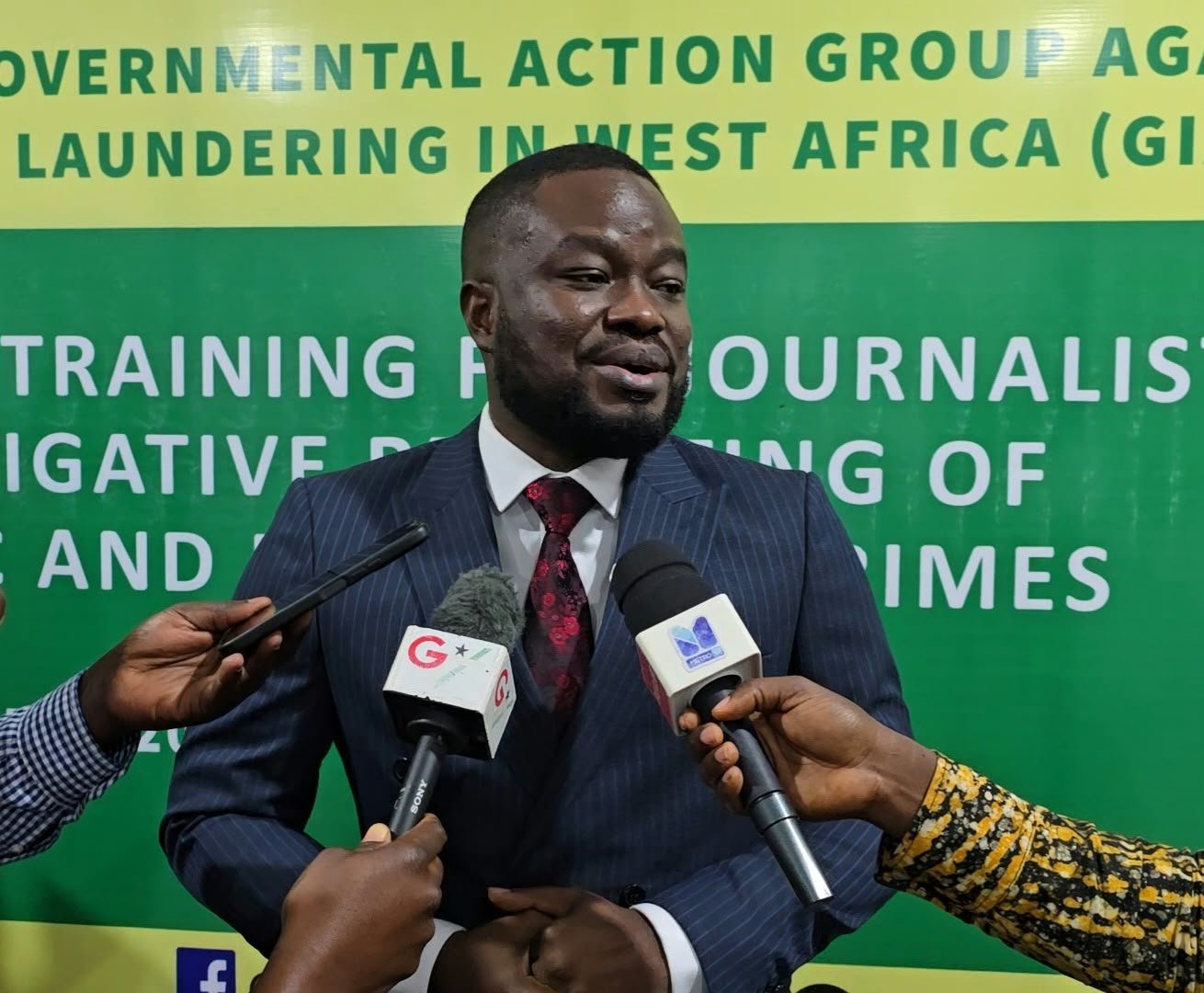
The Inter-Governmental Action Group against Money Laundering in West Africa (GIABA) has called on journalists across West Africa to intensify their watchdog role and deploy stronger investigative journalism to expose economic and financial crimes, illicit financial flows and other emerging threats undermining transparency, accountability and regional development.
The call was made as GIABA opened a three-day Regional Training Workshop on Investigative Reporting of Economic and Financial Crimes in Accra, bringing together media professionals from across the sub-region to strengthen their understanding of financial crime and improve the quality of reporting on money laundering, terrorist financing and related issues.
According to GIABA, the September 22–24, 2026 workshop is designed to strengthen journalists’ investigative capacity, improve coverage of AML/CFT issues and build a stronger regional network of media professionals.
The training is also aimed at equipping journalists with modern investigative techniques, including intelligence gathering, open-source intelligence, analysis of financial records, corporate structures and beneficial ownership information.
Speaking at the opening of the programme, the Director General of GIABA, Mr Mam Cherno Jallow, underscored the critical role of the media in exposing financial crimes and strengthening public accountability.
Jallow pointed to the changing nature of threats confronting the West African region, including money laundering, terrorist financing, proliferation financing, high-level corruption, illicit financial flows, drug trafficking, the misuse of virtual assets and weaknesses in regulatory oversight.
“Our region continues to face evolving threats related to Money Laundering, Terrorist Financing, and Proliferation Financing. These phenomena undermine the effective implementation of measures,” Jallow stated.
“Key vulnerabilities include high-level corruption resulting in illicit financial flows, largely from the extractive sector, the rise of terrorism-related activities, the misuse of virtual assets, drug trafficking, and the weak regulatory oversight of Designated Non-Financial Businesses and Professions.”
His remarks come against the backdrop of growing concerns over the sophistication of financial crime and the increasing use of technology, complex corporate arrangements and cross-border transactions to conceal illicit proceeds.
GIABA’s official programme description similarly identifies the need for journalists to understand regional AML/CFT initiatives and financial-crime typologies while strengthening investigative reporting.
Jallow stressed that the fight against financial crime cannot be left solely to law-enforcement agencies, regulators and financial intelligence institutions. According to him, public awareness, citizen participation and effective journalism are essential components of the broader response.
“Beyond these challenges, let me remind you that GIABA is not only a witness to, but also the architect of, a major transformation in the fight against money laundering and terrorist financing in West Africa,” he noted.
Indeed, this is a fight that requires serious awareness raising, citizens mobilisation, and collective ownership of the fight. This is where your role as the media is extremely important.”
He further told journalists that “the fight against money laundering and terrorist financing will only be won if light prevails over darkness, and you, journalists, are one of our most powerful beacons.”
The message placed investigative journalists at the centre of efforts to uncover hidden financial activities, raise public awareness and demand accountability from institutions and individuals whose actions have implications for the public interest.
GIABA has also expressed concern about weaknesses in the reporting of AML/CFT matters, including inadequate due diligence and misinformation, urging journalists to use the training to improve their investigative methods and ensure that published information is properly verified.
Delivering a welcome address on behalf of the Financial Intelligence Centre (FIC) of Ghana and the President of the Republic, Benjamin Ofori stressed that the fight against financial crime requires collaboration among institutions, professionals and the media.
He noted that criminals are increasingly using sophisticated technology, digital financial services and complex corporate structures to conceal proceeds linked to fraud, tax evasion and organised crime.
For journalists, he said, understanding these mechanisms is essential to effective financial investigations.
“The modern financial crime reporter must be able to follow the money,” Mr Ofori declared.
He explained that this requires journalists to understand corporate structures, examine financial records, identify beneficial owners, analyse procurement information, connect seemingly unrelated transactions and use open-source intelligence.
“This requires an understanding of corporate structures and the ability to examine financial records, identify beneficial owners, analyse procurement information, connect seemingly unrelated transactions and use open-source intelligence. Above all, it requires asking the right questions about who owns and moves assets.”
Ofori also emphasised that investigative journalism must go beyond simply obtaining information. Journalists must establish the context, verify facts, protect sources and maintain professional standards when presenting sensitive financial information.
“Investigative journalism, however, is not only about finding information. It also requires journalists to verify information, understand its context, protect sources, maintain professional standards and present evidence accurately and responsibly.”
He added that “our goal should not simply be to produce more stories about financial crime. It should be to produce well-informed, evidence-based and impactful journalism that explains how financial crime operates, how it affects our communities and economies, and what can be done about it.”
The September 22–24 training programme is expected to contribute to the development of a stronger regional network of media professionals committed to reporting on financial crime, transparency and public accountability.
By strengthening journalists’ technical knowledge and investigative capabilities, the programme seeks to improve the quality of reporting on money laundering, terrorist financing and related financial crimes across West Africa.
It also provides an opportunity for journalists to exchange experiences, understand regional policy developments and explore new approaches to investigating financial and economic crimes.
As financial crime continues to evolve alongside technological and financial innovation, the ability of journalists to understand financial trails, corporate structures and emerging investigative techniques will remain an important component of public-interest journalism.
The Accra training ultimately underscores a broader message: effective journalism is not only about telling the story—it is also about understanding the evidence, asking difficult questions, connecting the dots and helping the public understand issues that affect the integrity of economies and institutions.
Source: Starrfm.com.gh