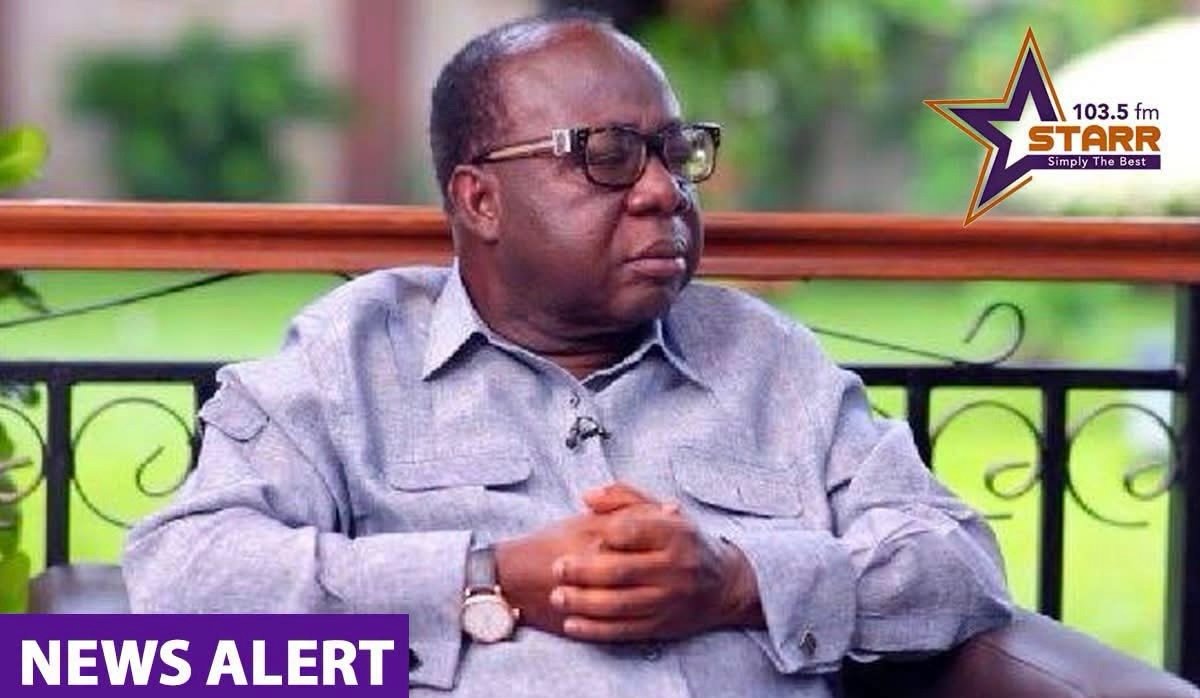
Former New Patriotic Party (NPP) Chairman, Freddie Blay, has questioned the government’s projected cost of its Big Push infrastructure programme, demanding clarity on its financing and implementation following what he says is an increase from GH¢4 billion to GH¢10 billion.
Mr. Blay expressed doubts about the government’s ability to execute the programme within its proposed timelines, raising concerns about the scale of funding required and whether the projected expenditure would translate into completed infrastructure projects.
Speaking to Arafat Musah on Morning Starr on Starr FM, Hon. Freddie Blay, former NPP chairman, questioned the government’s initial cost estimates, arguing that authorities must provide clarity on how much is required to undertake the programme and what can realistically be achieved within the planned period.
He said the government had previously indicated that about GH¢4 billion would be needed for the initiative and suggested that subsequent figures pointed to a significantly higher financing requirement of about GH¢10 billion.
Mr. Blay challenged the government to demonstrate its preparedness to undertake the programme, particularly given the ambitious timelines attached to its infrastructure commitments.
“First you said you need about 4 million to do that. Four billion to do that. I said that we’ve raised the money for it. Apparently now, it appears that maybe we have to raise about 10 billion for it. Are you sure what you are going to do? You’re going to spend four billion on a big push within two years? Are you sure that you can do that? We’ll wait and see,” he said.
He further called for accountability on the government’s promises, arguing that citizens must be given the opportunity to assess what has been achieved against commitments made in previous budgets and policy announcements.
Mr. Blay’s concerns come amid broader questions about government delivery of infrastructure projects, with he insisting that commitments must be supported by clear timelines, funding details and tangible results rather than assurances.
He maintained that government must demonstrate how the resources earmarked for the programme would be utilised and what projects would be completed within the stipulated period.
Story By Pamela Quayson