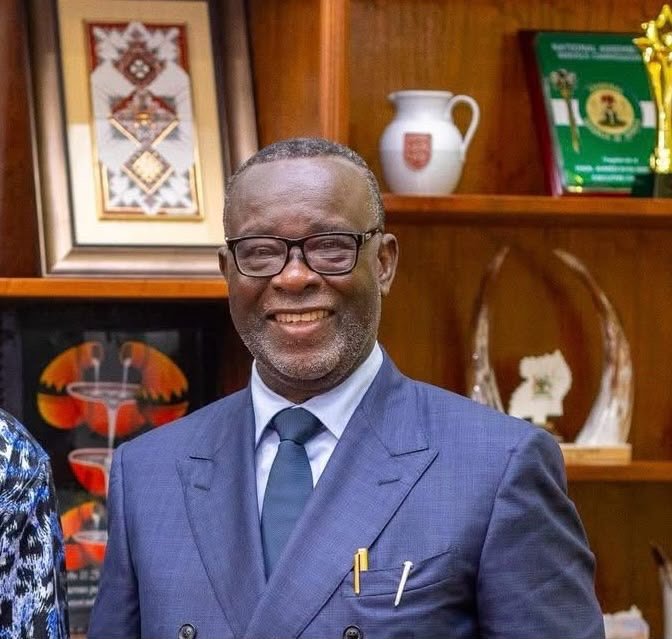
I have taken a particular interest in the leadership of Ghana’s Chief Justice, His Lordship Justice Paul Kwadwo Baffoe-Bonnie. This interest has been heightened by recent criticisms which, in my view, make it necessary to examine his tenure not through political lenses, personalities or conjecture, but against the actual decisions and reforms emerging from the Judiciary under his leadership.
It may still be early days, but the evidence so far presents an interesting picture: a Chief Justice seeking to restore confidence in the Judiciary, protect its institutional independence, make justice delivery more efficient and accessible, and yet dissociate himself and his outfit from the old trajectory of public fear of the leadership of the judiciary through a socialization approach.
From the Era of “Unanimous FC”
Not too long ago, the expression “Unanimous FC” entered Ghana’s political and legal vocabulary as a derisive reference to perceptions surrounding a succession of unanimous Supreme Court decisions. The expression became sufficiently established that it even entered Ghanaian legal scholarship, where it was explained as reflecting perceptions among some opposition sympathisers that certain Supreme Court decisions favoured the then-governing New Patriotic Party (UGSLJ, 2023).
Whether those perceptions were justified in every instance is another matter. What cannot be denied is that concerns about public confidence in the Judiciary became part of the national conversation.
Indeed, then National Security Minister, Hon. Albert Kan-Dapaah, publicly warned about the national-security implications of perceptions of biased justice (Myjoyonline, Ghana News Agency etc., 2022). His concern was essentially that where judicial interpretation was persistently perceived and seen as favouring government, confidence in the Judiciary could be undermined.
This historical context matters when assessing Justice Baffoe-Bonnie. The true test of an independent Judiciary is not whether its decisions please the government or opposition. It is whether the law can operate against the political expectations of either side.
On that score, some developments under Chief Justice Baffoe-Bonnie deserve serious attention.
Kpandai MP, Jean Mensa and Her Deputies: A Significant Test
When it became apparent that the Member of Parliament for Kpandai, Hon. Matthew Yandam, could lose his seat in court, potentially relieving the governing National Democratic Congress (NDC) and disappointing the opposition New Patriotic Party (NPP), the Chief Justice faced a politically sensitive matter. Yet, rather than letting political considerations, emotions, or the circumstances surrounding his own appointment influence the process, he turned to the law, constitutional principles, and the dictates of justice. He applied the law as he found it, irrespective of which political party stood to benefit or suffer from the outcome.
The petition was filed at the High Court outside the constitutionally prescribed 21-day period following the gazetting of the election results. Consequently, the Supreme Court essentially quashed the High Court’s orders on the basis that the court lacked jurisdiction to entertain the petition under the circumstances.
Furthermore, the Chief Justice did not sit as part of the coram that determined the certiorari application.
Consider the petitions seeking the removal of Electoral Commission Chairperson Madam Jean Adukwei Mensa and her deputies, Dr. Bossman Eric Asare and Mr. Samuel Tettey.
Seven petitions seeking their removal were referred by President John Dramani Mahama to the Chief Justice in accordance with the constitutional process. After examining them, Justice Baffoe-Bonnie determined that no prima facie case had been established to warrant further investigation. The removal process therefore went no further.
Pause and consider the political significance and this is the person some Ghanaians want us to believe has bruised the independence of the judiciary? Come on!
These were officials appointed during the previous NPP administration, many of whom had, over the years, come under considerable criticism from sections of the NDC and those who were open-minded in their thoughts.
What should, however, be evident to these critics is the fact that the NDC, while in opposition, repeatedly vowed to remove the Electoral Commission Chairperson and her deputies once it assumed office.
They (the critics) must therefore explain to Ghanaians who, in the circumstances, is allegedly compromised. Because, on the face of these facts, it certainly cannot be Justice Paul Kwadwo Baffoe-Bonnie. Despite the clear biases of the aforementioned Nana Addo appointees, an NDC administration, including a Chief Justice appointed by President Mahama, examined petitions against them and concluded that the constitutional threshold for proceeding against them had not been met.
That is precisely why judicial independence must be assessed by conduct rather than political association.
If Justice Baffoe-Bonnie were simply an appendage of the Executive, as some of his critics seek to portray him, this outcome becomes difficult to reconcile with that narrative.
Kissi Agyebeng and the Office of the Special Prosecutor
The same principle arose in relation to Special Prosecutor Mr. Kissi Agyebeng Esq.
Three petitions seeking his removal were also referred to the Chief Justice. Again, Justice Baffoe-Bonnie found that they failed to establish a prima facie case warranting further investigation.
Whatever anybody’s political opinion of the Special Prosecutor, the institutional principle is more important.
A constitutional democracy becomes stronger when officeholders are protected not because they are politically useful to somebody, but because the legal threshold required for their removal has not been satisfied.
Interestingly, even some figures associated with the governing NDC publicly indicated that, although disappointed by the decision concerning the Electoral Commission leadership, they accepted the Chief Justice’s determination.
That is how institutions mature.
Beyond Judgments: Reforming Justice Delivery
Paul Baffoe Bonnie is fiercely liberated in his convictions and this is reflected in both his public speeches and his judgments. In 2005, when the NPP government sought to frustrate a civil servant by transferring him from the Ghana Immigration Service to an uncertain organisation, Baffoe Bonnie ruled that the action of the then President amounted to constructive dismissal. He ordered the reinstatement of the officer and ordered the payment of his salary arrears. President Kufour recognized this trait of speaking to power in him and nominated him for promotion to the Supreme Court. The NDC was not pleased and opposed his nomination. Yet when, in 2013, the NPP felt he was one of their own, he again voted according to his conscience and solely on the evidence to keep the NDC in power.
In Sept 2025, when he was only acting as the Chief Justice, he publicly chastised the Mahama government with his famous speech on galamsey at the bar conference in Wa.
But Justice Baffoe-Bonnie’s emerging legacy cannot even be measured only by politically sensitive decisions or his public utterances because he is a human being and not the law itself.
His reform programme may ultimately prove even more consequential.
Under his leadership, the Judiciary has moved towards morning and afternoon court sessions to reduce congestion and case backlogs. His administration has also pursued expanded Alternative Dispute Resolution, specialised courts, accelerated E-Justice, reforms to the Rules of Court and dedicated judicial mechanisms for areas including environmental and illegal-mining cases.
The Judiciary has further introduced a Specialised High Court Division aimed at improving efficiency through judicial specialisation rather than requiring individual judges to handle an unnecessarily broad range of subject matters.
These may not generate dramatic political headlines, but this is where the everyday Ghanaian experiences the justice system.
A litigant waiting a year for a case to be heard is interested in speed. A business trapped in commercial litigation wants efficiency and certainty. A citizen living outside Accra wants accessibility. And an ordinary Ghanaian appearing before a court wants to believe that justice does not depend upon political connections, wealth or status.
That is why Justice Baffoe-Bonnie’s own insistence that justice must become faster, clearer and more accessible deserves attention. He has acknowledged that delays, cost and distance continue to weaken access to justice and public confidence in the courts.
Justice Baffoe-Bonnie has rather brought a refreshing and impeccable sense of relief, openness and renewed confidence to Ghana’s judicial system. For far too long, the concentration of power in the hands of a few created an atmosphere in which some members of both the Bar and the Bench felt constrained, intimidated and unable to express themselves freely.
Today, his leadership offers a different narrative, one that seeks to bring the judiciary closer to the people, not as an intimidating institution of fault-finders, but as a friend, a partner in justice and a pillar of hope for the ordinary Ghanaian. His willingness to attend funerals, weddings and other social gatherings, including the recent funeral in Techiman, demonstrates a Chief Justice who understands that judges are not detached figures seated on elevated benches, but human beings who belong to the very communities they serve. More importantly, he speaks his mind, stands by his convictions and engages issues with a measure of independence that deserves to be judged on its merits. So, one is compelled to ask: How does a Chief Justice who is making deliberate efforts to humanise the judiciary, restore confidence in the institution and bring the Bench and the Bar closer to the people suddenly become a “puppet of the Executive” in the eyes of some Ghanaians? Is it now wrong for a Chief Justice to be accessible, sociable, outspoken and willing to engage the public beyond the courtroom? Surely, the independence of the judiciary must be assessed by its decisions, constitutional fidelity and institutional conduct, not by the mere fact that its head is visible among the people or willing to speak his mind. Justice Baffoe-Bonnie deserves to be assessed fairly, on the strength of his leadership, his actions and his record, rather than reduced to a political label that may say more about the prejudices of his critics than about the man himself.
Independence Must Work Both Ways
There is a deeper lesson here.
We cannot defend judicial independence only when a court reaches a decision we like and suddenly discover political interference when it reaches one we dislike.
Neither should the independence of a Chief Justice be judged merely by who nominated him.
Justice Baffoe-Bonnie was nominated by President Mahama. That is a constitutional fact. But nomination by a President does not make a Chief Justice the judicial representative of that President.
Indeed, upon assuming office, Justice Baffoe-Bonnie publicly pledged to uphold the rule of law, respect the separation of powers, protect the Constitution and preserve the independence of judges from improper influence and that is what is being done against all odds. Those commitments must ultimately be measured against his record.
So far, the decisions concerning Jean Mensa, her deputies and Kissi Agyebeng provide important evidence. When petitions against politically sensitive officeholders reached his desk, the constitutional threshold, rather than presumed political convenience, determined the outcome. That fact should matter to both his supporters and his critics.
Let History Judge Him on the Evidence
I do not suggest that Justice Paul Kwadwo Baffoe-Bonnie, or indeed any Chief Justice, should be insulated from criticism. Far from it.
The Judiciary exercises enormous constitutional power and must therefore remain open to rigorous public scrutiny. Judges, including Chief Justices, should be assessed by their decisions, administrative leadership, fidelity to the Constitution and commitment to justice. But criticism must equally be fair.
If we accuse a Chief Justice of surrendering the Judiciary to the Executive, we should be prepared to reconcile that accusation with decisions in which the same Judiciary refuses outcomes that might politically benefit people associated with the government of the day.
Justice Baffoe-Bonnie’s tenure is still unfolding. History will eventually make the fuller assessment.
But if he sustains an independent Judiciary, deepens the reforms already underway, reduces delays, expands access to justice and preserves a Supreme Court whose decisions cannot simply be predicted according to which political party occupies the Jubilee House, then his tenure may indeed come to be regarded as one of the defining periods of judicial leadership in contemporary Ghana. For me, that is the standard by which he should be judged.
Not rumours. Not political affiliation. Not who appointed him. Not his private associations or what he has said honestly somewhere to address a situation.
But whether, when the difficult moments came, the law was allowed to remain the law.
By Joel Abendeni Abanginiriba