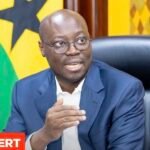
Finance Minister Dr. Cassiel Ato Forson has said Ghana’s economic recovery will only be meaningful if it translates into more jobs, higher incomes and improved living conditions for households.
He said the improvement in macroeconomic indicators must create tangible opportunities for young graduates, farmers, traders, pensioners and entrepreneurs who have endured the effects of economic instability.
Presenting the 2027 Budget Statement to Parliament, Dr. Forson said Ghanaians had repeatedly experienced periods of economic progress that failed to provide lasting improvements in their circumstances.
He cited young graduates searching for employment, farmers struggling to secure reliable markets, market women whose capital had been eroded by inflation and entrepreneurs unable to access affordable long-term financing.
The Finance Minister said unemployment stood at about 12.8% in 2025, despite more than three decades of economic expansion.
He argued that economic performance should not be measured solely by growth figures but by its impact on the quality of life.
“The best measure of an economy must be an improvement in the quality of life,” he said.
Dr. Forson acknowledged that government had made progress in restoring macroeconomic stability, noting that inflation had declined from 23.8% to 5.4% by the end of 2025.
He also reported an improvement in the primary balance from a deficit of 4.1% to a surplus of 2.5% of GDP, while public debt had fallen to 44.7% of GDP and gross international reserves had increased to 5.7 months of import cover.
However, he cautioned that the gains would only benefit citizens if they translated into productive economic activity.
“Their sacrifices will be honored when restored stability becomes production, jobs, rising income, and opportunities,” he told Parliament.
Under the proposed New Economy programme, government intends to invest the equivalent of US$10 billion between 2027 and 2030 in eight priority areas, including commercial agriculture, energy infrastructure, critical minerals value addition, manufacturing and technology.
Dr. Forson said the programme would seek to expand domestic production and create decent jobs while ensuring that economic recovery improves the lives of Ghanaians.