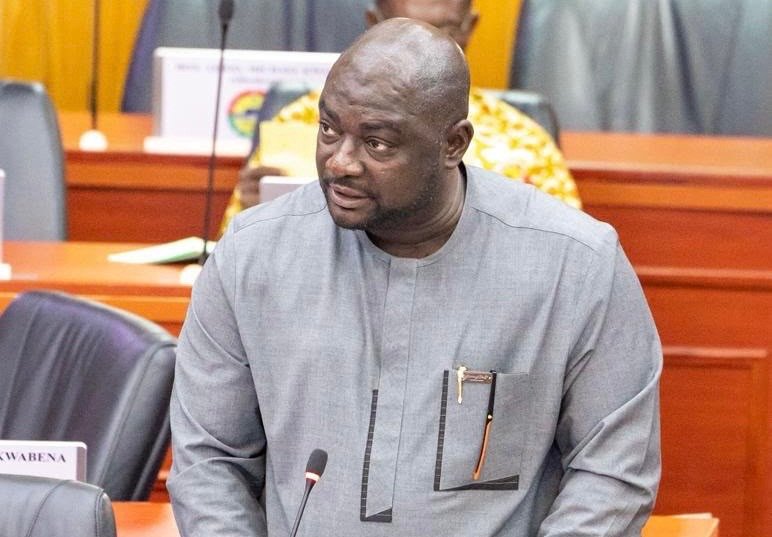
The Member of Parliament for Mpraeso, Hon. Davis Ansah Opoku, has questioned apparent inconsistencies in the financial figures presented for the government’s Big Push infrastructure programme in the 2027 Budget Statement.
Contributing to the Budget debate in Parliament, the legislator drew attention to different figures he said appeared in separate sections of the document.
He referred to paragraph 1552, paragraph 1629 and Appendix 3C, arguing that the figures associated with the programme were not consistent.
“These are three different figures for the same programme in a budget. So which one are we approving?” he questioned.
Mr Opoku maintained that Parliament required clear and consistent financial information to perform its constitutional responsibility of scrutinising and approving public expenditure.
He also questioned the government’s approach to procurement for the proposed 198.7-kilometre Accra–Kumasi Expressway.
Referring to paragraph 922 of the Budget Statement, he raised concerns about international competitive tendering for the project.
According to the MP, the government had indicated that substantial financing was available for the programme, yet Ghanaian contractors risked losing opportunities to foreign companies.
“Instead of giving it to local contractors, you are now going to bring foreigners from China and elsewhere to come and bid for this work at the detriment of a local contractor,” he stated.
The legislator argued that infrastructure investment should not be measured solely by the number of roads constructed but also by the opportunities created for Ghanaian businesses and workers.
He insisted that local contractors must be given meaningful opportunities to participate in major publicly funded infrastructure projects.
“If you are determined to promote a new economy, a new economy must be owned by Ghanaians and not foreigners,” he declared.
Mr Opoku called for greater clarity in the presentation of the Big Push programme’s financial commitments and a procurement approach that gives Ghanaian businesses a fair opportunity to compete.
He maintained that Ghana’s infrastructure development must contribute to building the capacity and competitiveness of indigenous enterprises.