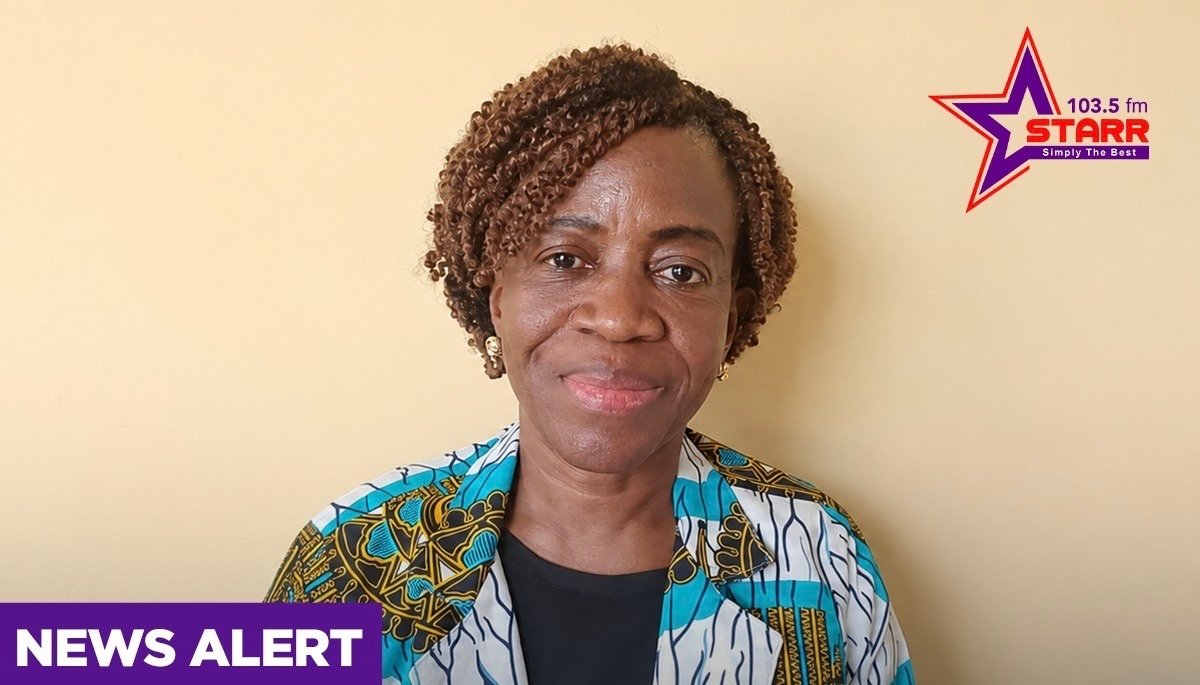
Executive Director of Eco-Conscious Citizens, Awula Serwah, has warned that illegal mining activities threatening the Atiwa Forest Reserve could jeopardise water resources relied on by more than five million Ghanaians.
Speaking to Isaac Addae on Morning Starr on Starr FM, she said the destruction of the reserve posed a serious environmental concern, given its importance as a source of water for the Birim, Ayensu and Densu rivers.
According to her, the forest reserve, established in 1926, has been invaded by illegal miners, raising concerns about the potential consequences for communities that depend on the water bodies originating from the forest.
“Five million Ghanaians, over five million Ghanaians get their water from Atiwa Forest Reserve because it’s a source of water to three main rivers, the Birim, the Ayensu and the Densu,” she said.
Awula Serwah described the situation as a national emergency, warning that the continued destruction of Ghana’s natural resources could lead to an ecological catastrophe.
“We face a national emergency. We are on the brink of an ecological catastrophe because we are committing ecological suicide,” she stated.
She lamented the degradation of the Atiwa Forest Reserve, arguing that illegal mining had significantly compromised the environmental integrity of the forest, which was designated a reserve in 1926.
Her concerns extend beyond the destruction of forest cover to the potential effects of illegal mining on Ghana’s water bodies, food sources and public health.
She cautioned that the consequences of environmental pollution could affect communities far beyond areas where illegal mining activities take place.
Awula Serwah questioned whether consumers were sufficiently aware of the origins of food sold in markets, warning that some produce could come from areas affected by illegal mining.
“When you go to the market, do you know where the food is coming from? It could be coming from the galamsey area,” she said.
She also raised concerns about the possible contamination of drinking water by chemicals used in illegal gold mining, including cyanide and mercury.
According to her, the appearance of water alone cannot establish whether it is safe for consumption, as some harmful substances may not be visible.
“When you’re in Accra and the water is coming through your taps, do you know there’s cyanide in it? Because they don’t announce themselves. They are colourless,” she said.
READ: ‘Why did you mislead Ghanaians?’ – Jamaludeen Abdullah challenges Mahama over galamsey fight
She stressed that the potential risks associated with contaminated water and food should be considered part of the broader environmental and public health concerns surrounding illegal mining.
Awula Serwah further criticised what she described as the emphasis on protecting the livelihoods of illegal miners while overlooking the economic hardships faced by farmers and fishermen whose livelihoods are threatened by environmental degradation.
“We’re concerned about the livelihood of the criminals, but we’re not concerned about the livelihood of the peasant farmers. We’re not concerned about the livelihood of the fishermen. We’re not concerned about Ghanaians being poisoned,” she said.
READ: Ghana’s environmental crisis is a political problem, not lack of knowledge – Prof. Frimpong-Boateng
She called for greater attention to the national implications of environmental destruction, particularly the threat to water sources that serve millions of Ghanaians.
Story By: Pamela Quayson