


Ark Development Organisation (ADO), a non Profit organisation has announced major progress in its Empowering Communities for the Elimination of Skin Neglected Tropical Diseases (NTDs) project, funded by the Anesvad Foundation.
The first phase of the Eradication of Skin NTDs project implemented between 2023 to 2025 in four districts and municipalities in Eastern Region – Upper Manya Krobo, Fanteakwa North, Suhum, and West Akim, provided direct wound care to 453 persons identified with Skin NTDs, referred 1,000 others to hospitals, and sadly recorded five deaths and three amputations.
The ongoing second phase of the project has intensified case search, advocacy, and community empowerment.
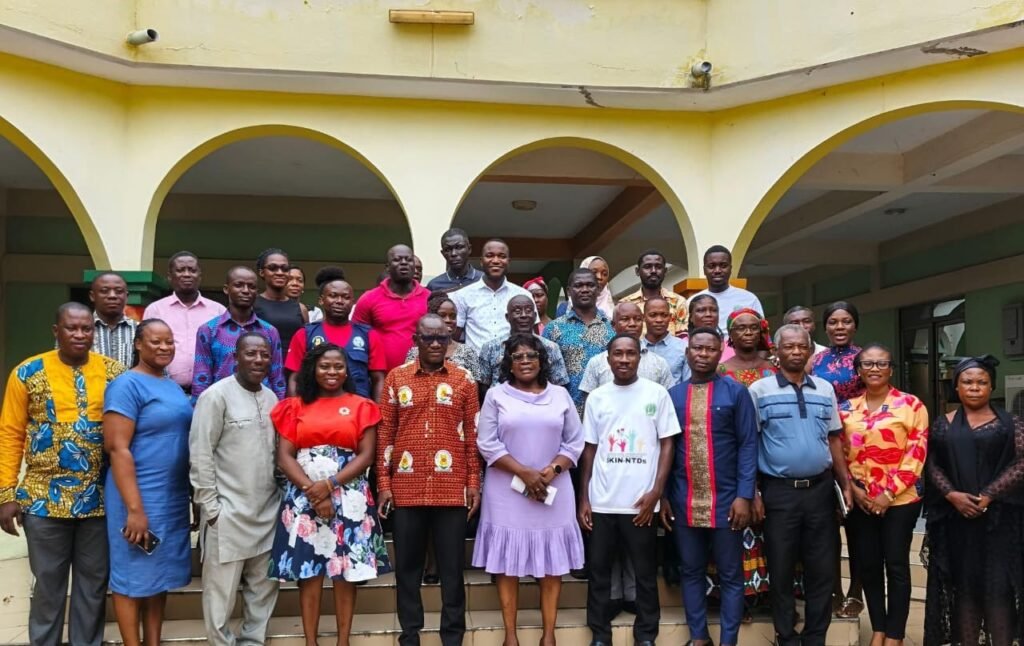
At a progress report on the second phase presented during Biannual Review Meeting attended by key stakeholders including the Ghana Health Service, Ghana Education Service, community volunteers, media representatives, and health-focused NGOs in Koforidua, the Executive Director of Ark Development Organization (ADO), Emmanuel Kwafo Mintah, reported strong gains in the second quarter of the project, highlighting the success of a community-led surveillance model that has improved early case detection.
He said 40 community health volunteers and 35 primary healthcare workers trained and deployed for case detection, management, stigma reduction and wound care has led to the identification of 1 to 5 suspected cases in at least each community visited.
A total of 128 cases of skin NTDs have been identified since the start of the second phase of the project, with many of the affected individuals receiving treatment and support.
The Screening teams have become vital in reaching remote, hard-to-access communities. Over 5,000 people reached through sensitization.
Emmanuel Kwafo Mintah stated that support from the Anesvad Foundation ensuring continuous supply of wound care materials,has helped many patients recover quickly.
The sensitization campaigns also focus on correcting misconceptions, encouraging early reporting of symptoms and promoting good Water, Sanitation and Hygiene (WASH) practices.
Emmanuel Kwafo Mintah averred that the project is driven by a shared vision to significantly reduce the burden of skin-related NTDs in targeted communities.
“Skin NTDs such as yaws, lymphatic filariasis, leprosy, Buruli ulcer and scabies do not only cause physical pain; they deepen social and economic marginalisation,” he said. “Our work is about restoring dignity, promoting equity and ensuring health for all.”
The project however faces challenges which includes deplorable rural roads making transportation difficulty for volunteers affecting outreach and drug resupply efforts in isolated communities.
Additionally, the report highlighted that stigma remains a major barrier, often causing late reporting and treatment dropout.
Project Coordinator at Ark Development Organization, Kwanin David, appealed to individuals, NGOs and benevolent organisations to support persons affected by skin NTDs who face both health and economic challenges.
“Many patients struggle with treatment costs and daily living expenses. We appeal to kind-hearted individuals and partners to support them so they can live healthier, dignified lives and contribute meaningfully to national development,” he said.
The Eastern Regional Director of Health Service, Dr. Damien Punguyire, expressed appreciation to Ark Development Organization for their consistent and strategic collaboration with the Health Service.
He lauded the project initiative and the gains made so far in addressing it right at the community level.
The Regional Health Director emphasized the critical role of community volunteers and the media in helping to sustain awareness creation, reducing stigma, and encouraging early care-seeking among affected persons.
According to World Health Organization, neglected tropical diseases (NTDs) are a diverse group of conditions caused by a variety of pathogens (including viruses, bacteria, parasites, fungi and toxins) and associated with devastating health, social and economic consequences.
NTDs are mainly prevalent among impoverished communities in tropical areas, although some have a much larger geographical distribution.
It is estimated that NTDs affect more than 1 billion people, while the number of people requiring NTD interventions (both preventive and curative) is 1.495 billion.
The epidemiology of NTDs is complex and often related to environmental conditions. Many of them are vector-borne, have animal reservoirs and are associated with complex life cycles making their public-health control challenging.
The second global meeting held on 24–26 March 2025 by World Health Organization on Skin NTDs, emphasized on integration of the disease into various health interventions to help in reducing case burden.
The road map emphasizes three critical shifts in approaches to overcoming NTDs – accelerating programmatic action; intensifying cross-cutting approaches; and changing operating models and culture to facilitate country ownership – to guide the implementation of activities.
Source: Starrfm.com.gh


