


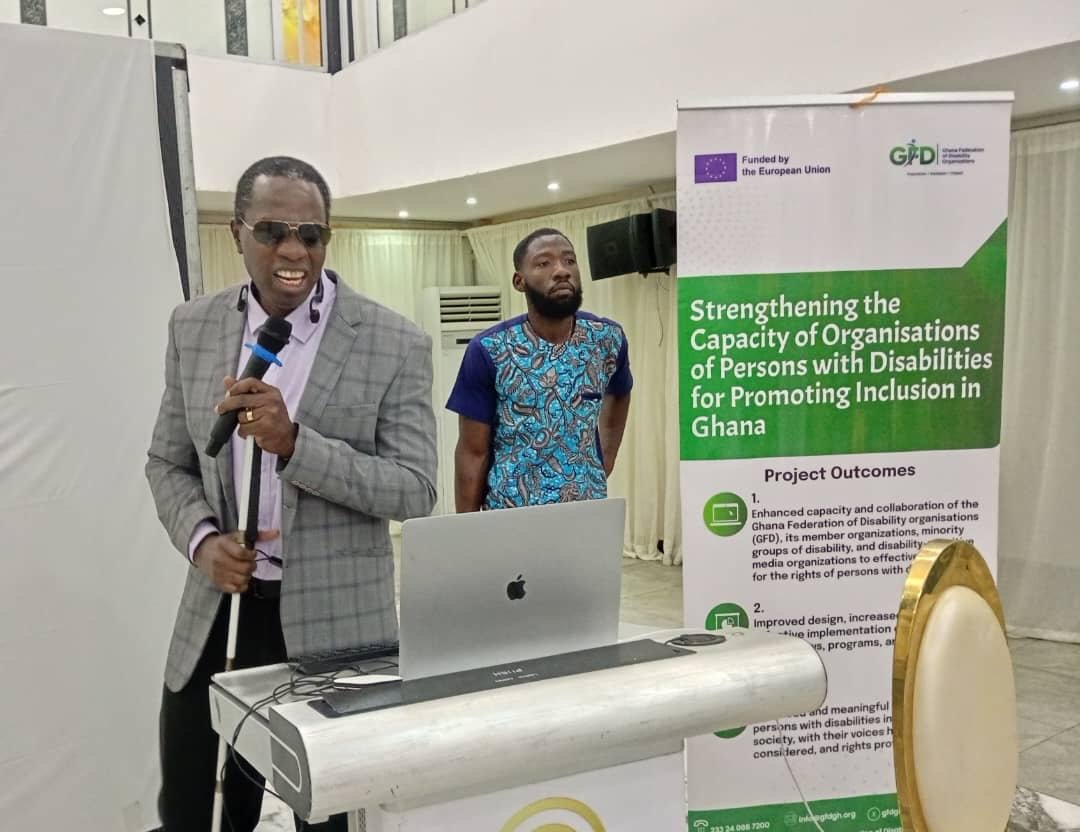
The Ghana Federation for Disability Organizations (GFD) has cautioned that Ghana’s quest to build an inclusive country will be a mirage without a strong advocacy front and a governance system that is willing to accommodate marginalized voices.
The Federation, is leading a consortium comprising the GFD, the Mental Health Society of Ghana, and the Africa Disability Institute to identify and eliminate debilitating gaps and age-long barriers that have stifled voices of persons with disability in decision making.
Under a three-year project funded by the European Union, the consortium is enhancing the capacities of central and local government actors on the peculiar issues surrounding social inclusion and participatory governance
The project further aims at building the institutional capacities of some sixteen Organizations of Persons with Disability (OPDs) to enable them to advocate more effectively and play active roles in policy processes.
Speaking in Kumasi at a two-day training held for frontline officers of Assemblies, Ministries, departments and Agencies, Project officer for the Federation Evans Oheneba Mensah underscored the need for Ghana to embrace inclusion in all facets of governance and socioeconomic development.
He insisted that many policies especially those designed and implemented for and behalf of persons with disability had failed to yield optimal results because the intended beneficiaries were inadequately consulted.
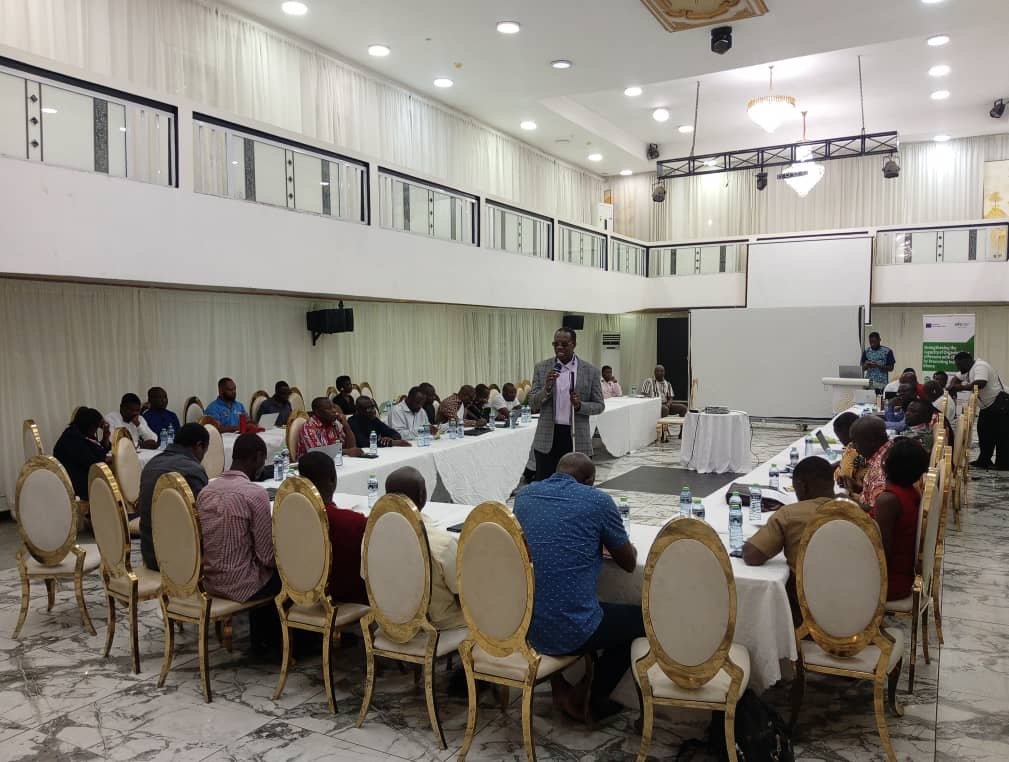
Oheneba Mensah argued, “The level of consultation of persons with disability in governance issues are still very low. Policies must emanate from the people and they can only succeed when the consultative processes are well grounded.”
“Very often the major problem is the exclusion of the voices of persons with disability at the local, regional and national level. There are issues surrounding the share of the District Assembly Common Fund for PWDs, inclusive education and the various manifesto promises targeted at PWDs,” he asserted.
Echoing this concern, Programs Manager for GFD, Doris Ndebugri, recounted how the disability community missed a crucial opportunity to contribute to Ghana’s Affirmative Action and Gender Equity Law due to limited engagement.
“We want to be more involved. Don’t just consult us and refuse to give us full participation. You cannot talk about us without us because we can speak better about our lived experiences,” she noted.
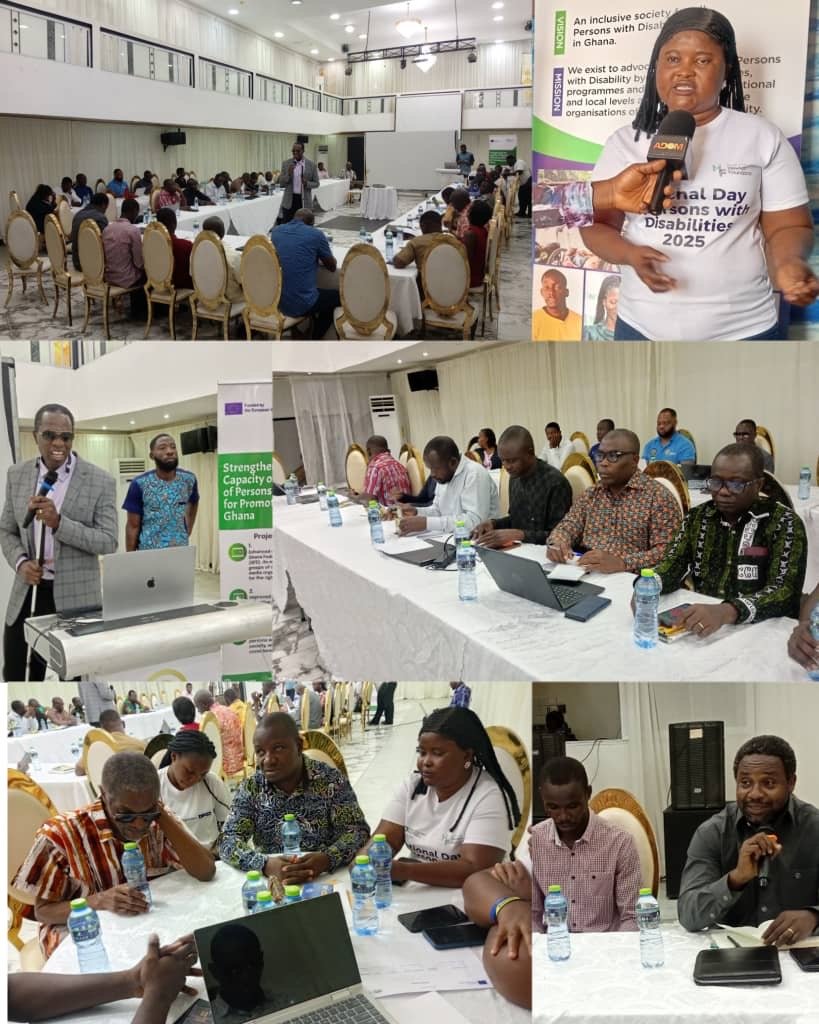
She was optimistic the training which brought together development planners and social welfare officers from Ministries, Departments, Agencies and District Assemblies would inspire institutional change and ensure that persons with disabilities secure their rightful place at the decision-making table.
The sessions also exposed participants to evolving global perspectives on disability and the world’s gradual departure from the outdated medical and charity models toward a human rights-based approach, which empowers PWDs and promotes inclusion as a matter of justice, not benevolence.
Speaking to Starr News on the sidelines of the training, Social Welfare Officer for the Asuogyaman District Assembly Bernard Jimah commended the consortium and its funding partners for the informative sessions and the transformation the training would bring to inclusion at various levels of governance.
“We didn’t appreciate the extent to which persons with disability had power and never realized how society was rather to blame for creating their inabilities. We will go back to implement the new ways to help empower PWDs in our line of work,” he assured.
Apart from Ghana’s Persons with Disability Act, 2006 (Act 715) which outlines a number of legal obligations of government towards the disability community in Ghana, it will take greater involvement of Persons with disability for Ghana to meet its international, and local commitments.
The project comes at a time Ghana races under pressure to meet its commitments to the UN Convention on the Rights of Persons with Disabilities (CRPD), the Sustainable Development Goals (SDGs), and national disability frameworks.
Meanwhile, a legal Instrument to operationalize the Persons With Disability Act and a legal instrument urgently required to operationalize same remains hanging.


