


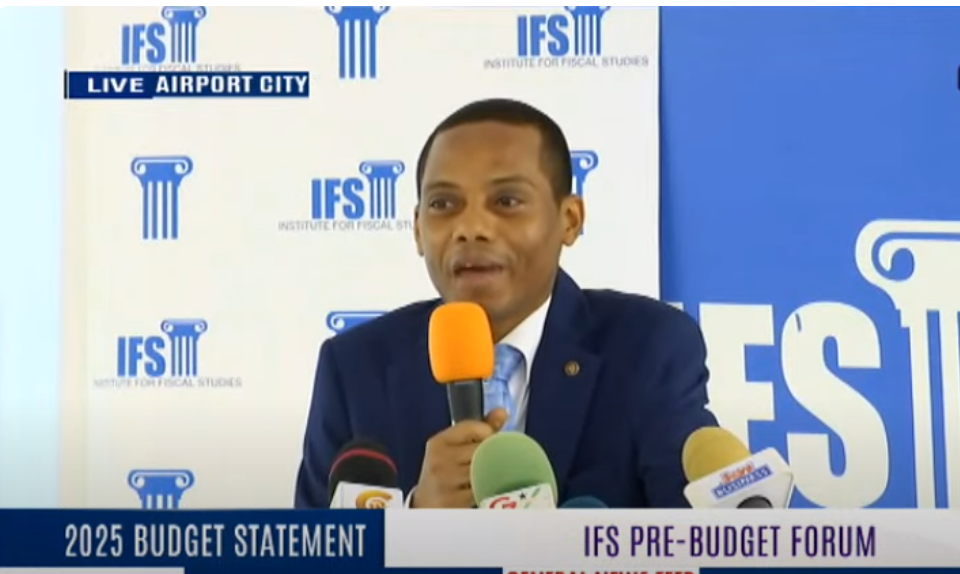
The Institute for Fiscal Studies (IFS) Ghana has raised concerns about a possible link between the Bank of Ghana’s (BoG) Domestic Gold Purchase Program and the sharp rise in liquidity since 2022. While the program was introduced to strengthen Ghana’s foreign reserves, the IFS warns that its unintended effects on money supply could be fueling inflation and exchange rate instability.
Presenting its latest paper, What Should Be the Priorities of the New Government as It Confronts the Ongoing Economic Difficulties? The think tank has reiterated the need for ensuring macroeconomic stability by reducing monetary growth, cautioning that excessive liquidity could worsen inflationary pressures and undermine economic recovery efforts.
“The Bank of Ghana must rein in monetary growth as a means of ensuring macroeconomic stability by using all the options of monetary control available to it, instead of relying mostly on the use of the policy rate.”, it cautioned.
IFS adds that the BoG’s Domestic Gold Purchase Program, while beneficial for accumulating gold reserves, may have inadvertently contributed to liquidity expansion, which could undermine efforts to stabilize the economy.
IFS further high macroeconomic instability currently prevailing in the country.” The report revealed that broad money supply (M2) growth, which had reduced to 12.0% in 2021, surged to 27.8% in 2022, 37.2% in 2023, and 33.7% in 2024. This sharp increase, the IFS warned, could be fueling inflation and exchange rate depreciation, creating further economic instability.
Ghana has struggled with inflation for an extended period, with rates remaining above 20% for 35months spanning as far back as April 2022 with the institute warning that this persistent inflation, combined with excessive liquidity growth, could undermine Ghana’s economic stability.
The Institute has therefore called on the new government to critically examine to ascertain a possible link between the program and the sharp growth in liquidity in Ghana since 2022.
“The result of this examination, weighed against the impact of the program on the Bank’s international reserves, should inform the new government’s decisions regarding whether it should continue the program or not, as part of the policy to stabilize the economy.”, it added
The BoG introduced the Domestic Gold Purchase Program (DGPP) in June 2021 as a strategy to build Ghana’s foreign exchange reserves and reduce the country’s dependence on external financing. Under this program, the central bank purchases gold from local small- and large-scale miners using cedis instead of foreign currency, aiming to strengthen its reserves and support the stability of the cedi.
According to the BoG, the program is a shift away from traditional methods of reserves accumulation, which rely heavily on foreign currency inflows. Governor Dr. Ernest Addison described the initiative as “historic,” stating, “This marks the first time the Bank of Ghana is embarking on a domestic gold purchasing program to augment our foreign reserves.” He added that the program would “help reduce the country’s dependence on foreign exchange inflows for reserves accumulation and strengthen the cedi”
As part of the program, the BoG partners with licensed gold aggregators and mining firms, ensuring that the gold meets international market standards. The central bank has stated that the accumulation of gold reserves will allow Ghana to leverage its resources for better financing terms and to stabilize the cedi without depleting foreign currency reserves.
The program since its inception has seen significant success in increasing Ghana’s gold reserves. The IMF’s latest review of Ghana’s economic performance indicated that by the end of 2023, the country’s foreign reserves had recovered to US$3.7 billion, with two-thirds of this increase attributed to BoG’s gold-buying program.
But the latest concerns, once again reignite concerns about the transparency of the programme and whether the benefits of accumulating reserves outweigh the risks associated with excess liquidity remains.


