Arguably, the clearest indicator of the long term prospects of any nation is the quality of its education system. At the heart of every successful society, is the delivery of quality education anchored on a responsive curriculum. Since the school is where training is given to the very people who will manage and lead the institutions of a country, what and how they are taught indicate, to a very great extent, how they will undertake their future duties for their country. From issues of sanitation, patriotism, skilled labour, energy production and economic growth, the crucial role played by a quality curriculum and its associated provisions can never be underestimated. This conviction is at the core of the reforms currently on-going in Ghana’s education sector. Though far from complete, the mission is clear and unmistakable – we need a new generation of Ghanaian thinkers, doers and leaders who will supercharge our development effort and our classrooms must begin to reflect this need. This means that we must jettison the old methods and adopt tried and tested models that can deliver the best outcomes for us.
This is why Ghana is shifting from the objective-based to a standards-based curriculum model, for example. Unfortunately, some of the commentaries around this development are based on a less than precise understanding of intentions behind the reforms. So far as curriculum development is concerned, a standard refers to what learners must know, understand and be able to do at a given stage within the learning process. In practice, what this means is that we must set clear milestones in terms of skills, attitudes and values which all learners at a given grade must demonstrate. Students who are unable to exhibit such skills or demonstrate the set essential traits are then considered as not meeting the standards. In this case, the teacher or other relevant authorities can put in place the necessary remedial action to help address the needs of the learner. Additionally, National Standards Assessment Tests will be introduced for all learners in basic 2, basic 4, basic 6, JHS 2 and SHS 2 in order to determine the extent to which learners are meeting the standards nationally, and provide sufficient data for targeted remediation and resource allocation.
This is important for the children because any deficiencies can be quickly addressed. It also provides the school system with a better understanding of the children’s abilities than traditional testing methods have done. In keeping with this, even though the JHS curriculum is yet to be reviewed holistically, we need to have a good look at the current form of the Basic Education Certificate Examination. It would serve us better to utilise it as a basis for placing students into appropriate schools and programmes rather than as a yardstick for promoting learners to the SHS or not. This becomes more crucial considering the fact that with the introduction of the free Senior High School Policy, Basic Education now ends in SHS 3.
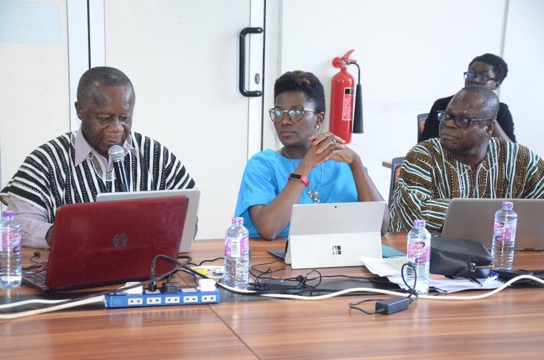
Another way to achieve better results in the classroom is to transform the role of the teacher. Globally, the teacher is acknowledged as the most important resource in the life of the student. Currently, many teachers generally pass on to children the information they need, part of a structure that sees learning as merely a means to acquire appropriate grades, rather than a life-long quest to improve oneself through discovery and prior experience. The knowledge passed on through this teaching approach, as everyone accepts, is quickly discarded once the test for which it was acquired is behind the student. We want this to change, and that is why teachers will now play the role of “facilitators”. This technical term is in congruence with the social constructivism philosophy, underlying philosophy of the standards-based curriculum, which contends that learners should be guided to construct their own learning based on their prior experience and interactions with others. This is in tandem with the learner-centred approach which is globally emphasised as the most effective way of stimulating learning. Thus the new curriculum emphasises on the use of such learner-centred methods as collaborative learning, think pair share, and project based learning, as a replacement to the traditional didactic, direct transmission mode of teaching where pupils are believed to be passive recipients whilst teachers who epitomise knowledge show and tell pupils what to do and how to do it.
In seeking to produce fully rounded graduates who are as adept in the classroom as they are outside it, extra-curricular activities are firmly placed within the structure of the new school curriculum. This will afford learners the opportunity to acquire additional competencies, skills and values through the organisation of STEM Clubs, Gender Clubs, Guidance and Counselling Sessions, Gardening, Project Based learning, Entrepreneurship sessions. Sports will also be emphasised, not only for reasons of health and fitness, but to enable the discovery of latent talents and abilities. Agriculture, contrary to some speculation, remains firmly in place and will be taught under the new interdisciplinary curriculum called “Our World our People”. The purpose of all this is to ensure the development of adept learners who are globally competitive and have a repertoire of hands-on skills and competencies. In a rapidly changing world, we need our children to have a wide range of essential skills and the flexibility to be relevant and comfortable in situations that we are unable to foresee today.
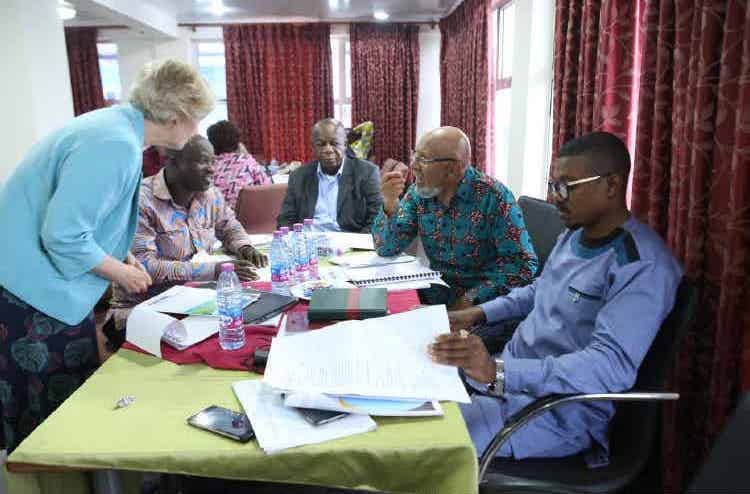
It is important that we not only conceive these ideas properly, but implement them rigorously as well. Our facilitators must be completely conversant with the content and methods of the new curriculum and we are going to make sure of that. So far, we have been holding one-week workshops for them. But this is far from enough. These sessions which are being conducted in an activity-based manner across the nation (in agreement with learning in the new curriculum) are focused on provisions in the curriculum such as modern ways of assessment, how to plan Scheme of Learning and undertake Lesson Planning, Learner Centred Teaching methods, ensuring inclusivity in the classroom. They also provide the opportunity to guide teachers on how to form Professional Learning Communities (PLCs) or communities of practice. It is through these communities of practice that the facilitators will undertake in-depth study and training in each of the subject curricula at the school or cluster level. Teachers will consequently engage in weekly meetings at the school to receive further training on the new curriculum. Continuous training is at the core of the philosophies that underpin these reforms. Teachers will be required to undergo periodic refresher programmes to keep them well positioned to provide the sort of teaching that the reforms require. The overarching role of ICT in modern times is acknowledged globally. During the PLC meetings, teachers will receive further training on how to help learners acquire the six core competencies integrated into the curriculum including Digital Literacy. This will look more prominently at how ICT can be used as a pedagogical tool for all teachers in addition to the learning of computing as a practical subject.
Any system, education included, that does not constantly challenge and reform itself will find itself losing relevance and usefulness very quickly. We have unfortunately left our education in this state for far too long. This makes the current reforms even more necessary. It also explains some of the resistance and scepticism from some who have grown comfortable with the old system and are, even with the best intentions, apprehensive of change. But they and all of us need to be assured that these reforms, based on empirical study and evidence and backed with robustly monitored implementation will make our nation great and strong. And as citizens, we must welcome and embrace this brave new world. Our children and our future depend on it.
By Prince Hamid Armah, PhD | The author is the Ag. Executive Secretary of the National Council for Curriculum and Assessment (NaCCA), a statutory body under the Ministry of Education responsible for the development of curriculum and assessment standards for all pre tertiary educational institutions in Ghana