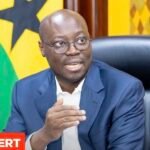
Finance Minister Dr. Cassiel Ato Forson has stressed that government officials entrusted with public funds must account to citizens, saying the 2027 Budget presents how taxpayers’ money will be spent and the purposes it is expected to serve.
He said the management of public resources must be guided by accountability, transparency and the willingness of public officials to be judged by the results of their spending decisions.
Presenting the 2027 Budget Statement and Economic Policy to Parliament on Thursday, November 12, Dr Forson said citizens had a right to know how public funds would be utilised.
“Rt. Hon. Speaker, public money belongs to the people. Those entrusted with it must answer to them,” he told Parliament.
He said the budget had outlined government’s planned expenditure for 2027 and the objectives behind the various allocations.
“We have shown where their money will go in 2027 and the purpose it will serve,” he said.
According to the Finance Minister, presenting spending priorities to the public was an important part of ensuring that government remained answerable for its decisions.
“This is accountability at its highest, placing our spending choices before the people and accepting their right to judge us by the results,” he stated.
Dr. Forson’s remarks come as the 2027 Budget sets out allocations across key sectors, including education, infrastructure, energy, transport and other areas of public service delivery.
He subsequently highlighted what he described as a shift towards productive expenditure, with government allocating GH¢98.3 billion for capital expenditure in 2027.
The amount, according to the Finance Minister, is more than GH¢37 billion above projected interest payments of GH¢61 billion and more than GH¢5.6 billion above the GH¢92.7 billion allocated to wages and salaries.
When capital expenditure financed through transfers to other government units is included, total capital expenditure rises to GH¢120.5 billion, equivalent to 6.7 per cent of GDP.
Dr. Forson said the spending priorities were intended to direct more public resources towards investments that would expand production, create employment and improve incomes.
He maintained that the public should ultimately assess government by the outcomes of its spending decisions.