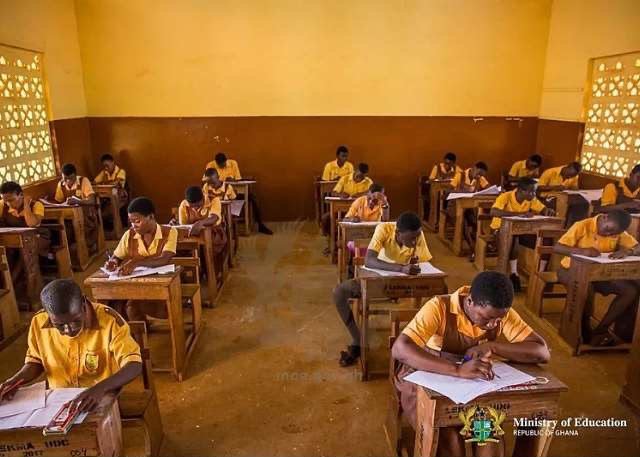
Nearly 55,000 Ghanaian children are now at the centre of a national education debate.
The 2026 BECE placement figures indicate that approximately 54,985 candidates did not qualify for SHS placement, compared with 13,019 in 2025. Failure to meet the required threshold in English or Mathematics has been cited among the grounds for non-placement.
The immediate question is:
What do we do with these children?
Yes, we must urgently create structured remedial and bridging pathways. Partnerships with qualified private SHSs, TVET institutions and other education providers should be explored.
But I believe Ghana must ask a deeper and more uncomfortable question:
Why are we only discovering the problem now?
Look Beneath the Surface
In my work in human capital development and organisational transformation, I often use the iceberg principle: what we see above the surface is usually only a small part of what is actually happening.
Education is no different.
The BECE result is visible.
The learning gaps beneath it may not be.
Behind one examination result could be years of difficulty with reading, comprehension, numeracy, learning habits, language, attendance, teaching quality, overcrowded classrooms, home circumstances, learning differences or simply a system that moved a child forward without ensuring that the foundations had been mastered.
The examination is showing us the symptom. It does not necessarily explain the cause.
And that distinction matters.
Because if we treat only the symptom, we may be having this same conversation again five years from now.
Rescue the 55,000 — But Don’t Stop There
These are not failed children.
They are young people whose current learning outcomes indicate that they need support, intervention and a pathway forward.
We should create a genuine second-chance pathway to competence — not a dumping ground for children who did not meet the threshold.
That means quality assurance, proper assessment, defined learning outcomes, psychosocial support and clear progression pathways.
But remediation cannot become the national solution.
Remediation is what we do after a gap has become visible.
The real reform is learning to identify and address that gap much earlier.
If a child struggles to read in Primary 4, why should we wait until BECE before the problem receives serious attention?
If a child struggles with basic numbers, why should we discover it at age 14 or 15?
We Need to Change the Question
Instead of asking:
“Why did these children fail?”
We should ask:
“What did they know? What did they not know? When did the learning gap emerge? And why did we not intervene earlier?”
That moves us:
From blame → to diagnosis.
From punishment → to intervention.
From exclusion → to pathways.
From examination results → to actual learning.
And yes, English and Mathematics matter.
Literacy and numeracy are foundational. Every child needs the ability to read, understand, communicate, reason and work with numbers.
But there is a difference between saying:
“You have not yet mastered this competency.”
and saying:
“Therefore, your educational journey ends here.”
They are not the same.
We Must Also Rethink Success
Not every child demonstrates ability in exactly the same way.
Some are strong academically.
Others show exceptional practical, technical, entrepreneurial, creative, artistic, sporting or communication abilities.
A technically gifted child should not be made to feel that TVET is where children who failed are sent.
TVET, academic, creative, entrepreneurial and professional pathways should all be respected pathways to competence, further education, employment and enterprise.
Five Shifts Ghana Needs
- Early Diagnostic Assessment
Identify learning gaps continuously, not only at BECE. - Targeted Intervention
Support children when they begin to fall behind — not years later. - Teacher Development
Strengthen teachers’ capacity to recognise and respond to different learning needs. - Multiple Pathways
Academic, technical, vocational, creative and entrepreneurial pathways must all lead somewhere meaningful. - Data-Driven Accountability
Know where children are struggling, why they are struggling and whether interventions are working.
And Behind the 55,000 Is a Human Being
55,000 is not just a number.
It is 55,000 young people.
55,000 families.
55,000 stories.
55,000 futures.
Our language matters.
These children are not failures. They have learning gaps.
A failure can become an identity.
A learning gap is something we can diagnose, address and overcome.
Ghana, Let’s Look Beneath the Water
So yes:
Rescue the 55,000.
Provide remedial and bridging programmes.
Partner with the private sector.
Maintain standards in English and Mathematics.
But let us also use this moment as a national diagnostic.
Let us examine the curriculum, teachers, classrooms, home and language environments, assessment system, transition system, learning resources, early-warning mechanisms, TVET pathways, parental role and our assumptions about what it means to be educated.
Because the real question is not:
“What do we do with the 55,000 who failed?”
It is:
“What must we change so that the next generation does not have to wait until age 14 or 15 for us to discover that they needed help?”
We must rescue the 55,000.
But more importantly, we must investigate the system that produced the 55,000.
That is where real education reform begins.
Ponder on these four questions:
What are we seeing?
What are we missing?
What is beneath the surface?
What must change?
About the Author
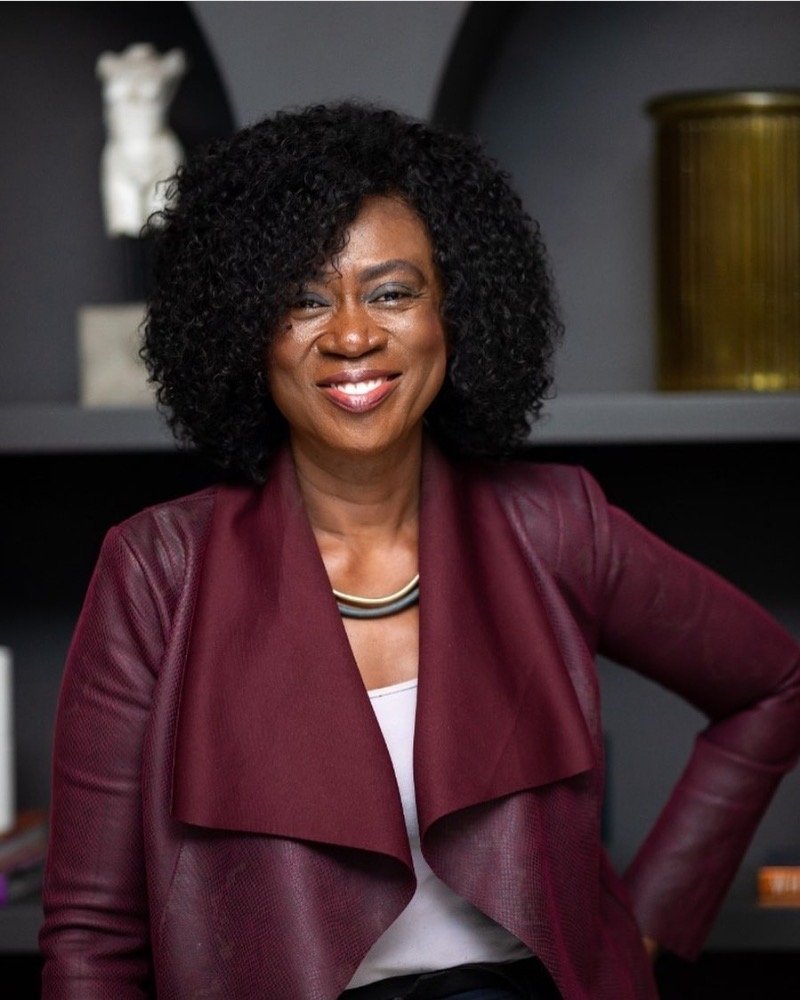
Sika Twum, ChRMP, CGP, is a Human Capital, Organisational Transformation & Education Thought Leader, with academic training in Educational Psychology and Guidance & Counselling.
She is also the Founder of Becoming My Best Self (BMBS), Founder & CEO of SESG Human Capital, and Founder of SESG Future Ready Hub.