


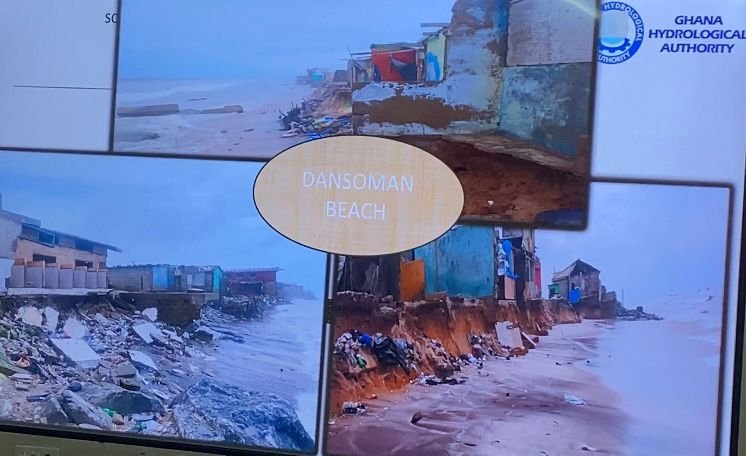
Human activities such as sand winning and sea erosion are wreaking havoc, posing significant threats to Ghana’s coastlines. As a result, Ghana risks losing 370km of its coastlines if the critical protection measures are not put in place.
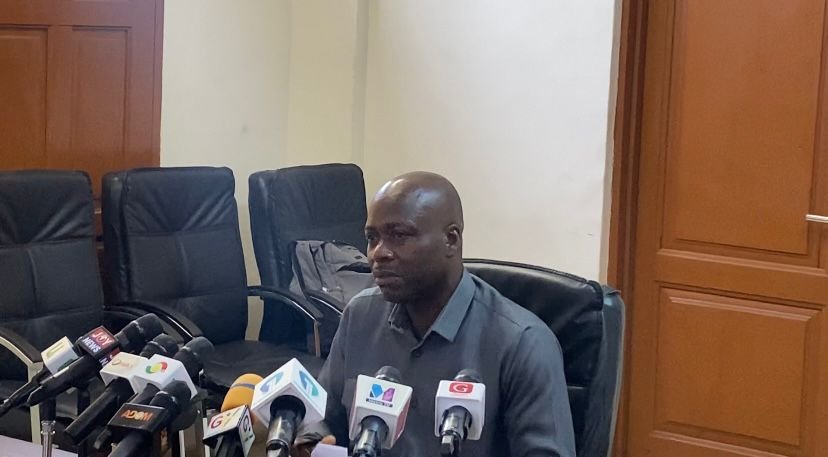
Chief Executive Officer of the Ghana Hydrological Authority, John Kissi is therefore calling for a concerted effort to protect the country’s coastline.
Two of Ghana’s critical power installations, the Aboadze Power Enclave, home to the Takoradi Thermal Power Station and the Twin Energy Station, are under severe threat from sea erosion.
These power plants, located in the Western Region, generate a combined 530 megawatts of electricity-330MW from the Takoradi Thermal Power Station and 200MW from Twin City Energy.
The potential impact of sea erosion on these plants could disrupt the stable supply of electricity, leading to nationwide load shedding.
Five coastal areas
Additionally, five coastal areas – Shama-Anlo Beach, Daukor Shorelines, Ezinlibo Coastal Stretch, Ningo-Prampram Shoreline, and Blekusu Coastline —are also at significant risk.
Other critical infrastructure at risk
Other important infrastructure at risk at the shorelines include the Cape Coast-Takoradi Highway, St. Augustine’s College, the University of Cape Coast, Cape Coast Central Hospital, Moree, Keta, and Blekusu.
550 kilometers coastline
Ghana’s coastline spans approximately 550 kilometers, with about one-third (180 kilometers) considered fairly stable and low-risk.
However, the remaining two-thirds (370 kilometers) are at risk of sea erosion, with only 80 kilometers currently protected.
This leaves 290 kilometers, including the power plants and coastal areas, unprotected and highly vulnerable.
Dr. Kissi stressed the urgent need for intervention, highlighting that even the stable 180 kilometers could become vulnerable over time due to increasing human activities, such as sand mining, and natural factors like climate change and rising sea levels.
“We have two-thirds of our coastline, about 370 kilometers stretch, at risk and requires intervention, requires protection, requires some action on our part,” Dr. Kissi stated.
Ghana loses 1.3 meters to sea erosion annually
He said Ghana loses as much as 1.3 meters of coastline to sea erosion each year. This comprises one meter in the central section of the coastline and 0.35 meters in the Western and Eastern ends.
He noted that some communities have disappeared from the Ghana map due to sea erosion.
Completion rates of various coastal protection works
Dr. Kissi provided updates on the completion rates of various coastal protection works: Dansoman coastal protection works are almost completed, Discover is 37% complete, Cape Coast is 79% complete, Komenda is 98% complete, Anomabo is 74% complete, Elmina is 98% complete, Aboadze is 70% complete, and Ningo Prampram is 70% complete.
In addition to Axim, which was completed two years ago, he said the government targets to complete three of these projects before the end of this year.
He assured that the Ghana Hydrological Authority is actively working with the sector ministry.
He assured that the Ghana Hydrological Authority is actively working with the sector ministry and the government to address these issues.
Source: Ghana/Starrfm.com.gh/103.5FM/Obed King Gaglo


