CLAIM
On February 12, 2026, Awal Mohammed, identified as a member of the Communication Team of the New Patriotic Party (NPP), shared a video on Facebook showing Senior High School (SHS) students being served what appeared to be unwholesome food.
[Video here: https://www.facebook.com/share/r/1FpCYyiv4z/?mibextid=wwXIfr]
The post was captioned: “This is in the Ashanti Region. Tag the TikTok minister for me. How did we get here?” As of February 18, 2026, the post had generated more than 62,000 views and over 400 shares, gaining significant traction online.
The same footage was later reposted by another NPP communicator, Issifu Manwuriba Farouk, who wrote: “Dr. Frank Amoakohene, this is happening in your backyard and you are always busy on TikTok, whilst they feed your students with food even dogs won’t eat.” Both posts strongly suggested that the video reflected current food quality conditions in schools within the Ashanti Region under the Ghana School Feeding Programme.
VERDICT: Misleading
Explanation
Given the level of engagement and the political undertone of the captions, EIB Research and Fact-Check conducted a verification exercise to determine the authenticity and timeline of the footage.
Using Google Reverse Image Search and keyframe analysis, still images from the viral video were traced to an earlier publication.
The search results led to a June 2019 report by JoyNews. Archival checks confirmed that the same footage was published by JoyNews in June 2019 in a report concerning concerns about food served to students at the time.
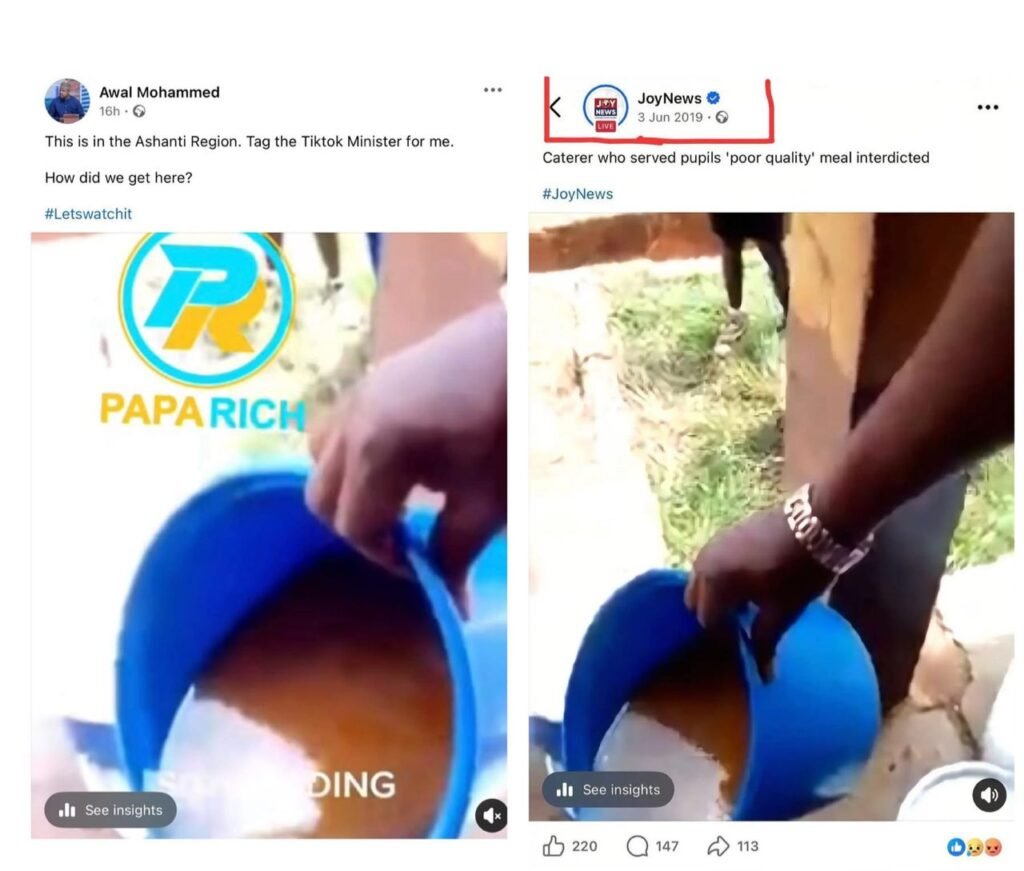
The verification process establishes that the video is not recent. It predates the February 2026 Facebook posts by approximately seven years.
The original report was published during the administration of the New Patriotic Party government in 2019. There is no evidence indicating that the footage was recorded in 2026 or that it documents a newly occurring incident in the Ashanti Region this year.
Although the video itself is authentic, its recirculation without reference to its original publication date amounts to “false context.” False context occurs when genuine content is shared with misleading framing, particularly when time, place, or circumstances are misrepresented.
In this case, the omission of the 2019 date creates the impression that the situation is current, thereby shaping public perception around an ongoing controversy regarding food quality in the Ghana School Feeding Programme.
The Ghana School Feeding Programme, established to improve enrolment, attendance, and nutrition among pupils in public basic schools, has faced periodic operational challenges over the years, including complaints about funding delays and food quality. However, the viral video does not constitute fresh evidence of a 2026 development. Instead, it is archival footage from a previously reported incident.
In conclusion, the claim that the video shows current conditions in SHS schools in the Ashanti Region is misleading. The footage was first published in June 2019 by JoyNews Facebook page, alongside other media publications, and does not depict a recent event.
By presenting old material as though it reflects present-day realities, the posts create a distorted narrative about the current state of the Ghana School Feeding Programme. It is therefore misleading.
Source: Starrfm.com.gh/Isaac Azumah Abilla (EIB Research and Investigative desk)