Communities in mining areas could soon have a stronger voice in decisions about mining activities under proposed changes to Ghana’s mining laws.
Lands and Natural Resources Minister, Emmanuel Armah-Kofi Buah, says the reforms will give local communities a direct role in the process of granting mining licences and help ensure that mining is carried out responsibly.
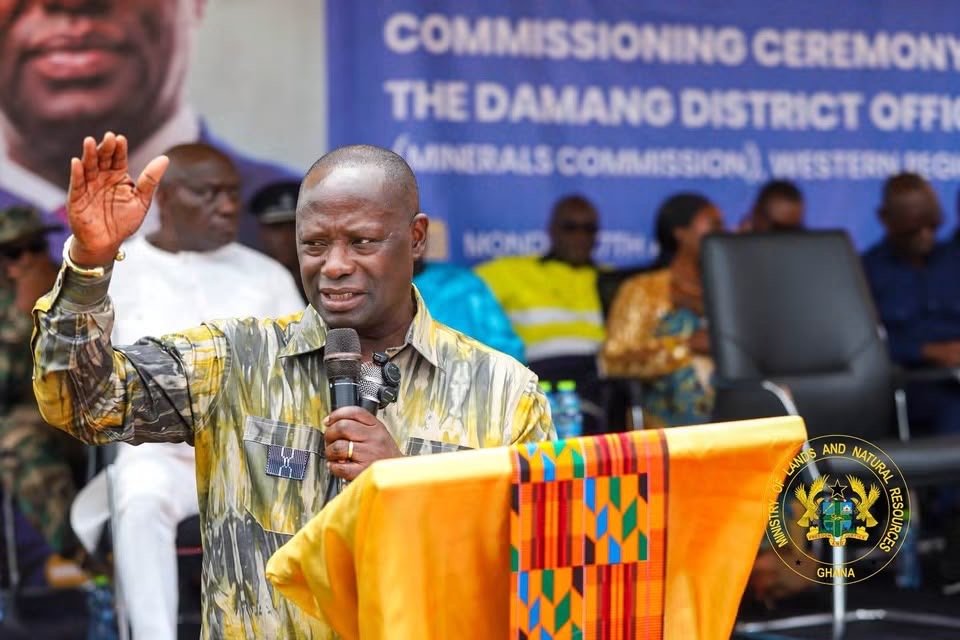
Speaking at the commissioning of the Damang District Minerals Commission Office in the Western Region, Mr. Buah said communities have for years had little involvement in decisions on mining licences, with most of the processes taking place at the Minerals Commission’s headquarters in Accra.
He said the proposed law will change this by establishing District Mining Committees made up of traditional leaders, community representatives, Assembly Members, Environmental Protection Agency officials and other relevant stakeholders.
Under the new arrangement, companies seeking mining licences will first have to engage the district committees.
The committees will then visit the proposed mining sites, assess the areas and gather views from relevant stakeholders before making recommendations to the Minerals Commission for further consideration.
The Minister said the establishment of the Damang District Minerals Commission Office is part of government’s broader plan to decentralise mining services and bring the Commission closer to mining communities.
He said residents should no longer have to travel to Accra to access basic mining-related services.

The Chief Executive Officer of the Minerals Commission, Isaac Andrews Tandoh, reiterated that the opening of the Damang office is an important step towards changing the way Ghana manages and regulates its mineral resources.
Mr. Tandoh acknowledged that the Minerals Commission has often been seen as a regulatory body operating largely from Accra, making it difficult for people in mining communities to access its services.

He said the opening of district offices such as the one in Damang is intended to change that perception and ensure that communities have easier access to the Commission.
Source: Starrfm.com.gh