By using this site, you agree to the Privacy Policy and Terms of Use.
Accept
Starr FmStarr FmStarr Fm
  • Home
  • Election Hub
  • General
    GeneralShow More
    Mahama removes Baba Jamal as Commissioner to Nigeria following alleged vote-buying in NDC Ayawaso East primaries
    February 7, 2026
    Baba Jamal wins NDC Ayawaso East primaries, defeats late MP’s wife
    February 7, 2026
    IShowSpeed promoted Ghana internationally better than we could do – Mahama
    February 7, 2026
    I never knew about Shea Butter Museum in Ghana until IShowSpeed’s visit – Mahama
    February 7, 2026
    Ghana, Zambia to partner on fintech and cybersecurity as AI fake news rises
    February 7, 2026
  • Business
    BusinessShow More
    African businesses should view displacement as an economic opportunity – Isaac Fokuo
    February 6, 2026
    3.8% inflation does not reflect reality at market – Tema Central MP slams gov’t
    February 6, 2026
    Ghana, Zambia are “twins of the same mother” facing similar economic challenges – Mahama
    February 6, 2026
    Africa’s new fight is economic transformation – Mahama addresses Zambia’s Parliament
    February 5, 2026
    Zambia President hails Ghana-Zambia ties, pledges support for AfCFTA secretariat
    February 5, 2026
  • Politics
    PoliticsShow More
    Mahama removes Baba Jamal as Commissioner to Nigeria following alleged vote-buying in NDC Ayawaso East primaries
    February 7, 2026
    Baba Jamal wins NDC Ayawaso East primaries, defeats late MP’s wife
    February 7, 2026
    Renaming Kotoka Airport must be guided by national interest, not ethnicity – Deloitte Associate Director
    February 7, 2026
    The criteria being used to rename Kotoka International Airport will disturb our history – Wilberforce Asare
    February 6, 2026
    Party unity at the grassroots is key to electoral victory – Awudu Mahama
    February 6, 2026
  • Entertainment
    EntertainmentShow More
    IShowSpeed promoted Ghana internationally better than we could do – Mahama
    February 7, 2026
    Gospel singer Victoria Ivy Obeng releases ‘My Passion’ EP
    February 6, 2026
    Clarion Clarkewoode returns with AyƐ Kwa
    February 6, 2026
    Starr 103.5 FM to host Fugu Night Out at +233 Jazz Bar & Grill
    February 6, 2026
    I was 17 when I won Miss Malaika – Hamamat Montia shares her journey to cultural advocacy
    February 6, 2026
  • Sports
    SportsShow More
    Otto Addo gets new technical team members ahead of 2026 World Cup
    February 7, 2026
    Kofi Adams calls for continental reset at AIPS Africa Congress in Gambia
    February 7, 2026
    Man City edge Newcastle, set up Carabao Cup final with Arsenal
    February 5, 2026
    Ghana Para-Athletics team heads to Dubai for Commonwealth Games qualifier
    February 5, 2026
    Carabao Cup: Arsenal knock out Chelsea to reach first final since 2018
    February 4, 2026
  • Technology
    TechnologyShow More
    Ghana, Zambia to partner on fintech and cybersecurity as AI fake news rises
    February 7, 2026
    GSTS and STEMQUEST: How an Alumni-Led Extracurricular Initiative is Redefining Technical Education in Ghana
    February 4, 2026
    IShowSpeed’s energy is on another level; he has to entertain followers nonstop – Wode Maya
    January 30, 2026
    A new layer of privacy five years in the making
    January 29, 2026
    APRIL STEM rejects STEAM model, says arts is already science as SMET is the future of innovation
    January 11, 2026
  • International
    InternationalShow More
    Ghana, Zambia to partner on fintech and cybersecurity as AI fake news rises
    February 7, 2026
    Over 100 million people displaced, globally, young Africans most affected – Isaac Kwaku Fokuo
    February 6, 2026
    Lordina Mahama meets Zambian First Lady, explores collaboration on cross-border community initiatives
    February 6, 2026
    Ghana, Zambia are “twins of the same mother” facing similar economic challenges – Mahama
    February 6, 2026
    Ghana–Zambia visa-free agreement is more than diplomatic instruments – Mahama
    February 6, 2026
  • Factometer
Search
© 2024 EIB Network Ltd. All Rights Reserved.
Reading: Africa needs more female leaders to drive equitable pandemic recovery efforts
Share
Notification Show More
Font ResizerAa
Starr FmStarr Fm
Font ResizerAa
  • Headlines
  • Election Hub
  • General
  • Politics
  • Sports
  • Business
  • Entertainment
  • Factometer
Search
  • Headlines
  • Election Hub
  • General
  • Politics
  • Sports
  • Business
  • Entertainment
  • Factometer
Have an existing account? Sign In
Follow US
© 2024 EIB Network Ltd. All Rights Reserved.
Editors PickFeatures

Africa needs more female leaders to drive equitable pandemic recovery efforts

Starrfm.com.gh By Starrfm.com.gh Published August 31, 2023
Share
SHARE

The pandemic has revealed and amplified existing inequalities around the world. Amidst lockdowns and economic shocks, African women have been hit particularly hard. According to the Brookings Institute, more than 70 per cent of women across the region now face insecurity. From job losses to increases in unpaid labour, a rise in domestic violence, and disruptions to education, African women have shouldered great mental, physical, and economic stress over the last year. But despite the pandemic’s outsized impact on African women, their voices are seldom included in recovery efforts, especially at the highest levels of leadership. If we hope to recover and reset to build more equitable societies, the voices of female leaders must be front and centre.

According to a recent survey by advocacy group Women Deliver and Paris-based research organisation Focus 2030, 7 of 10 workers on the frontline of the pandemic are female. Yet, women are left out of many COVID-19 response and recovery plans. Across the world, women only account for a quarter of decision-makers on COVID-19 response panels.

The situation in Africa isn’t much different.  For example, women constitute only a quarter of ministers of health across the region.

In my home country, Ghana, I served as a member of the National Democratic Party’s COVID-19 Technical Response Committee. Nevertheless, I could count the number of women involved in decision-making around pandemic response in either major party on two hands.

This reality is not unique to Ghana; it is the status quo across the region. That oversight will cost Africa in the long term. Because the impact of the pandemic has been gendered, it is critical that the voices of all affected parties—especially women—be heard.

In early 2020, only 14 countries worldwide had cabinets where women held at least half of posts. Only one—Rwanda—was in Africa. By now, it is no secret that Africa women are rarely included in decision-making, policy and government circles. And when women are included, they often suffer severe harassment.

According to a 2016 study, four in five women parliamentarians have experienced psychological violence linked to their job, one in four physical violence and one in five sexual violence.

I know this firsthand: as a parliamentary candidate in Ghana’s recent elections, I experienced an avalanche of discrimination with bitter criticism of everything from my makeup to my medical qualifications, despite being a board-certified surgeon.

This vitriol is not only a threat to women’s safety but a deterrent that dissuades qualified female candidates from running in local and national elections alike.

We have to address the roadblocks that discourage women from taking office because women in leadership are essential to help us build forward differently.

For example, we have seen firsthand how countries that have most successfully navigated the pandemic have been female-led.

During the Covid-19 crisis, the number of cases and deaths were systematically better in countries led by women.

In the United States, one study of U.S. governors found that states with female leaders had lower fatality rates. These findings are not unique to industrialised economies: in India, women-led councils have pushed for better access to clean water – critical for preventing the spread of the virus.

When we exclude or dissuade women from political office, societies lose. After all, research and anecdotal evidence suggest that where women are in leadership, governments are more likely to respond better to crises in ways that support socio-economic development.

Full and equitable participation of women in public life is essential to addressing structural inequality. My fellow countryman Kofi Annan once noted that “there is no tool for development more effective than the empowerment of women. No other policy is as likely to raise economic productivity or to reduce child and maternal mortality. No other policy is as sure to improve nutrition and promote health, including the prevention of HIV/AIDS. No other policy is as powerful in increasing the chances of education for the next generation.”

What he did not include in that statement is the reality that women are not only facilitators of peace but are also the backbone driving our development.

It is not just because of altruism; it is often because women have experienced developmental challenges firsthand: the face of poverty in Africa is female. These lived experiences might explain why studies show that female politicians are more likely to prioritise health, education, and related indicators.

Gender equality is undoubtedly a regional and global imperative. The African Union calls for “a more inclusive society where all the citizens are actively involved in decision making in all aspects.”

At the same time, the United Nations declares that all sustainable development goals hinge upon the achievement of gender equality.

But as we navigate COVID-19 recovery, we need more attention to gender equality than ever before. We have lost too much during this pandemic to let the carefully fought gains of recent decades disappear. To avoid regression, we must recognise that gender equality is critical to the ability of our societies and economies to recover and that diverse leadership is a crucial dimension of this journey.

Instead of seeking to go “back to normal”, it is time to introduce a “Great Reset” by promoting governance models that amplify women’s voices and engage women as decision-makers.

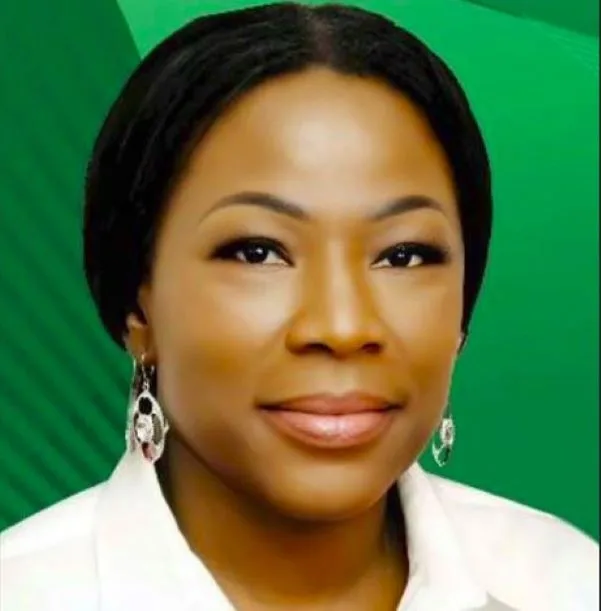
Dr. Grace Ayensu-Danquah, MD, MPH, FACS, is a US board Certified Surgeon Specialist, A philanthropist a Gender Advocate and current NDC Parliamentary Candidate for Ghana’s Essikado-Ketan Constituency.

Source: Dr. Grace Ayensu-Danquah

You Might Also Like

IShowSpeed promoted Ghana internationally better than we could do – Mahama

Ghana, Zambia to partner on fintech and cybersecurity as AI fake news rises

Lordina Mahama meets Zambian First Lady, explores collaboration on cross-border community initiatives

It is time to ensure Africa’s natural resources serve its people, project their dignity – Ablakwa

Zambian President announces plans to purchase more Ghanaian fugu following Mahama’s visit

TAGGED:Africacovid-19 pandemicDr. Grace Ayensu-DanquahfemalePANDEMIC
Share This Article
Facebook Twitter Email Print
Share
Previous Article Minority demo: Police go to court over routes impasse
Next Article MTN treats customers with movie screening “Retribution” at Silverbird Cinemas

Starr 103.5FM

Starr FmStarr Fm
Follow US
© 2024 EIB Network Ltd. All Rights Reserved.
newsletter icon
Join Us!

Subscribe to our newsletter and never miss our latest in news, podcasts etc..

[mc4wp_form]
Zero spam, Unsubscribe at any time.
adbanner
AdBlock Detected
Our site is an advertising supported site. Please whitelist to support our site.
Okay, I'll Whitelist
Welcome Back!

Sign in to your account

Lost your password?