Young people in West Africa have been urged to uphold the principles and protocols of Economic Community of West African State (ECOWAS) to help tackle growing insecurity and political instability in the sub-region .
ECOWAS vision 2050 anchored on peace, security and stability,governance and rule of law and economic integration and interconnectivity, transformation, inclusive and sustainable development.
However, according to the West Africa Network for Peacebuilding (WANEP), from January to June, it’s National Early Warning Systems (NEWS) documented 4,237 human security-related incidents across West Africa, resulting in 7,036 fatalities.
The monitoring report captures trends across four thematic areas: Organised Crime and Violent Extremism; Democracy and Governance; Gender, Peace and Security; and Environmental
Security.
The report says the sub-region continues to face escalating security threats from organised crime and violent extremism which encompassed terrorist attacks, armed banditry, agro-pastoralist conflicts, armed robbery, gang violence, kidnapping, homicide, and trafficking in persons and drugs.
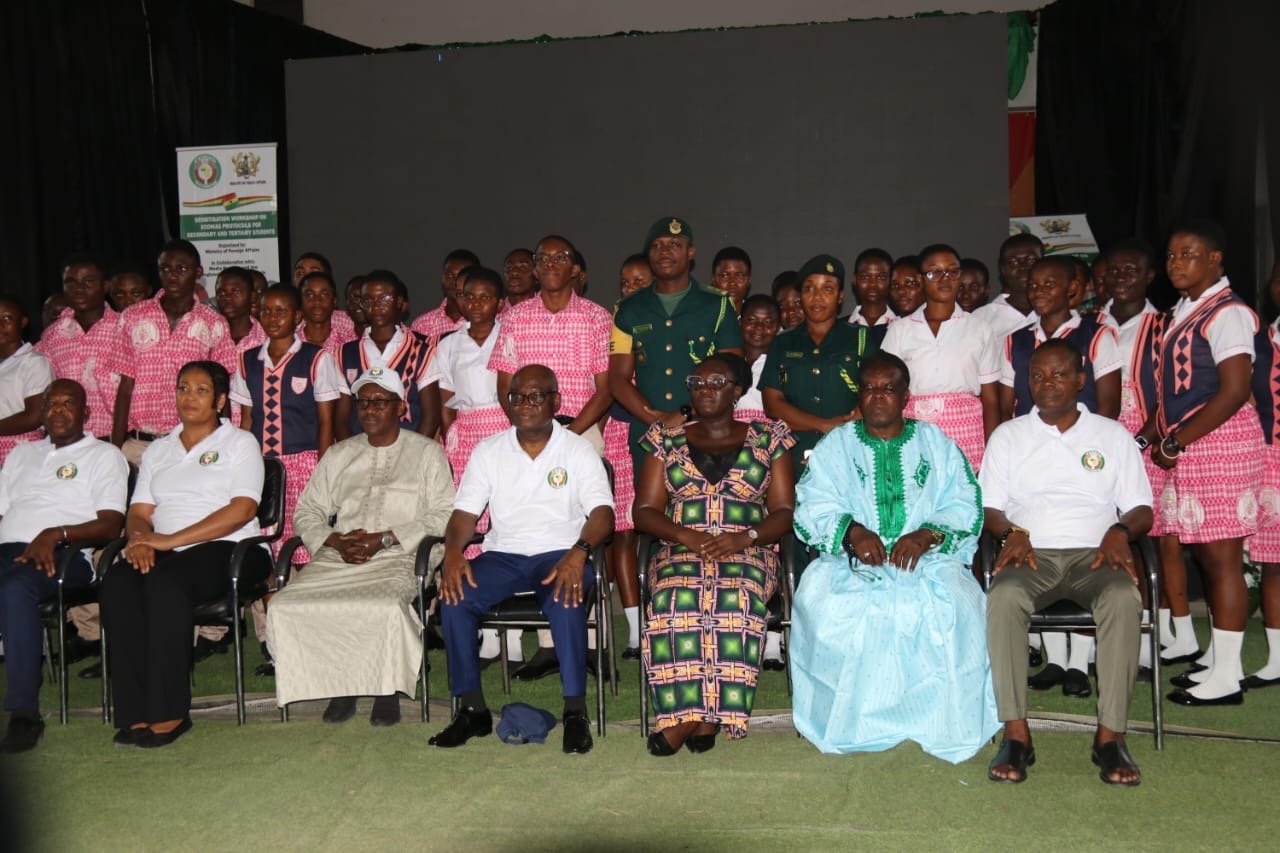
At a Regional Sensitization Workshop on ECOWAS Protocols held for secondary and tertiary students in Eastern Region, Coordinating Director for Multilateral and International Organisations at the Ministry of Foreign Affairs, Ambassador Francis Danti Kotia, urged the young people to see themselves as ambassadors of regional integration and peace, emphasizing that the future of West Africa’s development depends on innovation, entrepreneurship, and skills development among the youth.
“You are not too young to influence the direction of our sub-region. As digital natives and innovators, your energy and creativity are needed to push West Africa toward a sustainable and inclusive future,” he said.
He encouraged the youth to take active interest in the activities and opportunities provided by the Economic Community of West African States (ECOWAS).
Ambassador Kotia, who represented the Minister for Foreign Affairs, Hon. Samuel Okudzeto Ablakwa (MP), said the workshop was part of efforts by the Ministry to increase public understanding of ECOWAS’s vision, protocols, and benefits, especially among young people.
“The aim of this workshop is to enlighten the bright minds of our students about the role, vision and protocols of ECOWAS, as well as the opportunities that can be derived from this great regional body,” he said.
He described ECOWAS as a shared dream of unity, progress, and prosperity for all West Africans, noting that since its establishment in 1975, the organization has played a vital role in promoting economic growth, political stability, and social development in the sub-region.
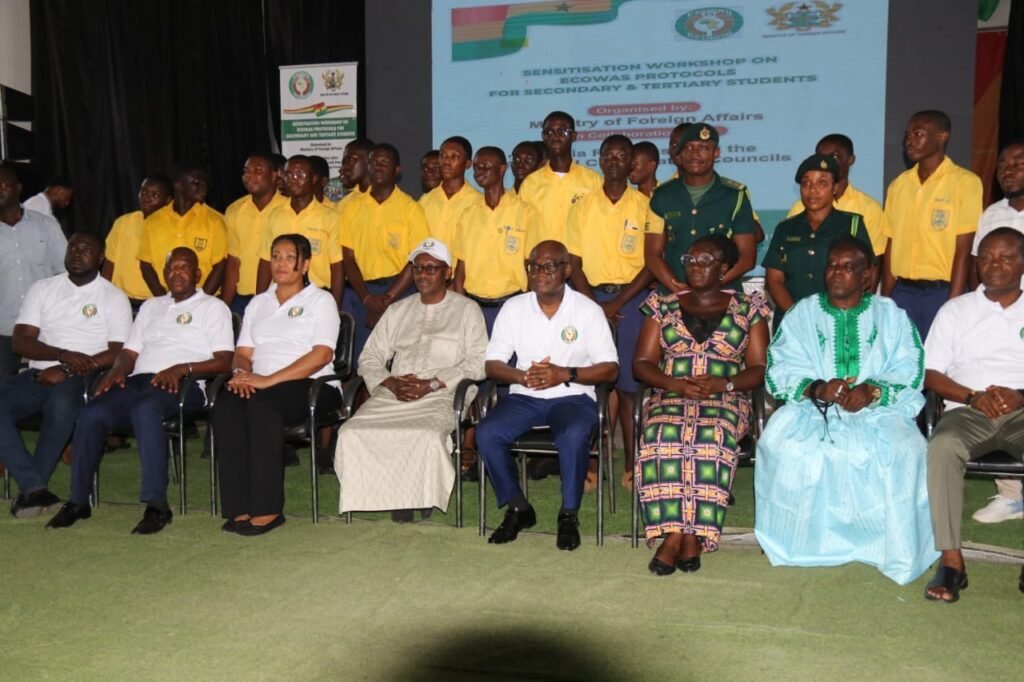
Ambassador Kotia highlighted that ECOWAS offers enormous opportunities for education, cultural exchange and youth empowerment through scholarships, internships, and cross-border collaborations, and encouraged students to take advantage of these initiatives.
He also underscored the tangible benefits ECOWAS continues to deliver to citizens, including the Protocol on Free Movement, Rights of Residence and Establishment, and the introduction of the ECOWAS Identity Card and passport, which are helping to create a unified regional identity.
“ECOWAS is not just about visa-free travel. It is about economic opportunity, social cohesion, and regional identity,” he said. “It is about breaking barriers and building bridges; ensuring that a student in Ghana can collaborate with peers in Nigeria, Senegal, or Sierra Leone to find African solutions to African challenges.”
READ: Solar for Industries Project at the heart of 24-hour economy – President Mahama
Ambassador Mohammed Lawal Lana, Representative of ECOWAS President said priority is being placed on youth development and empowerment across the sub region to ensure that potential of the youth who constitute 60% of the region’s population are harnessed.
Mohammed Saani Adams, Director of Youth Development and Employment at Ministry of Youth Development and Empowerment, said providing educational and economic opportunities for the youth as well as their participation in decision making area key to ensuring stability and inclusive development.
Source: Starrfm.com.gh