Municipal and district assemblies across the Eastern Region to manage rising volume of daily waste generation expending huge funds weekly on refuse collection while struggling with limited landfill space, even as a nearly completed waste treatment plant remains non-operational.
The New Juaben South Municipal Assembly alone generates nearly 400 tonnes of solid waste every day, spending close to GH¢80,000 each week on waste collection and disposal.
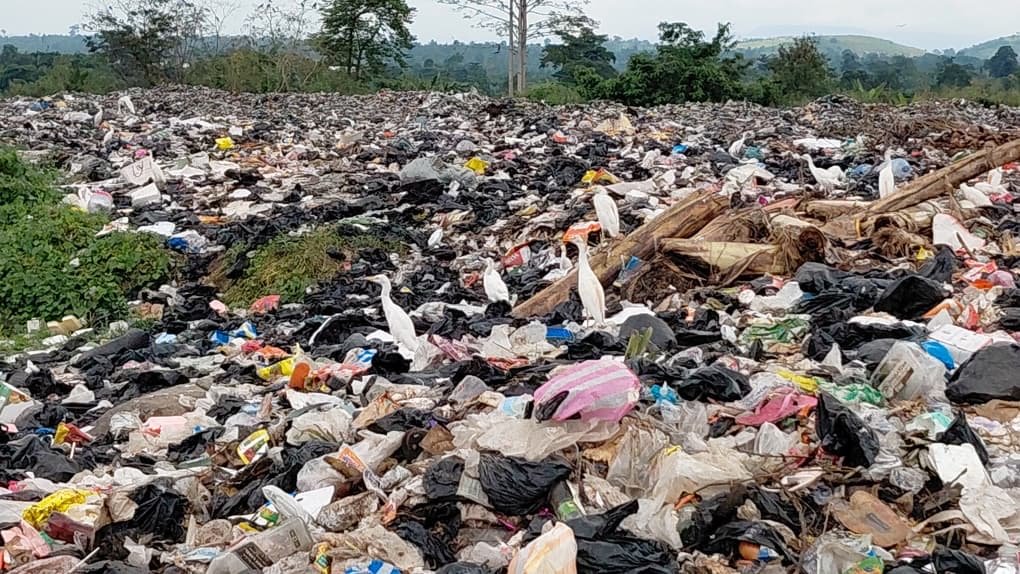
The situation has been worsened by the deteriorating condition of the Akwadum landfill site, which has reached full capacity.
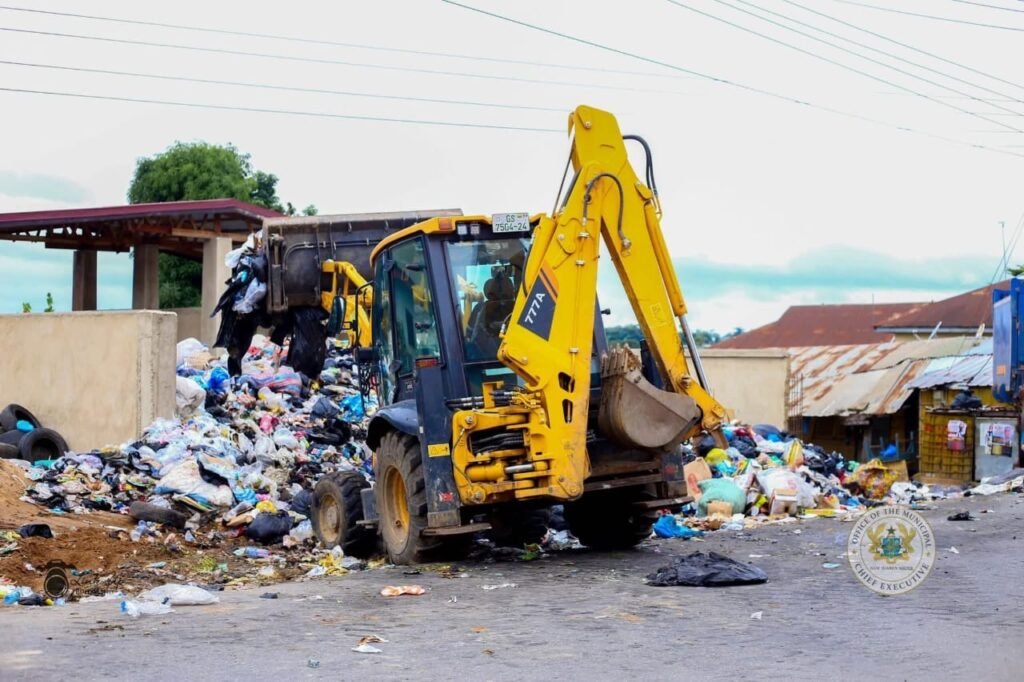
Flooding during the rainy season has rendered parts of the landfill inaccessible, making it difficult for refuse trucks to dispose of waste on schedule and causing delays in waste collection across the municipality.
The Municipal Chief Executive (MCE) for New Juaben North, Samuel Adongo, said the landfill has served several municipalities for years and is no longer able to cope with the increasing volume of waste.
“It’s not good enough because we have been dumping there for several years, and it’s the same landfill taking care of other municipalities. During the rainy season the place becomes very slippery and the trucks are unable to access the dumping areas. Almost every week we have to push the waste, and it costs us so much,” he said.
According to him, the assembly has begun improving access roads within the landfill while discussions are underway for Zoomlion Ghana Limited to take over its management.
The landfill challenges have resulted in delayed refuse collection, overflowing waste containers and growing sanitation concerns in the New Juaben North and South municipalities, with similar problems being experienced by several assemblies across the region.
Residents say the volume of waste continues to outpace the available disposal facilities.
Ironically, only a few kilometres away stands a facility that many believe could transform waste management in the region.
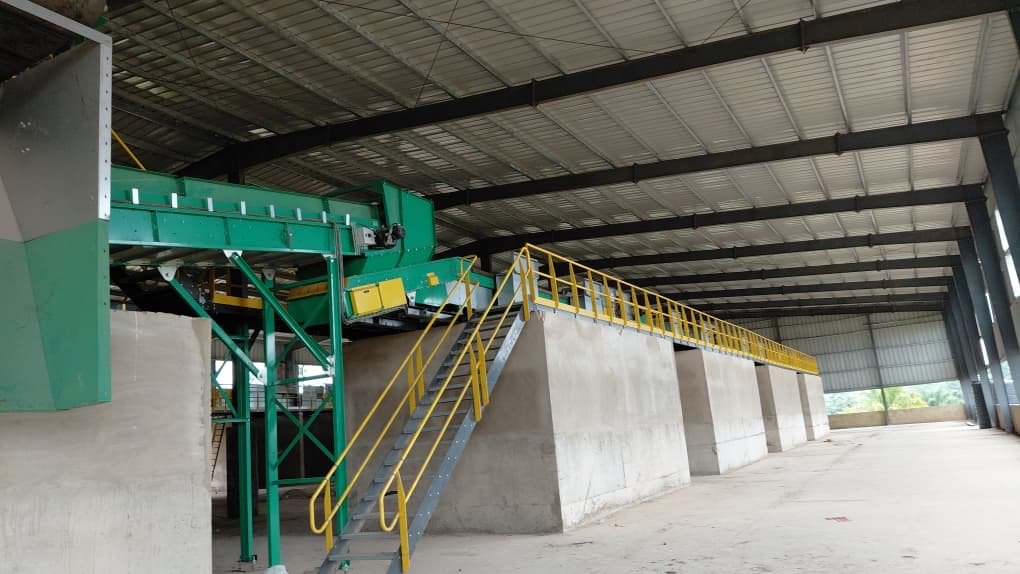
Constructed under the government’s Integrated Recycling and Compost Plant (IRECOP) initiative by Zoomlion Ghana Limited and its partners, the Eastern Regional waste treatment plant, located along the Koforidua–Akwadum Road, was expected to process municipal solid waste into reusable materials and organic compost.
The project, which began in 2020 when the Eastern Region became the eighth beneficiary of the nationwide programme, is estimated to be about 95 percent complete but remains idle years after construction.
Mr. Adongo believes operationalising the plant would significantly reduce pressure on existing landfill sites.
“If this recycling plant starts operating today, this issue of waste and landfill will be over. The plant is so huge that even the waste generated within New Juaben alone will not be enough. It has the capacity to serve many surrounding districts and municipalities. We pray that the company operationalises the plant as soon as possible to relieve us of this burden,” he said.
Unlike conventional landfill systems, the Integrated Recycling and Compost Plant is designed to sort incoming waste into plastics, metals, paper and organic materials. Recyclable materials would be supplied to manufacturing industries, while organic waste would be converted into nutrient-rich compost for agriculture.
The MCE described waste as an economic resource rather than a liability, stressing that the facility could create significant employment opportunities.
“It can employ about 500 people at the same time and operate as a 24-hour factory. It will solve our sanitation problems, create jobs for the youth and provide raw materials for industries,” he added.
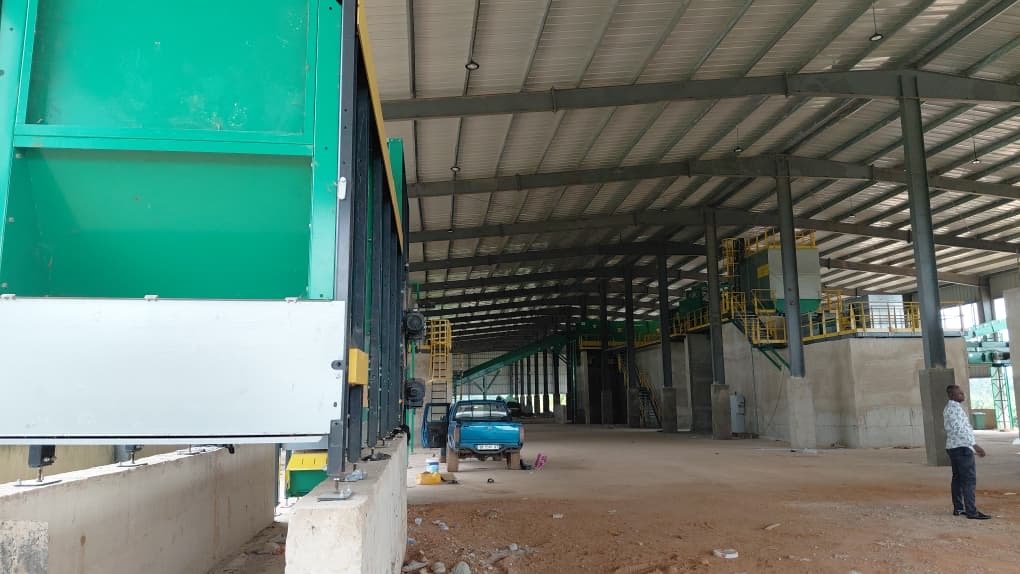
As assemblies continue to spend huge sums managing overflowing landfills amid growing sanitation concerns, stakeholders say the operationalisation of the Integrated Recycling and Compost Plant has become increasingly urgent to provide a sustainable and long-term solution to the Eastern Region’s waste management challenges.
Source: Starrfm.com.gh