The Minister for Education, Haruna Iddrisu, has hinted at a possible review of the two-year examination ban imposed on Junior High School (JHS) students who skip classes to sit for the Basic Education Certificate Examination (BECE) ahead of schedule.
He said the government would reconsider the severity of the sanctions after the BECE examination and registration process, although he maintained that the policy was necessary to protect the integrity of the country’s education system.
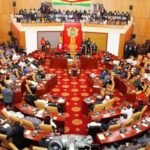
The minister made the remarks while addressing journalists in Parliament on Friday, November 27, following criticism from the opposition New Patriotic Party (NPP) over the sanctions.
The policy targets JHS 1 and JHS 2 students who bypass the normal academic progression to write the BECE before completing the three-year junior high school programme.
According to Mr. Iddrisu, the practice undermines continuous assessment, which forms an important part of the examination process.
“Our primary concern is not just planning and the numbers, it’s about the integrity of assessment because continued assessment is an integral part of the BECE exams,” he said.
The Tamale South MP argued that students must complete the required period of training before taking the final examination.
However, acknowledging concerns about the severity of the punishment, the minister indicated that the two-year ban could be reconsidered.
“If it is about the severity of the sanctions, when I say that the child will suffer and the child may not be accommodated for purpose of B.E.C. examination, we will at the appropriate time after the B.E.C. examination and registration review it,” he said.
He added that the review would not happen immediately, stressing the need to first assess how the country responds to the policy.
Mr. Iddrisu maintained that the government was not opposed to exceptionally gifted students sitting the examination early but insisted that such cases should be determined by the school system.
“I’m not against a brilliant gifted student, but like it or not, there would be an exceptional few,” he said.