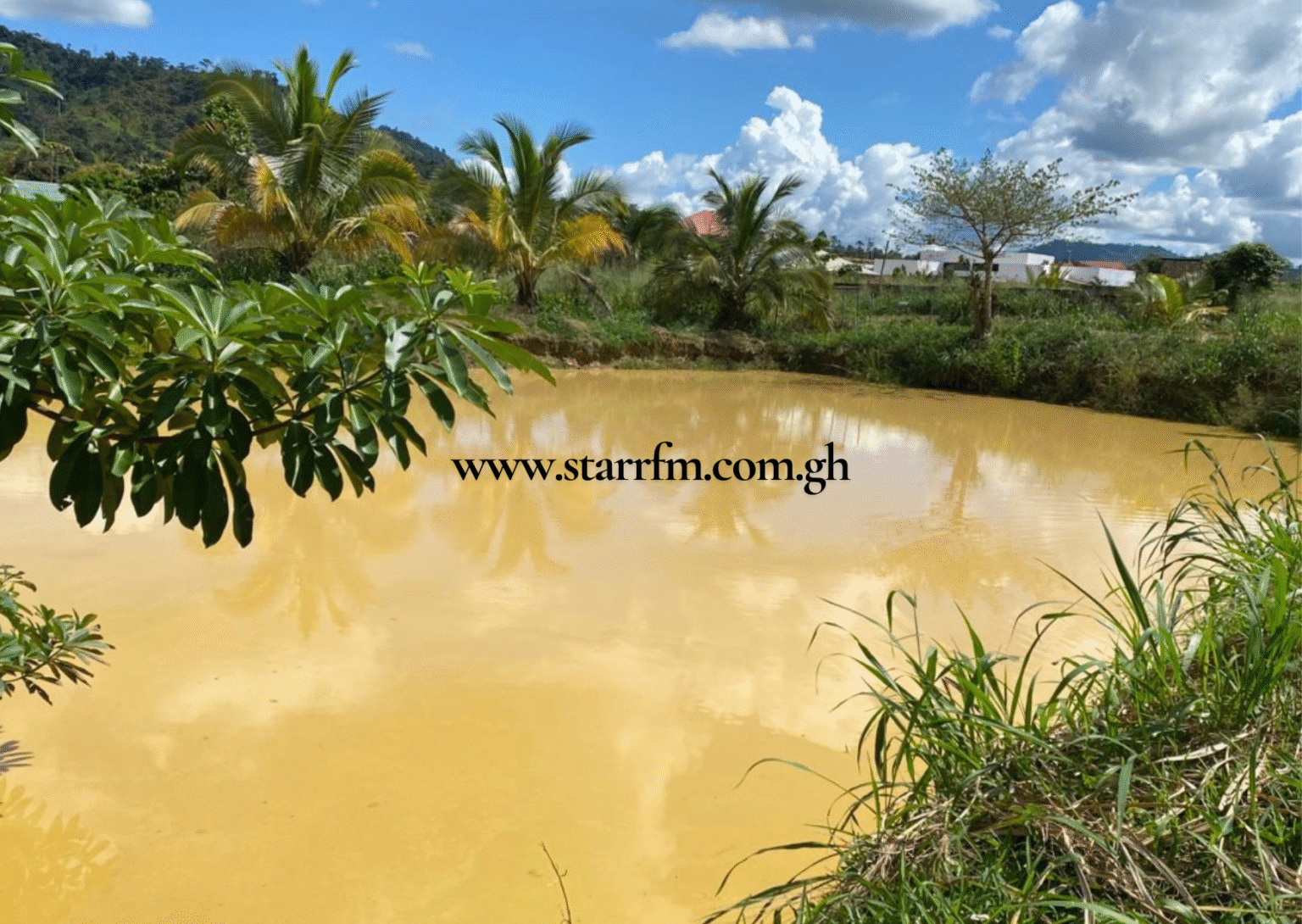
Aquaculture in Fanteakwa South was once a booming venture, with farmers investing in fish ponds and cage farming for both food and income, but that story has changed.
Over eighty percent of waterlogged areas suitable for pond production in Osino and nearby communities have been wiped out by illegal mining.
A 2024 Report by Abraham Nketiah, Station Officer in charge of Osino Zone for the Veterinary Service explained that one of the major losses is the Solar Fish Farm at Osino.
The farm operated 81 floating cages with an average stocking density of 4,000 tilapia fingerlings per cage, producing about 200 metric tons of fish annually.
Today, the picture is grim. The dams that sustained the fish farm have been overtaken by illegal miners.
The report said water sources are polluted with silt and heavy metals, ponds have been mined out, and the offices and nursery tanks now lie in ruins.
At Nat Farms in Jampomani, another major fish production site with eight dugout ponds that once thrived with fish have been completely destroyed. The only trace left is an abandoned farmhouse deep in the bush – its water source gone without a trace.
According to Dr. Kofi Nti Agyarko, a Senior Veterinary Officer at the Eastern Regional Veterinary Department of the Ministry of Food and Agriculture, fish farmers in mining areas are facing mounting challenges.
Some rely on boreholes, but those who use natural water sources are struggling with contamination.
“When water from mining areas is used for aquaculture without proper filtration, heavy metals end up in the fish. Many can’t survive in such waters. Aquatic animals live in these contaminated water bodies, and when heavy metals and poisonous substances are released, it directly affects their health,” he explained
The Doctor of Veterinary Medicine said illegal mining is causing extensive harm not only to humans but also to terrestrial and aquatic animal health.
He said bushmeat lovers risk eating mercury and cyanide accumulated meats as water bodies in forest areas where these wild animals drink are heavily polluted.
“Terrestrial animals like cattle also drink from these same water sources, and the toxins are deposited in their bodies, eventually finding their way into the human food chain.”
Dr. Kofi Nti warned that if the situation persists, Ghana risks a serious decline in animal protein supply, as the fisheries sector – which contributes significantly to the country’s GDP – continues to deteriorate.
“Most of our protein comes from animal sources. If we don’t tackle this, we’ll experience a gradual decline in animal protein, and that’s a huge concern,” he added.
READ: Junior doctors suspend planned nationwide strike following assurances from stakeholders
He is however optimistic about the current government’s commitment to the fight against galamsey to safeguard the country’s environment, food security, and public health.
Source: Starrfm.com.gh