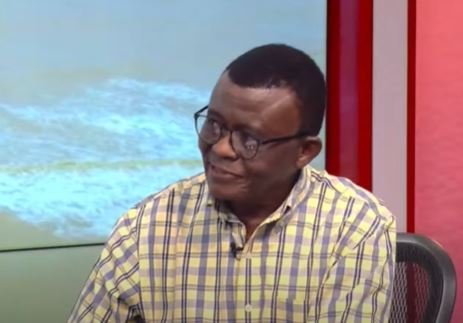
Governance expert Professor Baffour Agyeman-Duah has strongly endorsed President John Dramani Mahama’s decision to reject a proposed United States health compact, describing the original demands as “simply outrageous” and a threat to Ghana’s sovereignty.
Speaking in a radio interview following the President’s disclosure in Goaso, Ahafo Region, that Washington has sought fresh talks to amend or remove contentious provisions, Prof. Agyeman-Duah applauded the government for rejecting the initial arrangement.
The proposed five-year compact, valued at approximately $109 million and intended to replace some previous USAID health funding, was thrown out by Cabinet earlier this year over concerns including the sharing of national pathogen profiles, citizens’ medical records, counterpart funding requirements, and restrictions on the Food and Drugs Authority’s inspection powers.
“I will applaud the President and his government for rejecting the arrangement that was submitted to them,” Prof. Agyeman-Duah said.
“Because the quid pro quo that they sought… was simply outrageous. One nation cannot demand that another nation submits the list of patients and the kinds of diseases that it contains in the country,” he said
He noted that such data requests raise serious questions and recalled longstanding concerns about external influence over African health systems and food production.
The professor expressed particular pride in President Mahama’s blunt explanation of the rejection during a Council on Foreign Relations engagement in New York last month.
While acknowledging that the United States has returned with proposals to revise the document, Prof. Agyeman-Duah said the content of any new terms remains unknown.
“If it is the same kinds of demands, the President will simply reject it again. And if it’s not, and the terms are good, and we consider our health sector to be a priority that requires us to take hundred and nine million dollars, then that’s fine,”he said.
He stressed, however, that Ghana possesses the resources to strengthen its health sector without accepting degrading conditions.
“There are so many things we can do on our own if we manage our economy better. If we can cut out the fat, the corruption and that kind of thing, a hundred and nine million dollars is not something that is beyond a country like Ghana with all the resources that we are blessed with,” he added.
Prof. Agyeman-Duah cautioned against partnerships that treat Ghana as a “doormat.”
“Any partnership that seems to degrade Ghanaians… that partnership is no partnership. It’s nothing but exploitation and disregard for our sovereignty.”
Drawing on the American saying that there is “nothing like free lunch,” he argued that Ghana has too often accepted loans and grants without fully scrutinising the conditions attached.
He called for a shift in mindset toward self-sufficiency, questioning over-reliance on external support for basic needs such as food production.
“We have become docile as a people, not even working, thinking through how we become self-sufficient in certain areas,” he said. “Why should we rely on partnerships so we can get free maize or something like that? Things that we can do ourselves.”
The professor concluded that while constructive international partnerships should continue, they must respect Ghana’s dignity and not perpetuate a sense of dependency.
Source: Starrfm.com.gh