


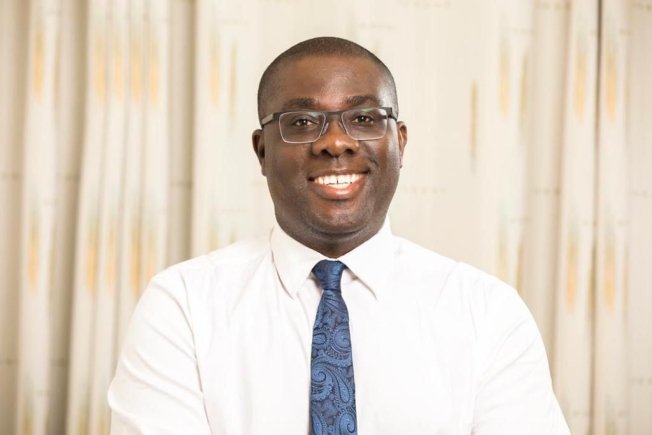
The Member of Parliament for Akuapim North, Sammi Awuku has charged Parliament to urgently enact a legal framework to streamline education of Persons Living with Disabilities, PWDs in the country particularly the deaf. Mr. Awuku particularly pleaded with the legislature to roll out measures to address the needs of deal students in Ghana. This plea from the MP comes on the back of a recent visit to the Senior High Technical School for the Deaf in Mampong in the Eastern Region.
Delivering a statement on the floor of Parliament, the MP for Akuapem North described the visit—organised by Parliament’s Department of Public Engagement—as a powerful reminder of the need for inclusive dialogue and meaningful democratic participation.
“The encounter provided a platform for students living with hearing impairments to interact directly with legislators and provide them with a real-world understanding of how Parliament works, including ways through which they can actively participate,” the MP noted.
The engagement, which featured contributions from several MPs including Fred Agbenyo, Edem Agbana, Kojo Oppong Nkrumah, Shirley Kyei, and Wallace Pele, revealed serious systemic challenges affecting the education and welfare of deaf learners in Ghana. Foremost among the concerns raised was the lack of a dedicated legislative framework for deaf education. The MP highlighted that the country’s only Senior High Technical School for the Deaf currently operates without legal backing to secure consistent funding, policy direction, and institutional support.
“This gap leaves the school vulnerable to inconsistent budgetary allocations, administrative neglect, and limited infrastructural development,” the MP warned, linking the issue to Ghana’s commitments under Sustainable Development Goal 4 (SDG 4) on inclusive education.
Infrastructure and Safety Concerns
The school’s divided campus layout was also raised as a critical safety issue. Students must cross busy roads multiple times a day to access meals and classes, often relying on taxis to transport food between campuses—an unreliable system that has led to delays and hunger.
The MP called on the Ministry of Education, with Parliament’s backing, to construct a centralised dining hall and take steps to unify the school’s learning environment.
Curriculum Reform and Teacher Support
Teachers at the school shared concerns that the national curriculum does not adequately cater to the needs of deaf learners. Many lessons require repetition due to comprehension delays, and current assessment structures fail to reflect the learning realities of students with hearing impairments.
The students proposed key reforms, including:
• Sign language-based instructional materials
• Visual learning tools
• Simplified content structures
• Extended teaching and assessment time
They also called for more trained sign language interpreters, special learning aids, and enhanced professional development for educators.
“Parliament must ensure that inclusive education becomes a practical reality rather than a theoretical aspiration,” Mr. Awuku appealed.
Find below the full statement read by Sammi Awuku on the floor of Parliament:
STATEMENT ON THE ENGAGEMENT WITH STUDENTS FROM THE SENIOR HIGH TECHNICAL SCHOOL FOR THE DEAF, MAMPONG.
BY HON. SAMUEL AWUKU
Mr. Speaker,
Thank you for the opportunity to make this statement. I do so on the basis of insights gathered during a recent engagement between some Honourable Members of Parliament and the students and staff of the Senior High Technical School for the Deaf in Mampong. The forum, organised by the Department of Public Engagement and graciously supported by myself, MP for Akuapem North, was an important demonstration of Parliament’s commitment to inclusive dialogue and participatory democracy.
Mr. Speaker, the encounter provided a platform for students living with hearing impairments to interact directly with legislators and provide them with a real world understanding of how parliament works, including ways through which they can actively participate. The session, which featured presentations by several Honourable Members – including Hon. Fred Agbenyo, Hon. Edem Agbana, Hon. Kojo Oppong Nkrumah, Hon. Shirley Kyei, and Hon. Wallace Pele – was inspiring and enlightening in equal measure.
More importantly, it highlighted critical concerns and thoughtful proposals made by the students and their teachers. These require Parliament’s attention, inclusive responses, and in some cases, targeted deliberate intervention.
Mr. Speaker, the first and most pressing issue raised by the students was the absence of a dedicated legislative framework for deaf education in Ghana. Currently, the only Senior High Technical School for the Deaf in the country functions without a law that secures its future through guaranteed funding, policy direction, and institutional support. This gap leaves the school vulnerable to inconsistent budgetary allocations, administrative neglect, and limited infrastructural development.
Such legislation, Mr. Speaker, would do more than fund a school; it would serve as a national commitment to inclusivity, equity, and sustainable educational development for a marginalised group of our population, in accordance with Sustainable Development Goal (SDG) 4 (Quality Education): Target 4.5 which aims to eliminate gender disparities in education and ensure equal access to all levels of education and vocational training for vulnerable groups, including people with disabilities, indigenous peoples, and children in vulnerable situations, by 2030.
Mr. Speaker, the second matter of concern is infrastructure. The school currently operates from two physically separated campuses – North and South. This setup forces students to cross busy roads several times a day, risking their lives just to access food or attend classes.
Furthermore, students depend on taxis to transport food between the campuses. This unreliable system has often resulted in delays, and in some cases, complete failure to deliver meals, thereby affecting student nutrition and concentration. An on-site dining hall is recommended to ensure nutrition and eliminate reliance on external logistics.
Mr. Speaker, the recommendation for a centralised and accessible learning environment, complete with an on-site dining facility, must be taken up by the Ministry of Education with support from Parliament.
Mr. Speaker, the third issue relates to the inadequacy of the current national curriculum in addressing the needs of deaf learners. Teachers explained that most lessons have to be repeated multiple times due to comprehension delays, and that current assessment structures do not account for the unique learning methods required by hearing-impaired students.
As such, the students proposed a comprehensive review of the National Curriculum for Deaf Learners to incorporate:
Sign language-based instructional materials;
Visual learning tools;
Simplified content structures;
Extended teaching and assessment time.
Additionally, they recommended the recruitment and training of more sign language interpreters, the provision of learning aids, and specialised professional development for teachers in deaf education.
Mr. Speaker, Parliament must take steps to ensure that inclusive education becomes a practical reality rather than a theoretical aspiration. We must empower and urge the Ghana Education Service to work with curriculum experts and disability advocates to revise content, pedagogy, and assessment methods.
Another area of concern, Mr. Speaker, is the systemic exclusion of deaf individuals from Ghana’s justice system. Deaf persons have encounter difficulties in attempting to report crimes, defend themselves, or pursue justice due to the absence of trained interpreters at police stations and in courtrooms.
This gap is a violation of basic human rights and goes against the country’s pursuit of achieving Target 10.2 of SDG Goal 10 (Reduced Inequalities) which aims to empower and promote the social, economic, and political inclusion of all people, regardless of age, sex, disability, race, ethnicity, origin, religion, or other status by 2030. Parliament must, therefore, clarify and enforce the responsibility of state institutions, especially the Ghana Police Service and the Judicial Service, to provide qualified sign language interpreters during legal and investigative proceedings involving deaf individuals.
The students also highlighted the need for disability-sensitive civic and legal education. Many are unaware of their constitutional rights or the legal channels available to them.
Mr. Speaker, Parliament must champion the development of civic education programs tailored to students with disabilities. These should be implemented through the National Commission for Civic Education (NCCE) and mainstreamed across the country.
Mr. Speaker, one of the most progressive proposals made at the forum was for Parliament to formally recognise Ghanaian Sign Language as a national language. The students argued, quite rightly, that such recognition would affirm their identity, improve public understanding, and promote greater national cohesion as done in South Africa, Kenya, Uganda, Portugal, Paraguay among other countries. The UN Convention on the Rights of Persons with Disabilities (CRPD) – Article 21 calls on states to recognize and promote the use of sign languages. This includes accepting and facilitating the use of sign languages, Braille, and other accessible means of communication in official interactions.
Parliament must explore legislative options and possibly constitutional amendments to recognise Ghanaian Sign Language, integrate it into the basic education system, and expand sign language training across public institutions.
Mr. Speaker, the role of educators in deaf education cannot be overstated. Teachers at the Senior High Technical School for the Deaf provide not only academic instruction but emotional and psychological support to their students.
Yet, they do this under challenging conditions – without specialised allowances and often with inadequate accommodation. The students called for an “emotional allowance” for their teachers similar to that provided to village teachers. They also urged authorities to expand staff accommodation to boost morale and performance.
Parliament must give serious consideration to these recommendations. Incentivising and retaining skilled educators in special needs schools is essential to bridging the inclusion gap in our educational system.
Mr. Speaker, in light of these concerns, Parliament has a vital role to play in transforming policy into practice. I respectfully propose the following interventions:
First, Parliament should refer this statement and its recommendations to a joint sitting of the Committees on Education; Gender, Children and Social Protection; and Constitutional, Legal and Parliamentary Affairs.
Second, Parliament must advocate for the introduction of a Public Bill or Private Member Bill that provides for:
Dedicated funding streams for deaf education;
Clear national standards for curriculum, staffing, and infrastructure;
Legal obligations for inclusive service delivery across sectors.
Third, Parliament should exercise its oversight mandate to ensure that resources allocated under the District Assemblies Common Fund for Persons with Disabilities are equitably distributed and directly benefit institutions like the Senior High Technical School for the Deaf, School for the blind and others.
Fourth, Parliament should urge the Ministry of Education to conduct an infrastructure audit of all special needs schools and submit a plan for campus upgrades and staff housing projects.
Fifth, a motion should be introduced mandating all public legal and justice institutions to provide accessible legal services for the deaf, including sign language interpretation.
Finally, Parliament should request an annual report from the Ministry of Education on the status of special needs education in Ghana, with specific data on student enrolment, curriculum delivery, teacher retention, and infrastructure conditions.
Mr. Speaker, the students of the Senior High Technical School for the Deaf in Mampong are not asking for sympathy. They are asking for fairness and equity. They are not demanding special treatment. They are demanding equal opportunity.
Let us, as a House, respond to their call with urgency, empathy, and resolve. Let this House be remembered as the Parliament that listened not just with its ears, but with its conscience.
May this House be remembered as the house that moved beyond its comfort zone to put smiles on the faces of these deaf students.
May the deliberations that follow bring about real change, not just for the students who spoke – but for all marginalised communities in Ghana.
Thank you, Mr. Speaker, for the opportunity.


