


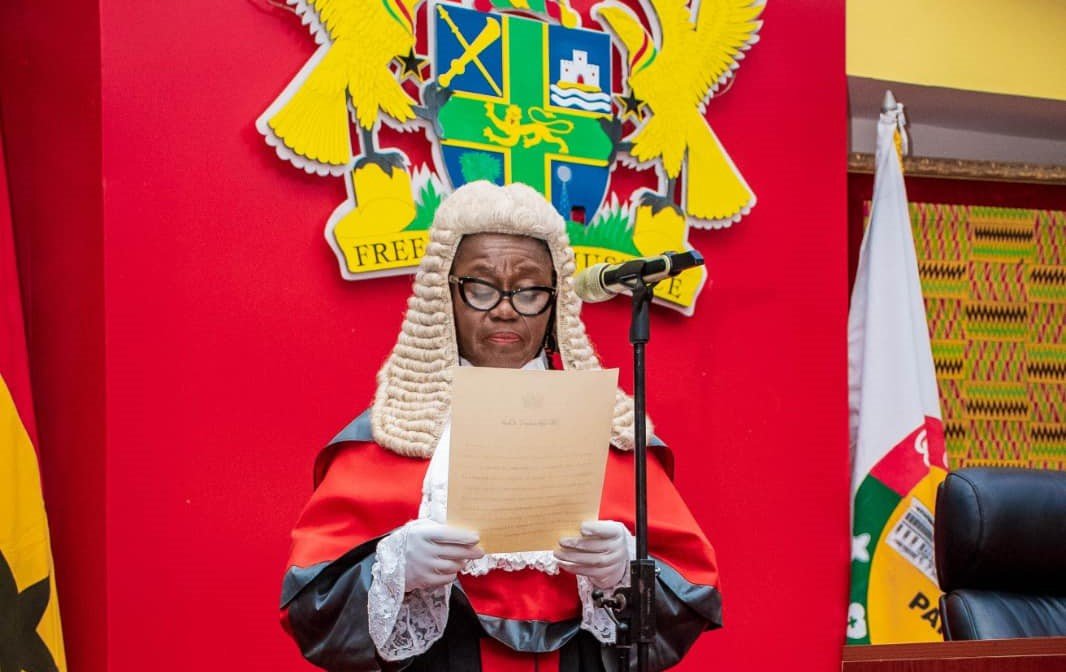
The removal of Chief Justice Gertrude Araba Esaaba Sackey Torkornoo has sparked outrage among sections of Ghanaian society, with some describing the development as a “constitutional travesty” that undermines the very foundation of judicial independence.
In a strongly-worded press statement jointly signed by Vincent Ekow Assafuah, Member of Parliament for Old Tafo Constituency, and Janet Asana Nabla, 2024 Presidential Candidate of the People’s National Party (PNP), the group insisted that the entire process leading to the removal was “fatally flawed” and must be reversed to safeguard Ghana’s democracy.
According to the statement, Article 146 of the 1992 Constitution outlines one of the most solemn and consequential processes the removal of a Chief Justice. The procedure begins with petitions to the President, who must determine whether a prima facie case exists before consulting the Council of State and constituting a committee.
However, the statement alleged that Justice Torkornoo was denied access to the petitions in the early stages and only received them after writing to the President. The petitioners, it said, were not subjected to cross-examination, while some never testified yet had their allegations used against her.
The statement further criticised the decision of the committee to abandon C.I. 65 the standing order for commissions of inquiry and instead apply High Court Civil Procedure Rules, creating what it described as “an adversarial trial skewed against the Chief Justice.”
The President’s warrant cited three grounds of “misbehaviour” for her removal: alleged misuse of public funds, transfer of a Deputy Director, and recommendation for promotion.
But the concerned citizens argued that these were flimsy and unconstitutional. On the issue of public funds, they pointed to Article 187(7), which vests the power to determine financial impropriety solely in the Auditor-General. They noted that the Auditor-General’s 2023 report on the Judicial Service made no such disallowance.
On the transfer and promotion claims, they stressed that Article 125(4) of the Constitution vests administrative and supervisory powers in the Chief Justice, making such actions lawful. “To treat a lawful transfer as grounds for impeachment is to criminalize the very duty the Constitution assigns to the Chief Justice,” the statement said.
The group rejected claims that the President was merely acting as a “conveyor belt” in the process. They argued that the President exercised discretion at several stages determining a prima facie case, consulting the Council of State, and acting on the committee’s report but chose to endorse what they described as a politically motivated process.
“The President cannot feign innocence. He acted, and in acting, he compromised the independence of the judiciary,” the statement added.
The removal of Justice Torkornoo has drawn sharp criticism from within and outside Ghana. Former Chief Justice Sophia Akuffo described the process as a “rigmarole,” while Ambassador Edward Nasigrie Mahama called it unconstitutional.
The Ghana Bar Association, the Commonwealth Lawyers Association, and the Bar Council of England and Wales have all condemned the action, warning that it breaches international norms.
Even within the judiciary, dissent has been recorded. Justice Prof. Henrietta Mensa-Bonsu, in a dissenting opinion in Vincent Ekow Assafuah v. Attorney-General, likened the ease of the process to “removing a class prefect in a school,” a stinging analogy that highlighted the precedent being set.
Veteran journalist Elizabeth Ohene also drew parallels with Ghana’s dark history, recalling the trauma of the 1982 abductions and killings of three High Court judges, describing the September 1, 2025 removal as another chilling assault on judicial independence.
The statement urged Justice Torkornoo not to resign and to seek judicial review of the process, insisting that a committee’s recommendation alone cannot extinguish a constitutional office.
“Ghanaians are firmly behind her. We will not allow the judiciary, the last bastion of our democracy, to be reduced to a political pawn. This dangerous precedent must be resisted. It must be reversed,” the statement concluded.
Source: Starrfm.com.gh


