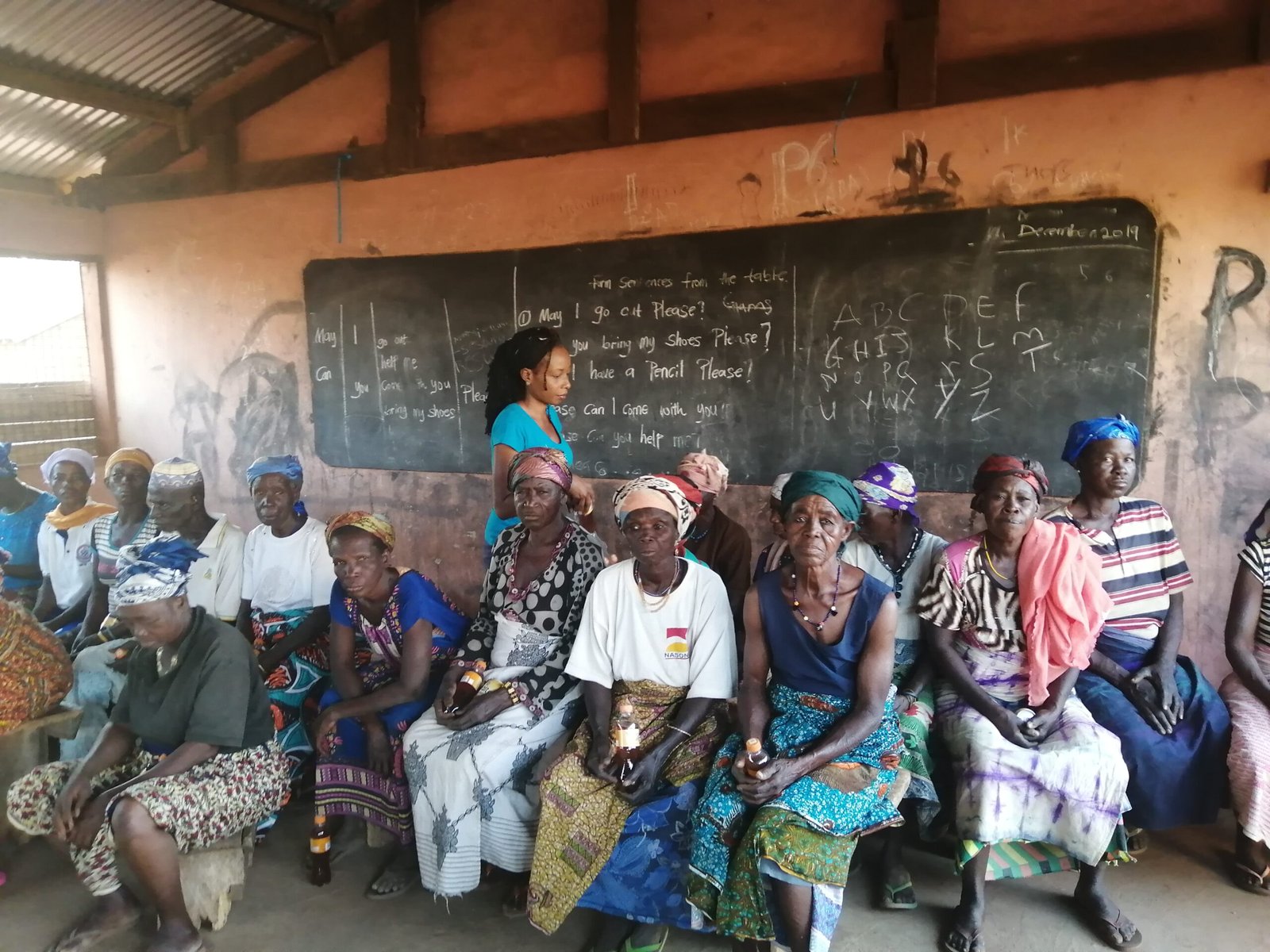
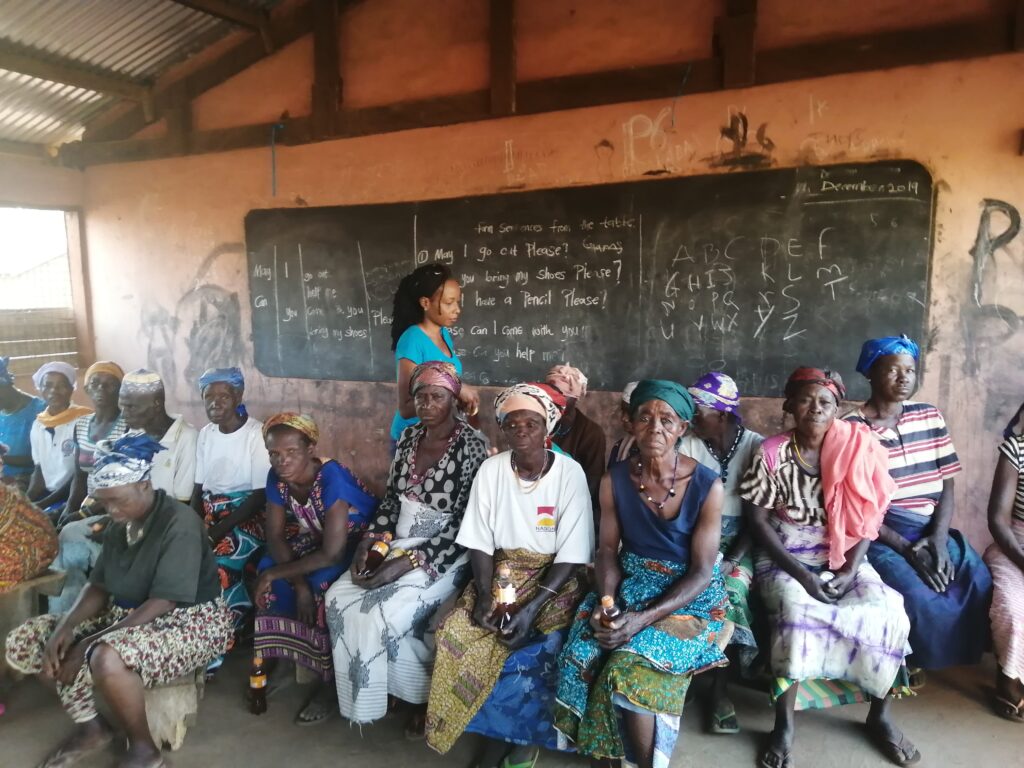
Just as we all had our wishes for the recent festive season, so did the ‘witches’ of Ghana’s infamous Gambaga Camp: to be allowed back home, reuniting with family and friends, and being reintegrated into the society they were exiled from long ago.
Unfortunately, this may only remain a wish for many of these women who feel trapped at the camp. Some have lived there for over two decades and are forever ostracized from the communities they once loved. Managers of the facility are trying to make their dreams come true, but the task is rendered difficult — if not impossible — by community members who remain largely adamant and unwelcoming.
Sampson Laar, coordinator of the Presby Go Home Project — a Presbyterian NGO set up to facilitate such reintegration — says over 80 per cent of the women do want to go home, but most communities are just not safe enough.
“This place is now like a safe haven for them,” Laar explains, the irony of it not lost on the writer. “Sometimes you talk to them and ask what they want; you can give them the whole world, but they only want to go back home.
“But then they compare their lives here to what they could face back home and, ultimately, decide to stay.”
FOUNDATIONS OF THE CAMP
In a community in Ghana’s northern parts, somewhere before or during the early 1900’s, a woman accused of being a witch was attacked by a mob; but for a kind man’s intervention, that would have led to certain death. The man, a Muslim cleric called Imam Baba, was returning to Gambaga from Nalerigu when he chanced on some people pelting the poor woman with stones and hitting her with other objects. Just when they were leading her to a mountain in the area where alleged witches were traditionally sent to be crucified, this woman — like the Biblical Mary Magdalene — met a saviour who turned her story around.
Imam Baba rescued her from the hands of the furious community members and provided refuge in his home. As days went by, he was overwhelmed by the sheer number of women seeking safety with him. With Islam’s holy book, the Qur’an, he would attempt to exorcise and cleanse them, just in case they were indeed possessed of witchcraft. As the numbers kept increasing, however, he couldn’t keep up and sought help. To the Gambarana (chief of Gambaga) Imam Baba handed the women; the chief, in turn, gave them a place and consulted his gods on how to purify the witches and nullify their powers. Since then, many more have flocked to the camp created by the Gambarana for the afflicted individuals’ safe-keeping.
People — mostly women — from about 64 communities in the Gambaga District of Ghana’s Northern Region suffer such humiliation when accused by relatives or friends for their misfortunes and banish them from their communities. If you think being dumped at the camp is bad enough, think about those unfortunate women who never made it that far and whose fatal lynchings have gone unpunished. Fortunately, many have lived to tell their stories — sad ones, in fact.
WUNI SHETU’S STORY
Wuni Shetu of Dagbriboari, a community in the Gambaga District, is one of the fortunate ones — to have made it to the camp and back into society. Beaming, Wuni couldn’t hide her excitement over being back home after spending three years at the camp, showering praises on Laar and his team for making it possible.
Narrating how she ended up at the camp, Wuni told a story of how her niece — who lives outside the village — stormed the house one day and accused her angrily for supposedly being behind her own troubles. That ‘revelation’, according to Wuni’s accuser, was made during a church service she had attended. Suddenly, some irate community members joined in and beat her almost to the point of death.
Only the chief of Dagbriboari, who kindly intervened, managed to help her escape to Gambaga. There, she was granted audience with the reigning Gambarana who, on hearing of her ordeal, offered her asylum at the town’s camp. Still, the incident left Wuni hospitalized, and while most of the wounds eventually healed, some injuries sustained would have a lifelong effect on the woman. The brutality affected her spine and knees, leaving her incapacitated and unable to work.
“Because of my back pain,” she related through an interpreter. “I couldn’t do anything for myself back at the camp. Even when I needed to fetch or buy water, Mr. Laar would have to bring me some; my daughter, on my return, has taken up that responsibility.”
Then there were the emotional scars which, sadly, have led her to contemplate suicide several times. The daughter Wuni speaks of is the other victim of her mother’s plight. Prior to it all, she was determined to further her education to tertiary level, but that dream is long gone down the drain. Now a mother herself, she is unsure of what next to do with her life.
At some point in our conversation, as she recounted her terrible experience at the hands of her niece and others, Wuni’s countenance suddenly changed, with anguish replacing joy. No longer could she prevent tears from bursting past her lids and rolling down her cheeks. The cheerful woman who welcomed unexpected guests to her home just minutes ago turned miserable as she recalled those nightmarish memories.
Wuni, though reasonably downcast, does count her blessings. She narrated an incident about a woman from Bintri, Alima, whom she met at the camp. According to her, Alima was beaten and hospitalized just like her, but after she was discharged from the hospital, they later realised that the violence suffered had affected her spinal cord — ultimately dying from a blood clot formation not many months ago.
WUNI KUMA’S STORY
Originally from Boguri, also within the Gambaga District, Wuni Kuma has spent 10 years at the camp. Like many others, she escaped the brutality of the members of her community, after her rival accused her of being the cause of her chronic headache.
Unfortunately for Wuni, the first wife, her husband seemingly took the side of the other woman and did nothing to settle the matter. Her brother then advised her to seek refuge at the camp before the community got wind of the domestic issue and blew it up into something more serious.
Her sympathetic sibling — on whose counsel she settled in the camp — is now deceased, but Wuni is currently looking after his children and some of her own grandchildren at the camp, describing them as her reason to stay alive. It’s why she doesn’t get depressed like the other women do. Wuni stated, also via an interpreter, that “the children are here to relieve me of the stress I would have suffered otherwise.”
Her greatest wish, though, is the same as everyone else’s: to go back home. That can’t happen automatically, however, as pointed out earlier.
“My brother, who advised that I come here, is now dead, and his children and mine are too young to request that I come home. My father’s family can do that, but they haven’t,” she lamented. “They have to go through the procedure and make sure that the community is ready to accommodate me first.”
Asked if she was, as accused, a witch, Wuni said: “I am not aware of anything of that sort. It was the work of the devil which made them raise that charge against me.”
Resigned to her fate, Wuni is trying to live a normal life at the camp.
ZENABU SUGURI’S STORY
Zenabu Suguri, likely in her mid-70s, has been in the camp for 12 years, selling tobacco to support herself. She is currently the ‘Magazia’ (Head) at the camp, supported by the six other leaders who deputize for her.
She described the events that led to her settling at the camp as a set-up, explaining how she was blamed for the death of a child in the compound where she lived. In view of the accusation, her family decided that she re-locate to the camp to preserve her life.
“I am fine here,” Zenabu told us, “but I wish to go home.
“There is, however, a procedure to sort that out — that my family make the request — and, should it succeed, I will be happy to follow them. If not, I’d be running a real risk.”
MOB JUSTICE: A COMMUNITY’S PERSPECTIVE
One elder in the Dagbriboari community, to our horror, actually justified the [attempted] lynching of suspected witches, excusing it as a deterrent to others who use sorcery to cast evil spells on innocent people.
Amadu — not his real name — argues that, even though he has never been involved in such an act, he certainly hails the role it has played in reducing the practice of witchcraft.
“If someone is accused of witchcraft and they voluntarily accept such a charge, they’re pardoned,” he explained. “Denial, however, only provokes the sort of aggression that eventually leads to the accused eventually accepting the charge — or to their death.”
Asked if they’re aware such acts are against human rights, Amadu said the community members had few pangs of guilt about inflicting such pain on people believed to be responsible for the misery of others.
HOW TO BECOME A CAMP MEMBER
As mentioned earlier, not all ‘witches’ live long enough to make the escape to Gambaga. Those who do run voluntarily to the Gambarana for help when they realise their lives are in danger. The chief, after conducting thorough investigation into the matter, only keeps the woman in the camp after it is established that her life is, indeed, under threat.
Alternatively, the two parties — the accused and their accusers — will both go to the Gambarana, who is generally believed to possess powers — enabled by the gods — to identify a witch. After some rituals are performed by the chief, involving the slaughtering of a fowl and recitation of incantations, the final resting position of the dying animal — either on its stomach (guilty) or on its back (innocent) — will determine whether the accused is truly a witch or not.
If someone is found guilty, the chief then proceeds to nullify her powers and send her to the camp; otherwise, she is vindicated and sent back home. There have been a few occasions, though, where the whole ‘fowl test’ vindicated the accused but the community members cried foul and wouldn’t accept the verdict, forcing the Gambarana to admit the woman at the camp anyway.
LIFE IN THE CAMP
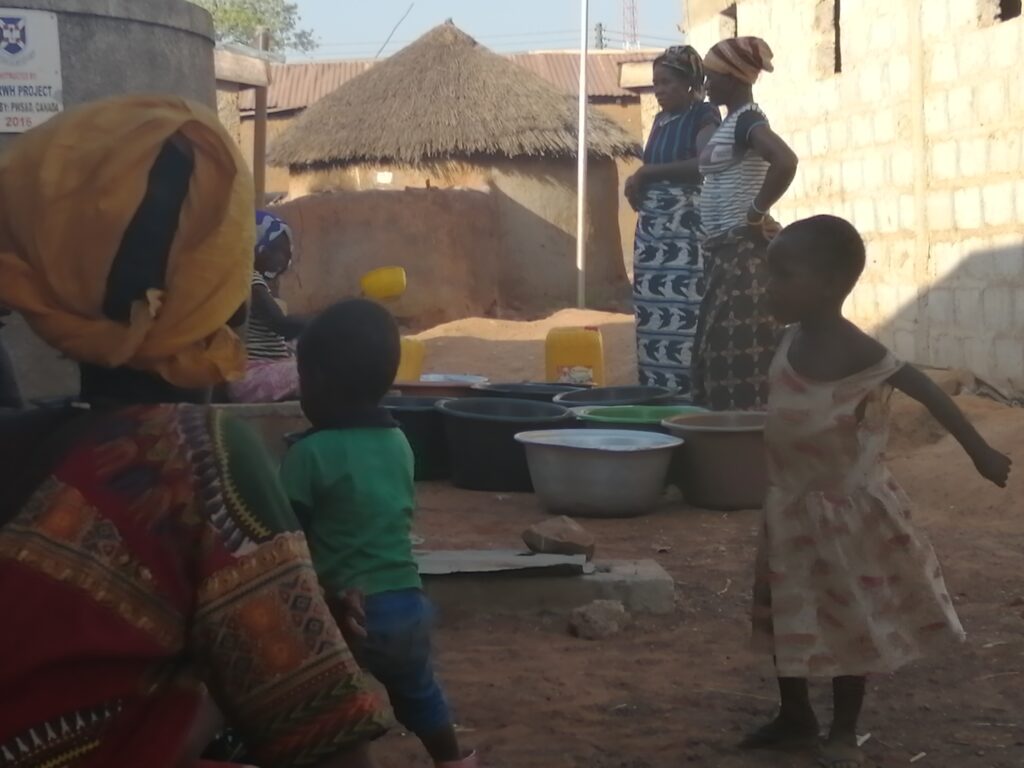
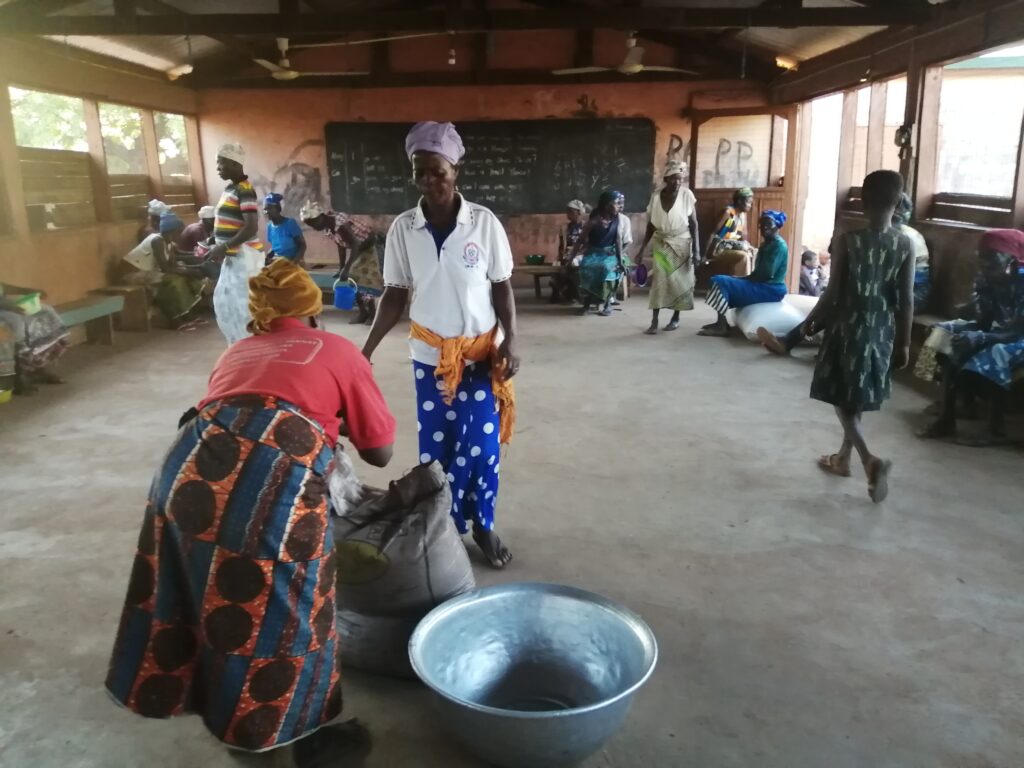
So far, over 80 women — aged between 57 and 90-plus years old — live in the camp, together with more than 30 young ones who are either children or grandchildren of the alleged witches. All of these share residence of about 89 clay huts on the compound and earn their livelihood by doing petty trading, working on people’s farms, and on support from the Presbyterian World Services and Development in Canada (the institutions funding the Presby Go Home project), as well as the Gambarana Palace’s enduring benevolence.
To ensure sanity at the camp, they have leaders of the various tribes who are represented at the camp present, all under the oversight of a leader who superintends the women’s general welfare and activities. Per the administrative structure at the camp, the women are expected to greet their leaders every morning as a sign of respect and also for the latter and managers of the camp to ascertain their welfare.
CHRISTMAS WITH THE ‘WITCHES’
The so-called ‘witches’ did not exempt themselves from the recent celebration of Christ’s birth. The morning of 25th December 2019 was marked by church activities at the camp, involving the singing of praises, worship songs, and crowned with a powerful sermon. During the afternoon, there were drinks and sugar distributed to them as gifts from the Laar and other well-wishers.
During our time at the camp, no family member was seen visiting any of the women, confirming claims that very few of them had received any friends or relatives as visitors — even in 20 years. Christmas is usually a time when many — young or old, friends or foes — are highly spirited and generally more generous in expressing affection, but the people in the Gambaga Camp received less of such good cheer than those who live outside of it. The difference was quite telling.
THE CHALLENGE OF REINTEGRATION
The idea of reintegration came up in 1996 when the number at the camp kept rising and the help being received wasn’t sustainable. But then came the aforementioned Presby Go Home project and, so far, about 74 women have been able to go back to their communities.
Before someone is sent home, the NGO visits the community she came from several times to negotiate her comeback with the duty-bearers there, while interacting with the families involved to determine if the potential returnee will be welcomed.
“We don’t just send them home; we visit the family and interact with them. If there is total peace, we will proceed to counsel the prospective returnee before sending her back,” Larr says.
With the Presby Go Home project’s contract ending this year, Laar is clueless about how they will continue with the reintegration exercise.
LIVES TO LIVE, LOVE TO GIVE
Like most social facilities, the Gambaga Witch Camp is heavily challenged. Its inmates — and their dependants — are not only marginalised, but also stigmatised. They are called names and, for the young ones, this affects their studies in school — which is why they only attend the Presbyterian School in the area, just to avoid intimidation and humiliation of any sort.
There are also challenges with housing, which exposes them to the elements anytime the rains come. Clothing, toiletries, and other daily household necessities are also hard to come by. Academics suffer, too, with parents and guardians struggling to afford school uniforms, books, and other items for the kids.
A ROYAL HEADACHE
Speaking on behalf of his aged father, Gambarana Amidu Alhassan expressed disappointment in the government for neglecting the women who fall under its social protection agenda.
“Government doesn’t support with anything, but when it is election time, politicians show up to campaign for votes in the camp,” he fumed.
“Only Lordina Mahama, the former First Lady, helps; every Christmas, she brings some food and clothes, even though the party she belongs to isn’t in power.”
The camp, which is more than a hundred years old, has been managed solely by successive chiefs of Gambaga until the Presbyterian Church came in quite recently to help; even so, the supply of aid is rendered insufficient by the increasing figures.
Alhassan also called for donations of motorbikes, fuel and other logistics to facilitate the advocacy required to educate the communities in putting an end to their cruel actions.
ANSWERING THE CALL
“We have realised that advocacy is the best way to deal with this age-old problem,” says Laar, mentioned earlier.
“About brutalities and lynching, for instance, we have involved the police before but realised it was not working for us at all.
“The community members know very well that the police will come for them if they assault a woman, so they rather set the victim’s house on fire deep into the night after blocking any means of escape.”
There’s still another crafty means by which ‘witches’ are done away with, however, according to Laar.
“Sometimes, poisonous substances are laced with their food and, on receiving news of the woman’s death the next day, her killers rejoice publicly. As this happens mostly in the interior villages, the perpetrators almost always act with impunity.”
It isn’t just the lives of suspected witches that are at risk now, though; also endangered are Laar and others like him involved in assisting the women, by association.
Thankfully, however, the advocacy strategy is working, even though it is very difficult to convince some of the chiefs; once these are won over, however, the community also shows an inclination to embrace the returning ‘witches’ whose powers to harm — it is believed — have been neutralized by their gods through the powerful Gambarana.
The trend, hopefully, could finally see the camp emptied someday. Till then, lots of support is required — from the government and from charitable individuals/institutions — for the comfort of the underprivileged lives it houses.
Source: Josephine Asabea Akonor