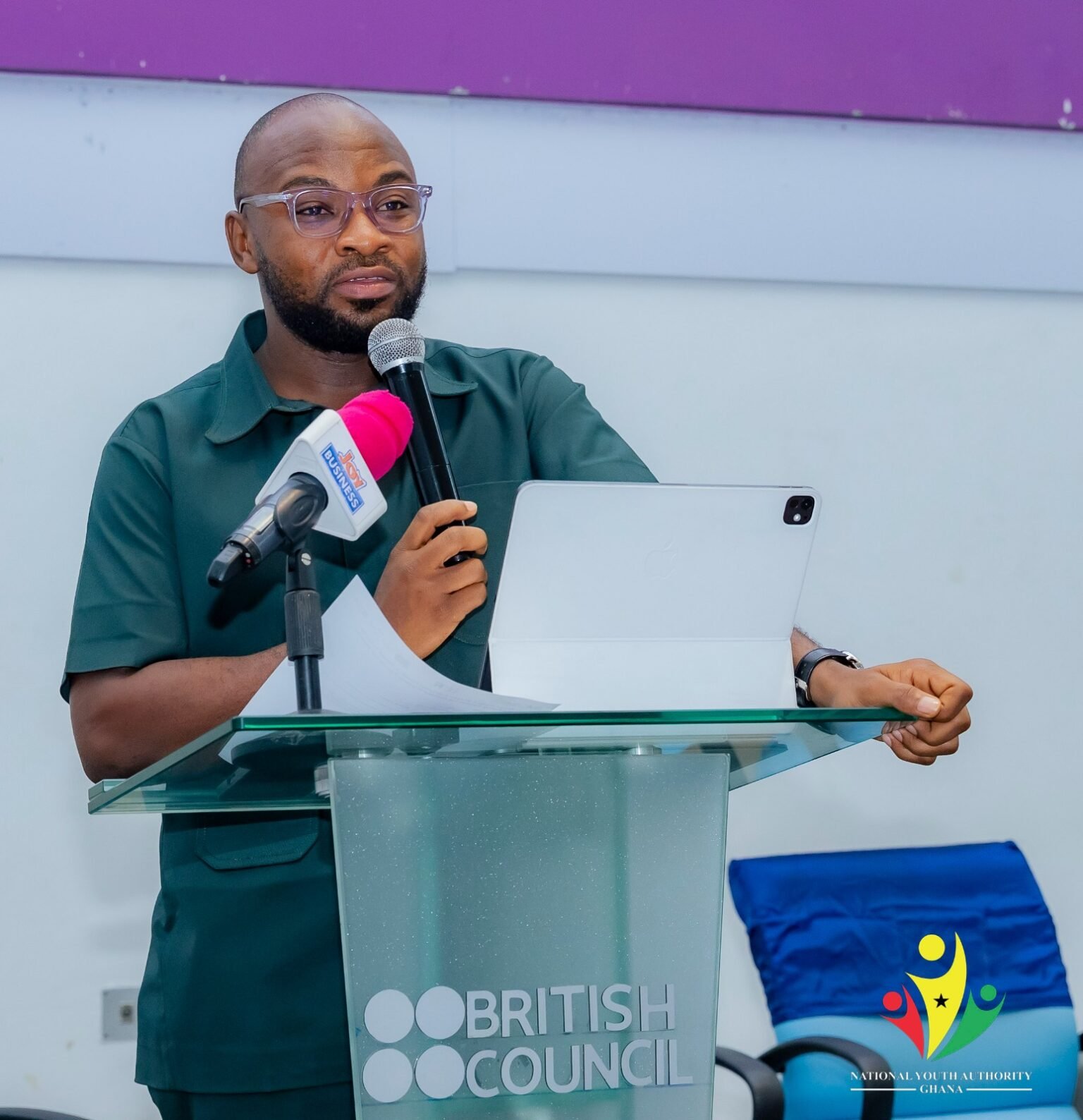
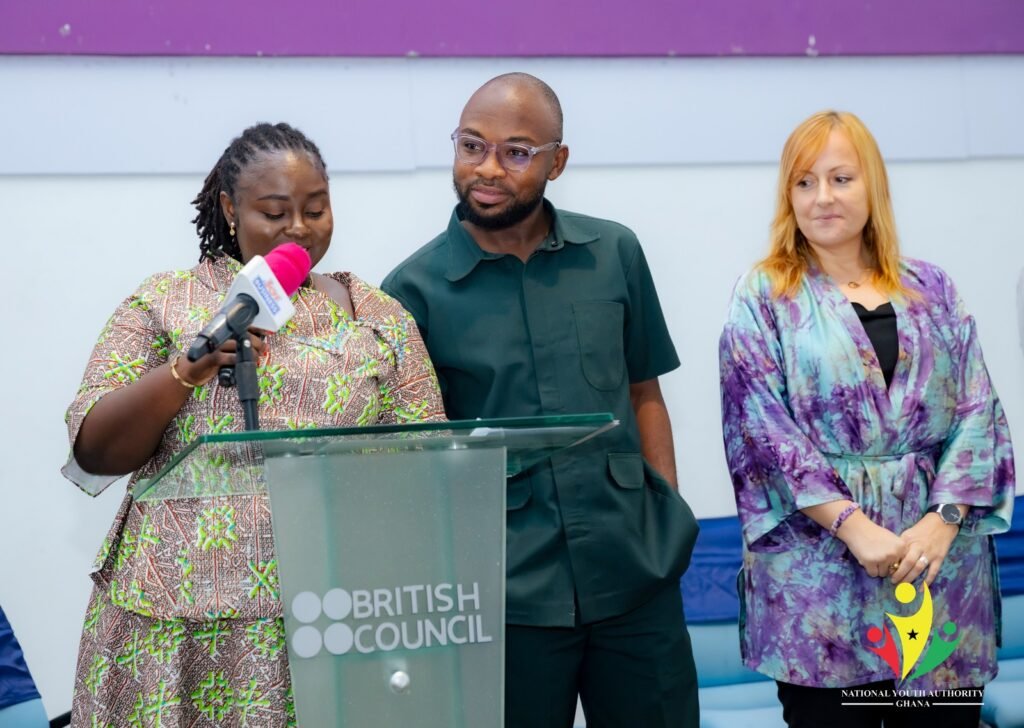
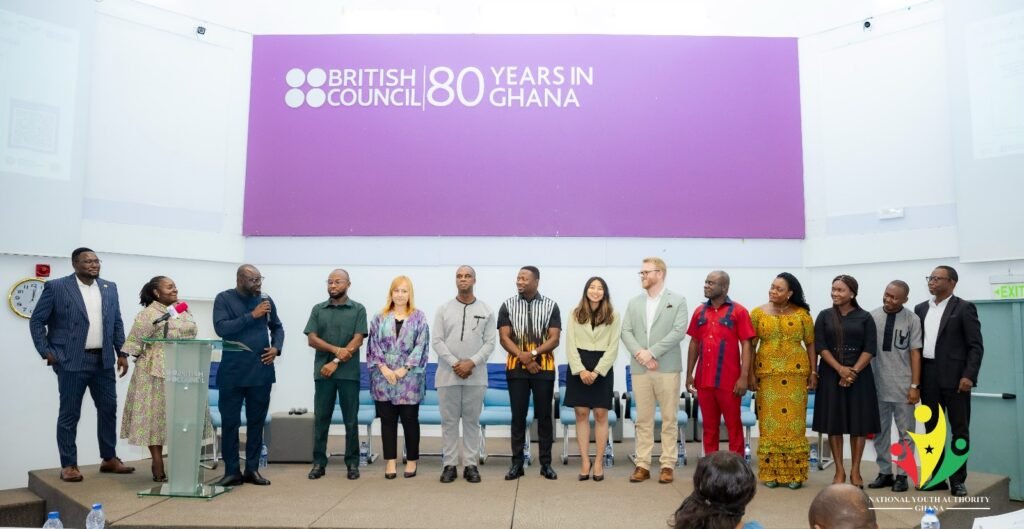
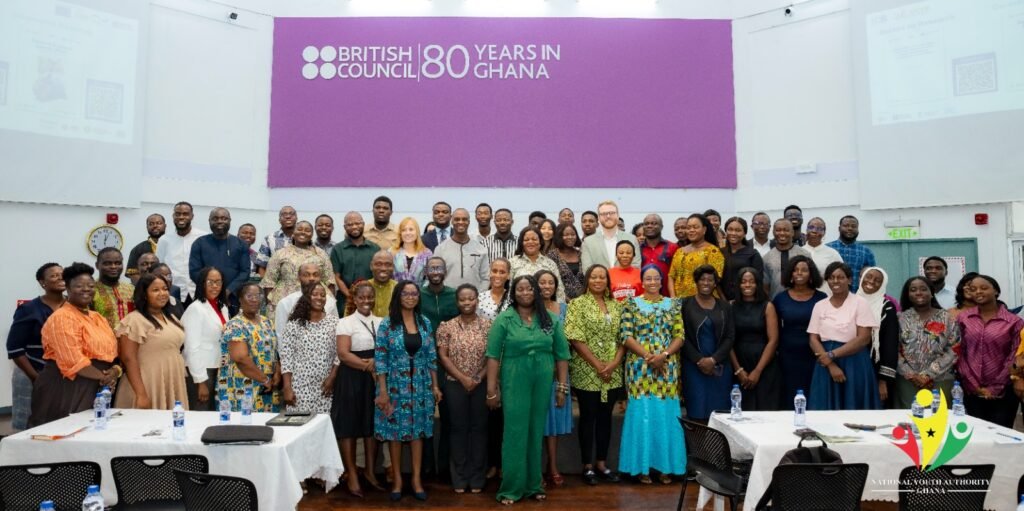
Chief Executive Officer of the National Youth Authority (NYA), Mr. Osman Abdulai Ayariga Esq. has launched the National Business Agenda at the Ghana Youth and Women Enterprise Forum, held at the British Council in Accra on June 2, 2025.
Addressing participants, Mr. Ayariga described the occasion not as a formality, but as a vital moment for action. “This gathering is more than a ceremonial event. It is a rallying point for our collective commitment to empowering Ghana’s youth and women, underscoring their indispensable role in driving sustainable economic transformation and achieving the Global Goals,” he stated.
Highlighting the challenges young people and women face in the business landscape, he referenced data from the Ghana Statistical Service which showed that as of the third quarter of 2022, approximately 1.5 million people aged 15 to 24 were not in education, employment, or training. He added that the Ghana Labour Market Information System reported a youth unemployment rate of 29.7% in 2023. He called the figures alarming and said they required “urgent, coordinated, and scalable responses.”
On the plight of women in the economic space, he noted that although women constitute 43.1% of Ghana’s economically active population, many of them are concentrated in informal sectors like food crop farming, where they have little access to funding or formal support structures. Citing the UNDP, he added that 75% of the country’s workforce operates in the informal sector, a reality that contributes to widespread underemployment and financial insecurity.
In response to these challenges, Mr. Ayariga highlighted the efforts of government agencies and development partners to promote entrepreneurship. He said the Ghana Enterprises Agency, in partnership with the World Bank and other stakeholders, has committed over GHS 60 million to support youth-led businesses and GHS 30 million to those led by women.
He also praised the launch of the Business in a Box (BizBox) programme, a four-year project designed to support 250,000 young Ghanaians with tools, mentorship, and startup kits. The initiative is focused heavily on women, who make up 70% of the targeted beneficiaries, and Persons with Disabilities, who account for 10%.
“BizBox does not just include young people in the economy. It positions them to lead it,” he voiced.
Mr. Ayariga said the National Business Agenda aligns perfectly with the NYA’s mission to empower young people socially, economically, and politically. He explained that the NYA will focus on building the capacity of young entrepreneurs, improving their access to finance, and advocating for policies that lower barriers and create a more supportive business environment.
“Our strategy is rooted in three pillars. Capacity building, access to finance, and policy advocacy, all designed to ensure that youth and women entrepreneurs not only survive but thrive in Ghana’s economic space.”
He also linked the initiative to the National Youth Policy (2022–2032), which he said offers a roadmap for all youth-focused efforts across the country and calls on stakeholders from government to civil society to help shape a future based on inclusion, innovation, and growth.
Focusing on women, Mr. Ayariga described their empowerment as not just a matter of fairness but of economic necessity. He said the Ghana Enterprises Agency’s Women MSME Programme is already addressing some of the major challenges women entrepreneurs face, by offering financial support, training, and assistance with formalising their businesses.
“Empowering women is not only a matter of equity, it is an economic imperative,” he said. “When women thrive, families are uplifted, communities flourish, and the nation prospers.”
Ending his remarks, Mr. Ayariga urged all stakeholders, from ministries and development partners to private companies and civil society, to take concrete steps to support the National Business Agenda.
“Ghana’s future will not be shaped in boardrooms alone,” he said. “It will be determined in classrooms, marketplaces, farms, and tech hubs—where youth and women are empowered to lead, innovate, and contribute meaningfully.”
He called on all to move from “rhetoric into action,” committing to inclusive policies, long-term support systems, and strong accountability measures to ensure the agenda delivers meaningful change.
Source: Ghana/Starrfm.com.gh/Mary Asantewaa Buabeng