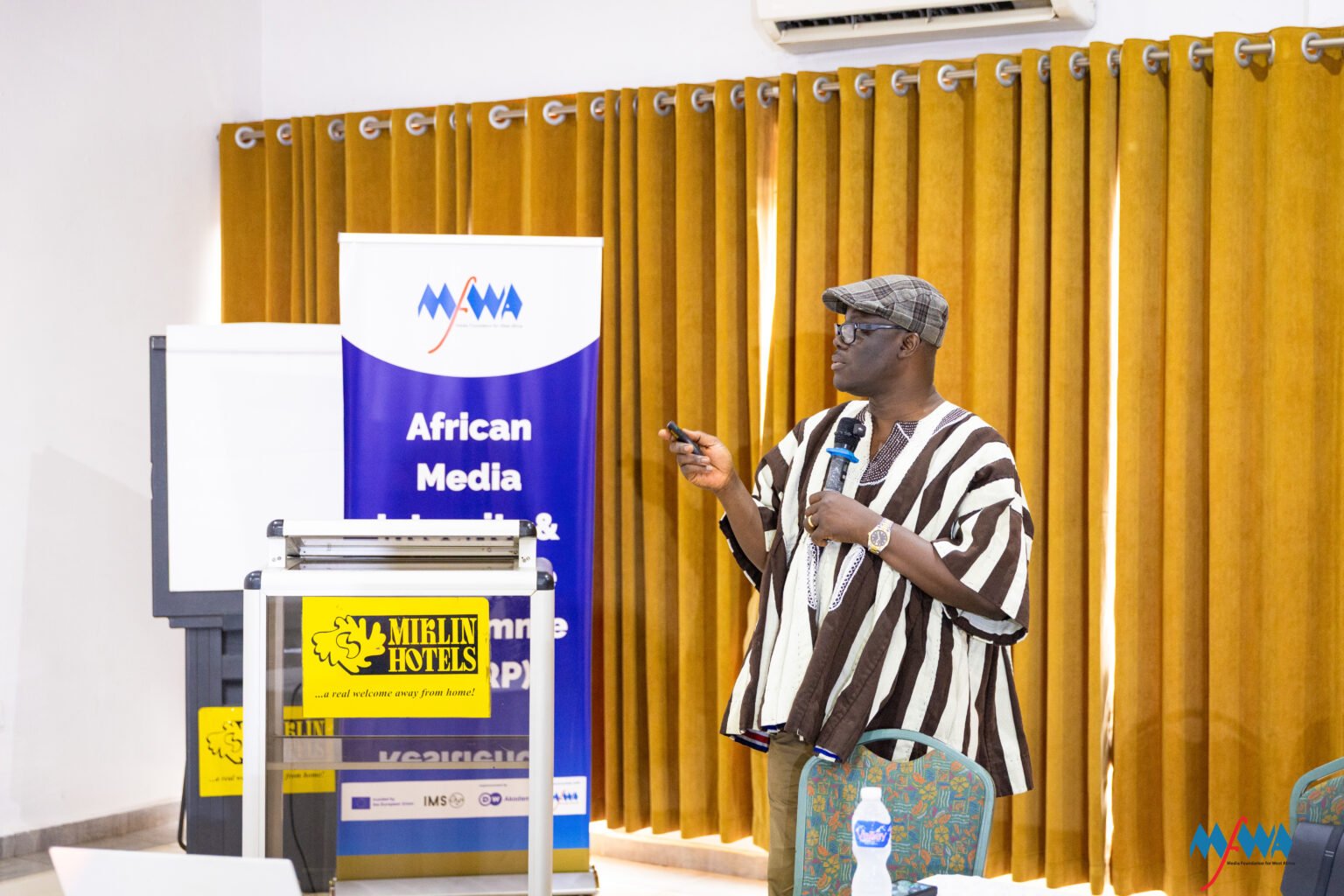
Lawyer and broadcaster Samson Lardy Anyenini has urged journalists not to allow the fear of costly lawsuits to undermine bold and credible reporting on matters of public interest.
He said while individuals aggrieved by media publications have a constitutional right to seek redress, some lawsuits are filed primarily to intimidate journalists and prevent them from continuing with legitimate public-interest reporting.
Mr Anyenini made the remarks in a sideline interview after the opening session of a four-day legal training organised by the Media Foundation for West Africa (MFWA) in the Ashanti Region on September 22.
Speaking as a facilitator at the training, he said journalists must, however, ensure that their work is grounded in rigorous verification, accuracy and evidence to strengthen their position when challenged legally.
“We live in a constitutional regime, in a democracy. Their right of redress includes a rejoinder or going to court, and then you show up in court to answer,” he noted.
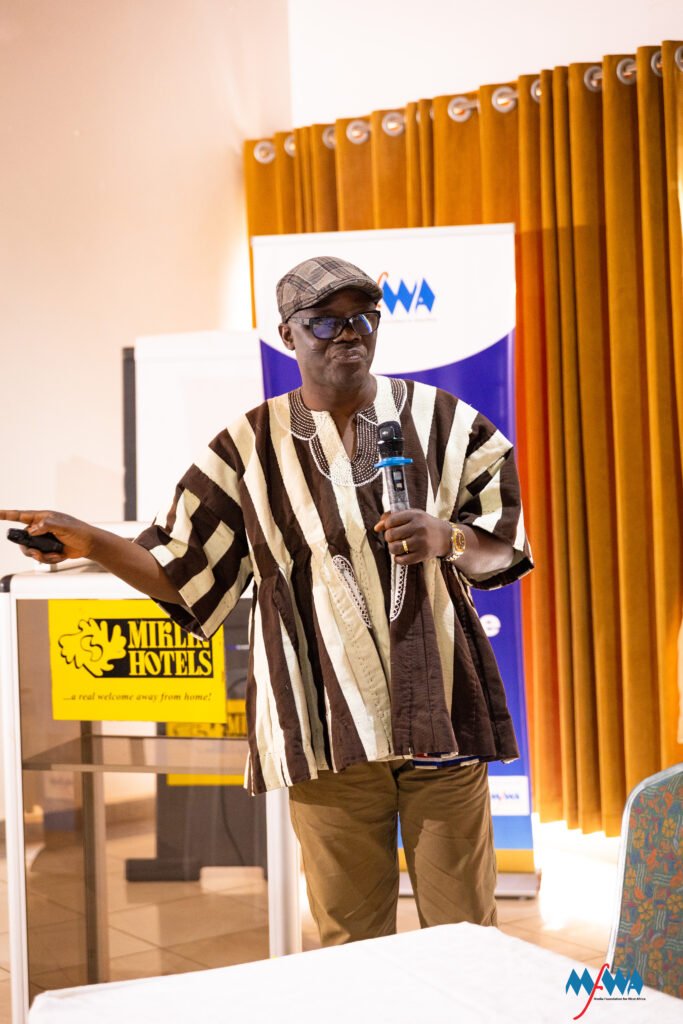
Mr Anyenini said some of the legal actions faced by the media fall under what is known as Strategic Lawsuits Against Public Participation (SLAPP), which he described as nuisance suits intended to shut down public-interest discussions.
“You have done your work and done it well, but they simply want to shut the media from discussing the matter, so they file a suit and seek an injunction to stop you from continuing with the subject. These things are costly and media houses are unable to afford them,” he said.
He therefore welcomed the establishment of a Legal Support Fund by the MFWA and its partners to assist journalists and media houses facing legal action arising from their work.
“To have a fund that is available to assist, I think it’s going to be very useful. You will do your work and do it boldly. Those that you need to call their bluff, you call their bluff, but where you need to humbly submit and admit that you also made an error, you will do so,” he said.
Mr Anyenini stressed that the availability of legal support should give journalists the confidence to pursue legitimate stories without being deterred by the financial implications of defending themselves in court.
“But the most important part is that you will not be shut down because you are scared there will not be money to fight frivolous suits,” he added.
Verification is key
The ace broadcaster urged journalists to make painstaking verification a hallmark of their work, including seeking responses from all parties involved in a story and obtaining supporting documentation through Right to Information (RTI) requests.
He also cautioned journalists against presenting opinions and allegations as established facts.
“At all times you must preserve the evidence you use for your publications against any day a suit might come,” he stressed.
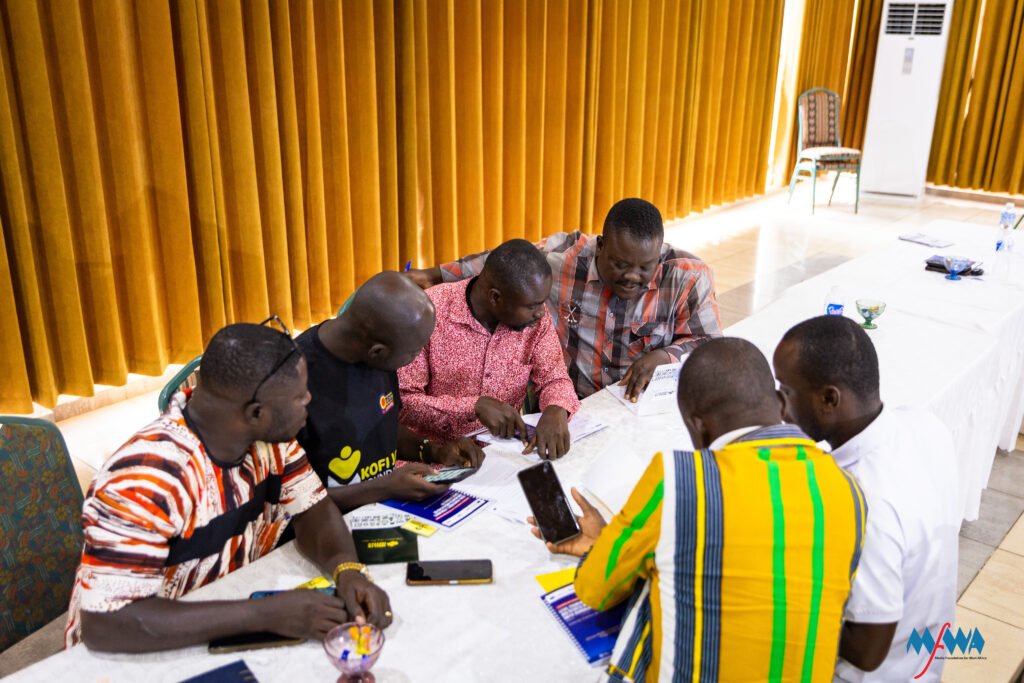
Mr Anyenini further reminded journalists of the constitutional mandate and protections afforded the media under the 1992 Constitution, citing the preamble, Article 1, Chapter 12 and Chapter 5.
“The Constitution has not only mandated the media to do bold, fearless and credible journalism, but has also provided protections for the media to do the work for and on behalf of the sovereign people of Ghana, who are ordinary Ghanaians,” he said.
READ: MFWA launches Legal Support Fund, begins five-day media law training for journalists
“That should be how we approach it – not that you are doing it because it is a certain privilege,” he added.
MFWA Legal Support Fund
The training, which is underway at the Miklin Hotel in Kumasi from September 22 to 25, 2026, forms part of the MFWA’s African Media Integrity and Resilience Programme: Ghana, Central African Republic (AMIRP Programme).

The Programmes Manager of the MFWA, Dr Daniel Kwame Ampofo Adjei, said the training is designed to enhance journalists’ capacity to work professionally while confidently asserting their rights when confronted with litigation, threats and judicial harassment.
The programme is being implemented in Ghana by the MFWA in collaboration with DW Akademie, with funding from the European Union through International Media Support (IMS).
A major component of the training is an orientation on the operational guidelines of the newly created Legal Support Fund, following a similar training held the previous week in Accra for journalists from the southern sector.
Dr Adjei said the Fund is intended to provide financial assistance for legal representation to journalists who face lawsuits or judicial harassment in the line of duty.
He said the initiative comes amid concerns over SLAPPs, defamation suits and other forms of legal pressure against critical journalism.
According to Dr Adjei, the lack of financial and legal resources means some media houses back down when threatened with legal action.
The Legal Support Fund, he said, is therefore intended to support journalists who are engaged in proper public-interest journalism and face legal threats as a result of their work.
Dr Adjei said the AMIRP initiative is a two-and-a-half-year programme being implemented in three countries – the Central African Republic, Ghana and Ethiopia.
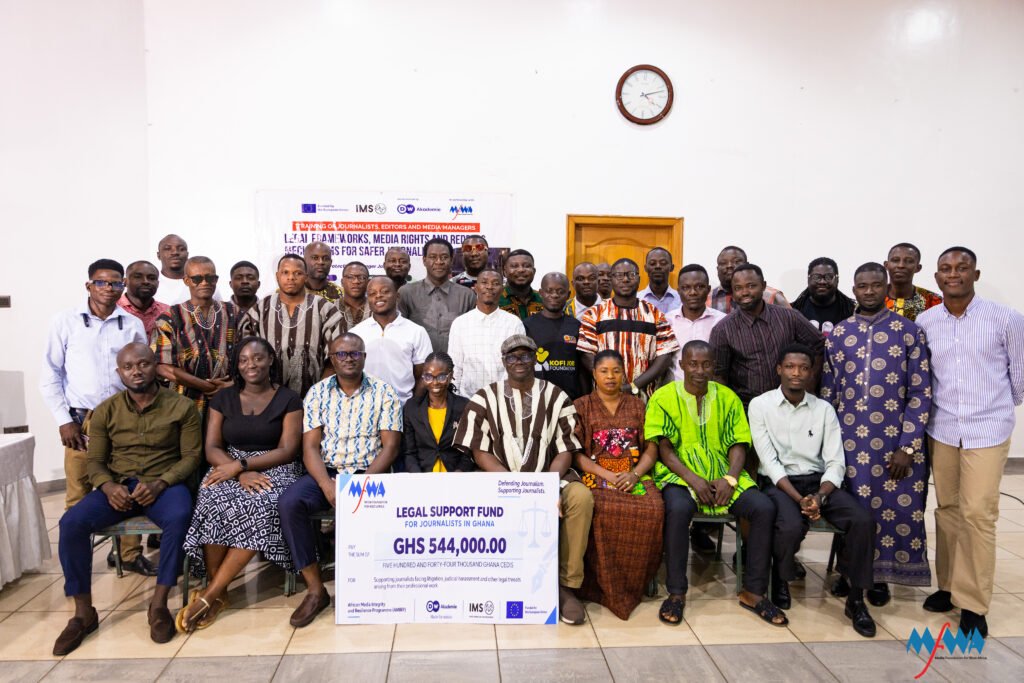
He said the programme focuses on several pillars, with the current training specifically addressing the need for an enabling legal and policy environment for independent media.